SIEMENS 6ES5420-4UA12 Plc Modules
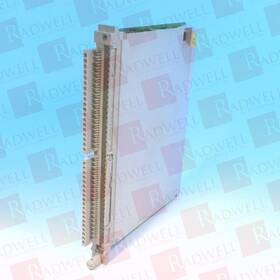
( Brand: Siemens ), ( Manufacturer Part Number: 6ES5420-4UA12 ), ( Part Type: Module )
Review SIEMENS 6es54204ua12 Used
The **Siemens 6ES5420-4UA12** is a high-performance, modular **SIMATIC ET 200SP** (S7-1200/1500-compatible) digital input/output (I/O) module designed for industrial automation applications requiring robust, compact, and scalable connectivity. Part of Siemens proven ET 200SP series, this module is engineered to integrate seamlessly into distributed I/O architectures, offering reliable signal processing for discrete control tasks in manufacturing, process automation, and machine-building environments. With a **12-channel digital input** configuration, each channel is equipped with **24V DC sinking or sourcing** capability, configurable via software, allowing for flexible compatibility with a wide range of sensors, switches, and actuators. The module features **optically isolated inputs**, ensuring immunity to electrical noise and voltage spikes, which is critical in harsh industrial settings where electromagnetic interference (EMI) and transient surges are common. Its **compact, DIN-rail-mountable design** (175 mm wide) maximizes space efficiency in control cabinets while maintaining easy accessibility for maintenance and troubleshooting. The **SIMATIC ET 200SP** platform supports both **PROFIBUS DP** and **PROFINET** communication protocols, enabling high-speed data exchange with central PLCs (such as the S7-1200 or S7-1500 series) and facilitating real-time monitoring and control. Additionally, the module includes **diagnostic functions** via the **SIMATIC ET 200SP diagnostic tool**, allowing operators to quickly identify issues such as open or short circuits, signal failures, or communication errors, thereby minimizing downtime. Built to meet **IEC 61131-2** and **IEC 62061** safety standards, the 6ES5420-4UA12 is suitable for applications requiring **Category 3 (CAT 3) protection**, ensuring safe operation in environments with moderate electrical hazards. Its **wide operating temperature range** (-25 C to 60 C) and **extended humidity resistance** (up to 95% non-condensing) make it ideal for both indoor and outdoor industrial deployments. Whether deployed in a high-speed packaging line, a CNC machine control system, or a building automation setup, this module delivers the reliability, flexibility, and performance demanded by modern automation requirements.
### **Analysis of Siemens 6ES5420-4UA12 (S7-300 CPU 314-2DP) Pros and Cons**
#### **Overview**
The **Siemens 6ES5420-4UA12** is a **CPU 314-2DP** module from the **S7-300** series, commonly used in industrial automation for PLC control applications. It features **2 digital inputs, 2 digital outputs, 1 analog input (0 10 V or 4 20 mA), and 1 analog output (0 10 V or 4 20 mA)**. Below is a detailed breakdown of its advantages and disadvantages.
---
### **Pros**
1. **Reliability and Proven Track Record**
- The **S7-300 series** has been widely used in industrial environments for decades, known for its robustness and long-term availability of spare parts.
- Siemens industrial-grade components are designed for harsh conditions, making them suitable for manufacturing, process control, and automation applications.
2. **Compatibility with Existing Systems**
- Fully backward-compatible with **S7-300/400** networks, allowing seamless integration with legacy systems.
- Supports **PROFIBUS DP, MPI (Multi-Point Interface), and Ethernet** communication protocols, ensuring flexibility in network setups.
3. **Modular and Expandable Architecture**
- The **CPU 314-2DP** can be expanded with additional **input/output (I/O) modules, function modules, and memory extensions**, making it adaptable to growing automation needs.
- Supports **S7-300 rack systems**, allowing for scalable configurations without replacing the entire controller.
4. **Analog Signal Handling**
- The built-in **1x AI (analog input) and 1x AO (analog output)** simplify control of **PID regulation, motor drives, or sensor feedback** without requiring additional modules.
- Supports **0 10 V, 4 20 mA, and RTD/Pt100 temperature inputs**, making it versatile for process control applications.
5. **Cost-Effective for Mid-Sized Applications**
- More affordable than newer **S7-1200/1500** or **TIA Portal-based** solutions while still offering sufficient processing power for **small to medium automation tasks**.
- Lower total cost of ownership compared to high-end PLCs for applications where **CPU 314-2DP** specifications are sufficient.
6. **Easy Programming and Maintenance**
- Uses **S7-GRAPH (Step 7)** or **S7-PROGRAM (TIA Portal)** for programming, which is well-documented and widely supported.
- Siemens provides **extensive documentation, training, and technical support**, reducing troubleshooting time.
- **Hot-plug capable** (when installed in a compatible rack), allowing for maintenance without full system shutdown.
7. **Energy Efficiency**
- Designed for **low power consumption** compared to older PLC generations, reducing operational costs in long-running industrial applications.
8. **Global Availability and Spare Parts**
- Siemens maintains **long-term support** for the S7-300 series, ensuring availability of replacement parts even for older installations.
- Widely distributed through **authorized distributors and Siemens service centers**, reducing lead times for critical replacements.
---
### **Cons**
1. **Outdated Technology Compared to Modern Alternatives**
- The **S7-300** is **nearing end-of-life (EOL) status** for new developments, with **S7-1200/1500 and SIMATIC PCS 7** being preferred for new projects.
- **Lack of built-in Ethernet ports** (requires additional **CP342-5 or CP343-1** for direct Ethernet connectivity).
- **No integrated safety functions** (unlike newer **S7-1500 with SISTEMA safety**), requiring external safety relays for hazardous applications.
2. **Limited Processing Power and Memory**
- **CPU 314-2DP** has **2 MB of user memory** (expandable to 8 MB with an extension module), which may be insufficient for **complex control algorithms or large data logging**.
- **Slower execution speed** compared to modern PLCs, which can be a bottleneck in **high-speed control or real-time applications**.
- **No integrated math co-processor**, requiring additional function blocks for complex calculations.
3. **Programming Complexity**
- **Step 7 (S7-GRAPH)** is **less intuitive** than **TIA Portal (S7-PROGRAM)**, which has a more modern, drag-and-drop interface.
- **No built-in function blocks for advanced features** (e.g., motion control, advanced diagnostics) that are available in newer PLCs.
4. **Physical Size and Installation Constraints**
- **Larger footprint** compared to compact PLCs like **S7-1200**, requiring more space in control panels.
- **MPI (Multi-Point Interface) communication** is **slower and less scalable** than **PROFINET or Ethernet/IP**, limiting network performance in large systems.
5. **Deprecation of Support**
- Siemens has **phased out official support** for new firmware updates, increasing risks of **compatibility issues with modern HMI/SCADA systems**.
- **No integration with cloud or IoT platforms** (unlike newer Siemens PLCs with **SIMATIC IT** capabilities).
6. **Higher Long-Term Costs for New Projects**
- While initially cheaper, **training new engineers** on **Step 7** may be more time-consuming than **TIA Portal**.
- **Future-proofing concerns** new hires may prefer working with **modern PLCs**, making maintenance harder in the long run.
7. **Limited Analog and Digital Channels**
- Only **2 digital inputs/outputs**, which may require **additional I/O modules** for larger applications.
- **No built-in high-speed counters** (unlike some S7-300 variants), limiting use in **positioning or high-speed counting** applications.
---
### **Conclusion**
The **Siemens 6ES5420-4UA12 (CPU 314-2DP)** remains a **viable choice** for:- **Legacy system upgrades** where compatibility with existing S7-300 networks is required.
- **Small to medium automation tasks** where **analog control, digital I/O, and PROFIBUS support** are sufficient.
- **Budget-conscious projects** where **cost-effectiveness and reliability** outweigh the need for advanced features.
- **Applications where long-term spare part availability** is critical (e.g., in industries with **extended equipment lifecycles**).
However, for **new projects**, the **S7-1200 or S7-1500** (with **TIA Portal**) is the **recommended choice** due to:- **Better performance, scalability, and integration with modern HMI/SCADA systems.**
- **Easier programming, diagnostics, and cloud connectivity.**
- **Future-proofing against obsolescence.**
If **cost is not a concern** and **long-term maintainability is prioritized**, investing in a **new S7-1500** or **TIA Portal-based system** will provide **better efficiency, flexibility, and support** in the long run.
---
### **Final Recommendation**
- **Buy the 6ES5420-4UA12 if:**- You are **maintaining or upgrading an existing S7-300 system**.
- Your application **does not require advanced features** (e.g., high-speed motion, cloud integration).
- **Budget constraints** make it the most cost-effective solution.
- **Spare parts availability** is a critical factor (e.g., in legacy industrial environments).
- **Avoid purchasing new if:**- You are **starting a new project** opt for **S7-1200/1500** instead.
- You need **modern programming tools (TIA Portal), Ethernet/IP, or safety functions**.
- **Scalability and future expansion** are priorities.
For **long-term reliability and efficiency**, **upgrading to a newer Siemens PLC** is strongly advised unless the **CPU 314-2DP** is specifically required for system compatibility.
Details:
Sells new and surplus product develops channels to purchase such. Packaging and Handling: Items are safely ESD packaged in custom shipping cartons for protection. All products are guaranteed to be working but may show signs of use if purchasing a used product. Call to use a shipping service other than the ones listed.
part #: 6es54204ua12 prices
- $26.77-$250.00
specifications sensoindustria:
- brand: Siemens
- mpn: 6es5420-4ua12
- part type: Module
seller sensoindustria:
- rating: 99.6%
- city: 1 Millennium Dr, Willingboro, NJ 08046
- # reviews: 1982 30
payments sensoindustria:
- wallet: Google-pay
- other
- credit card: Diners-club
shipping sensoindustria:
- cost: $12.90
- class: Standard
- service: Standard
- type: Fixed
- transit: 24-37 Days
general sensoindustria:
- condition: Used
- PLCs HMIs > PLC Peripheral Modules > PLC Input Output Modules
returns sensoindustria:
- paid by: Buyer
- method: Money back
- time: 30 Days
- policy: Returns Accepted
offer sensoindustria:
- started: April 7, 2026
- options: Ship-to-home
- availability: In Stock
- quantity: 1
- sold: 0
Siemens 6ES5420-4UA12 Is Similar To:
- 222-1bf22-0xa0 Siemens Used Output Module Make Offer (25.8% similar) All technical questions problems should be addressed through messages for the fastest possible service. Any damaged package received should be addressed with the delivering USPS office and a claim filed there. This lot consists of: 1 used Siemens 6ES7 222-1BF22-0XA0 output module no box condition: ...(March 7th, 2019)
- 3rk1304-0hs00-7aa0 Siemens Isolator Module Used (38.6% similar) If another carrier such as ups or FedEx is required to ship due the size, then shipping costs may change...(February 17th, 2018)
- 3tf4422-0b Unbranded Siemens Used (32.4% similar) If another carrier such as ups or FedEx is required to ship due the size, then shipping costs may change...(June 15th, 2017)
- 462008.7604.01 Siemens Drive Circuit Board Used Free Shipping (33.3% similar) The shipping on this item reflects standard ground for us. 01 drive circuit board - used for sale. Greenback stock G29329...(July 2nd, 2018)
- 500-5016 Siemens Ti Two Channel Analog Output Module Used (32.7% similar) For sale is a ti Siemens two channel analog output module - used no wiring terminals...(July 21st, 2018)
- 505-6308 Siemens Input Module Used (42.7% similar) If another carrier such as ups or FedEx is required to ship due the size, then shipping costs may change...(January 21st, 2018)
- 505-6516 Siemens Slot Plc Chasis Rack Used (38.6% similar) Siemens 16 slot plc chassis rack model: 505-6516ITEM from surplus inventory...(August 1st, 2018)
- 545-1106 Siemens Texas Instruments Plc Module Cpu Used (35.8% similar) ...(September 8th, 2018)
- 6es7-222-1ef22-0xa0 Siemens Used Output Module (27.6% similar) For sale is a used Siemens 6ES7-222-1EF22-0XA0 output module...(July 16th, 2018)
- 6es7-235-0kd00-0xa0 Siemens Used Analog I-o (28.6% similar) Please e-mail with any questions. This item is guaranteed to be as described. Left right side e-stand, please specify which one you are interested. Siemens 6ES7-235-0KD00-0XA0 used analog I o module 235-0KD00-0XA0 note: 2 units available...(February 24th, 2018)
- 6es7-235-0kd22-0xa0 Siemens Used Analog I-o (28.6% similar) This item is guaranteed to be as described. Please e-mail with any questions...(February 17th, 2018)
