SIEMENS 6ES5301-3AB13 Plc Modules
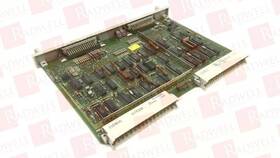
( Brand: Siemens ), ( Manufacturer Part Number: 6ES5301-3AB13 ), ( Part Type: Module )
Review SIEMENS 6es53013ab13 Used
The **Siemens 6ES5301-3AB13 (6ES5301-3AB13)** is a high-performance, modular **SIMATIC ET 200SP** (S7-300/S7-400 compatible) terminal block designed for use in industrial automation systems, particularly within the Siemens SIMATIC architecture. This compact yet robust component is part of the **ET 200SP** series, a versatile line of programmable logic controller (PLC) peripherals engineered to interface directly with digital and analog signals in demanding industrial environments. The **6ES5301-3AB13** is specifically a **terminal block for 24V DC digital inputs**, featuring a **16-channel configuration** that allows seamless integration into distributed I/O systems, enabling remote signal processing and communication with central control units. Constructed with Siemens signature attention to reliability and durability, this terminal block is built to withstand harsh conditions, including temperature fluctuations, vibration, and exposure to moisture, making it ideal for applications in manufacturing plants, process industries, and automation-driven facilities where consistent performance is critical.
The design of the **6ES5301-3AB13** emphasizes modularity and ease of installation, with a **plug-and-play compatibility** that simplifies wiring and reduces downtime during system setup or maintenance. Each of the 16 channels is equipped with **optically isolated inputs**, ensuring protection against voltage spikes, electromagnetic interference (EMI), and other electrical disturbances that could compromise system integrity. The terminal block supports **24V DC power supply**, a standard voltage level in industrial automation, and is engineered to handle both **normally open (NO) and normally closed (NC) configurations**, providing flexibility in signal processing depending on the application requirements. Its compact form factor allows for efficient space utilization within control cabinets, while the **IP65 protection rating** ensures resistance to dust and water ingress, further enhancing its suitability for rugged industrial settings.
Beyond its functional robustness, the **6ES5301-3AB13** is designed with **SIMATIC compatibility** in mind, seamlessly integrating with Siemens **S7-300 and S7-400 PLCs** via the **PROFIBUS DP** or **S7 communication protocols**, enabling real-time data exchange and synchronized control operations. This terminal block is particularly well-suited for applications requiring **high-speed digital input processing**, such as machine monitoring, sensor interfacing, or discrete control systems where precise timing and signal integrity are essential. Siemens rigorous quality standards ensure that every component adheres to strict manufacturing tolerances, minimizing the risk of failures and maximizing operational uptime. Whether deployed in a small-scale automation setup or as part of a larger, complex industrial network, the **6ES5301-3AB13** delivers a reliable, high-performance solution for digital signal acquisition and processing in modern automation environments.
### **Analysis of Siemens 6ES5301-3AB13 (CPU 313C-2 DP) Pros and Cons**
#### **Overview**
The **Siemens 6ES5301-3AB13** is a **CPU 313C-2 DP**, a member of the **SIMATIC S7-300** series, designed for industrial automation tasks. It supports **PROFIBUS DP** and **PROFINET** communication, making it suitable for mid-sized control applications. Below is a detailed breakdown of its advantages and disadvantages.
---
### **Pros**
1. **Reliability and Proven Track Record**
- Part of Siemens long-standing **S7-300** line, known for durability in harsh industrial environments.
- Extensive global support and a large user base, ensuring availability of spare parts and documentation.
2. **Strong Communication Capabilities**
- **PROFIBUS DP** support allows direct connection to drives, sensors, and actuators, reducing the need for additional I/O expansion.
- **PROFINET** compatibility enables high-speed Ethernet communication, useful for integration with higher-level SCADA or MES systems.
- Supports **S7 Communication (S7 Protocol)** for easy integration with other Siemens controllers.
3. **Modular and Expandable Architecture**
- Compatible with a wide range of **S7-300 I/O modules**, allowing customization based on application needs.
- Supports **remote I/O** via **PROFIBUS** or **Ethernet**, enabling distributed control systems.
- Can be integrated with **SIMATIC HMI** (e.g., TP, KTP) for operator interfaces.
4. **Good Performance for Mid-Sized Applications**
- **16 KB user program memory** (expandable via additional memory cards) is sufficient for many automation tasks.
- **14 digital inputs (DI), 10 digital outputs (DO), and 4 analog inputs (AI)** on the CPU itself, reducing the need for external I/O.
- **4x PROFIBUS DP ports** allow connection to multiple devices without additional hardware.
5. **Energy Efficiency and Low Heat Dissipation**
- Designed to operate efficiently in industrial settings with minimal cooling requirements.
- Lower power consumption compared to some newer or higher-end controllers.
6. **Cost-Effective for Legacy and Mid-Range Systems**
- More affordable than newer **S7-1200/1500** or **TIA Portal** systems, making it a practical choice for retrofitting or budget-conscious projects.
- Lower total cost of ownership (TCO) due to reduced complexity and established maintenance practices.
7. **Compatibility with Older Siemens Software**
- Works seamlessly with **S7-GRAPH, S7-PLCSIM, and STEP 7 (V4.0 and later)**.
- Supports **LAD (Ladder Logic), FBD (Function Block Diagram), and STL (Statement List)** programming, catering to different engineering preferences.
8. **Good for PROFIBUS-Based Networks**
- Ideal for applications where **PROFIBUS DP** is the primary communication protocol (e.g., machine tools, packaging, or process control).
- Strong integration with **Siemens drives (e.g., Sinamics)** and other PROFIBUS-compatible devices.
---
### **Cons**
1. **Outdated Technology Compared to Modern Alternatives**
- **No built-in PROFINET switch** (unlike newer S7-1200/1500 models), requiring additional hardware for Ethernet-based networks.
- **Lacks built-in security features** (e.g., no native encryption or advanced cybersecurity measures) compared to newer Siemens controllers.
- **No support for modern protocols** like **OPC UA, MQTT, or cloud connectivity** without third-party solutions.
2. **Limited Memory and Processing Power**
- **16 KB user program memory** may be restrictive for complex applications requiring large amounts of logic or data handling.
- **Slower processing speed** compared to modern CPUs, which can be a bottleneck in high-speed or real-time applications.
- **No integrated real-time clock (RTC) module** (requires external hardware for precise timekeeping).
3. **Deprecated Software Support**
- **STEP 7 V5.x and later** may have reduced compatibility or require workarounds for full functionality.
- **No official support for TIA Portal** (Siemens modern engineering framework), limiting integration with newer systems.
- **Fewer training resources** available compared to newer platforms, which may increase maintenance challenges.
4. **Physical and Connectivity Limitations**
- **No USB or Ethernet ports on the CPU itself** (requires additional modules for modern connectivity).
- **PROFIBUS DP is a legacy protocol**, which may not be as widely supported in newer automation ecosystems.
- **No built-in Wi-Fi or cellular connectivity**, restricting remote access options.
5. **Higher Maintenance and Replacement Costs Over Time**
- **Parts may become harder to source** as Siemens phases out older products in favor of newer lines (e.g., S7-1500).
- **Training engineers on legacy systems** can be more time-consuming than teaching modern, intuitive platforms.
- **Less integration with IoT/Industry 4.0 solutions**, limiting future scalability.
6. **Limited Analog and Specialized I/O**
- Only **4 analog inputs** on the CPU, which may require additional modules for high-resolution or multi-channel analog applications.
- **No built-in support for high-speed counters or specialized I/O** (e.g., encoder interfaces, high-speed pulse counting).
7. **Compatibility Issues with Modern HMI and SCADA Systems**
- **Older HMIs (e.g., TP170, TP270)** may not integrate as smoothly with newer SCADA or MES systems compared to PROFINET-compatible devices.
- **Lack of native support for modern visualization tools** (e.g., Siemens WinCC Flexible, third-party SCADA).
---
### **Conclusion**
The **Siemens 6ES5301-3AB13 (CPU 313C-2 DP)** remains a **solid choice for applications where:**- **PROFIBUS DP is the primary communication protocol** and modern Ethernet alternatives are not required.
- **Budget constraints** make newer S7 models (e.g., 1200/1500) impractical.
- **Legacy system integration** is necessary, and the controller is already proven in the existing infrastructure.
- **Mid-sized control tasks** (e.g., machine automation, packaging, or process control) do not require advanced memory or processing power.
However, for **new projects or applications requiring:**- **High-speed Ethernet (PROFINET) with built-in switching.**
- **Advanced security, IoT, or cloud connectivity.**
- **Larger program memory or modern programming environments (TIA Portal).**
- **Future-proofing and easier integration with Industry 4.0 solutions,**
the **S7-1200, S7-1500, or even S7-400** would be more appropriate.
---
### **Recommendation**
1. **If the application is already running on S7-300 and requires minimal upgrades:**- **Proceed with the 6ES5301-3AB13** if it meets the I/O and communication needs.
- Ensure **backup power supplies and redundant PROFIBUS segments** are in place for reliability.
- **Document all configurations** for future maintenance, as training on legacy systems may be limited.
2. **If starting a new project or replacing an old system:**- **Consider upgrading to an S7-1200 or S7-1500** for better performance, PROFINET support, and TIA Portal compatibility.
- **Evaluate the need for PROFINET vs. PROFIBUS** if Ethernet is required, the newer models are far superior.
- **Assess long-term maintenance costs** newer systems may have lower TCO due to better support and easier integration.
3. **For hybrid or future-proofing scenarios:**- **Use the 6ES5301-3AB13 in legacy sections** while integrating newer S7 controllers for expansion.
- **Invest in gateways** (e.g., Siemens SCALANCE) to bridge PROFIBUS and PROFINET networks if necessary.
**Final Verdict:**The **6ES5301-3AB13 is a capable but aging controller** that excels in **PROFIBUS-based, mid-sized automation tasks** where cost and legacy compatibility are priorities. For **new installations or advanced applications**, a **modern Siemens S7 controller (1200/1500) or even a third-party PLC (e.g., Allen-Bradley, Beckhoff)** may offer better long-term value. Always weigh the **current needs against future scalability** when making a decision.
Details:
Packaging and Handling: Items are safely ESD packaged in custom shipping cartons for protection. Call to use a shipping service other than the ones listed. Sells new and surplus product develops channels to purchase such. All products are guaranteed to be working but may show signs of use if purchasing a used product.
part #: 6es53013ab13 prices
- $124.00-$315.00
specifications sensoindustria:
- brand: Siemens
- mpn: 6es5301-3ab13
- part type: Module
offer sensoindustria:
- sold: 0
- options: Ship-to-home
- quantity: 1
- started: April 14, 2026
- availability: In Stock
payments sensoindustria:
- wallet: Google-pay
- credit card: Mastercard
- other
returns sensoindustria:
- policy: Returns Accepted
- method: Money back
- time: 30 Days
- paid by: Buyer
seller sensoindustria:
- rating: 99.6%
- # reviews: 1993 27
- city: 1 Millennium Dr, Willingboro, NJ 08046
general sensoindustria:
- condition: Used
- PLCs HMIs > PLC Peripheral Modules > PLC Input Output Modules
shipping sensoindustria:
- service: Standard
- class: Standard
- transit: 23-36 Days
- cost: $12.90
- type: Fixed
Siemens 6ES5301-3AB13 Is Similar To:
- 222-1bf22-0xa0 Siemens Used Output Module Make Offer (25.8% similar) All technical questions problems should be addressed through messages for the fastest possible service. Any damaged package received should be addressed with the delivering USPS office and a claim filed there. This lot consists of: 1 used Siemens 6ES7 222-1BF22-0XA0 output module no box condition: ...(March 7th, 2019)
- 3rk1304-0hs00-7aa0 Siemens Isolator Module Used (38.6% similar) If another carrier such as ups or FedEx is required to ship due the size, then shipping costs may change...(February 17th, 2018)
- 3tf4422-0b Unbranded Siemens Used (32.4% similar) If another carrier such as ups or FedEx is required to ship due the size, then shipping costs may change...(June 15th, 2017)
- 462008.7604.01 Siemens Drive Circuit Board Used Free Shipping (33.3% similar) The shipping on this item reflects standard ground for us. 01 drive circuit board - used for sale. Greenback stock G29329...(July 2nd, 2018)
- 500-5016 Siemens Ti Two Channel Analog Output Module Used (32.7% similar) For sale is a ti Siemens two channel analog output module - used no wiring terminals...(July 21st, 2018)
- 505-6308 Siemens Input Module Used (40% similar) If another carrier such as ups or FedEx is required to ship due the size, then shipping costs may change...(January 21st, 2018)
- 505-6516 Siemens Slot Plc Chasis Rack Used (38.6% similar) Siemens 16 slot plc chassis rack model: 505-6516ITEM from surplus inventory...(August 1st, 2018)
- 545-1106 Siemens Texas Instruments Plc Module Cpu Used (33.7% similar) ...(September 8th, 2018)
- 6es7-222-1ef22-0xa0 Siemens Used Output Module (27.6% similar) For sale is a used Siemens 6ES7-222-1EF22-0XA0 output module...(July 16th, 2018)
- 6es7-235-0kd00-0xa0 Siemens Used Analog I-o (28.6% similar) Please e-mail with any questions. This item is guaranteed to be as described. Left right side e-stand, please specify which one you are interested. Siemens 6ES7-235-0KD00-0XA0 used analog I o module 235-0KD00-0XA0 note: 2 units available...(February 24th, 2018)
- 6es7-235-0kd22-0xa0 Siemens Used Analog I-o (28.6% similar) This item is guaranteed to be as described. Please e-mail with any questions...(February 17th, 2018)
