ANALOG DEVICES 6BP16-2 Plc Modules
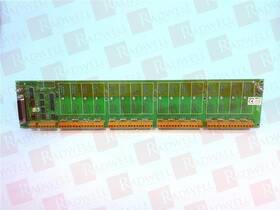
( Brand: Analog Devices ), ( Manufacturer Part Number: 6BP16-2 ), ( Part Type: Module )
Review ANALOG DEVICES 6bp162 Used
The **Analog Devices AD6BP16-2 (or AD6BP162)** is a high-performance, dual-channel, low-noise, rail-to-rail input operational amplifier designed for precision analog signal processing applications. Part of Analog Devices **AD6BP** series, this amplifier is engineered to deliver exceptional accuracy, stability, and dynamic performance while maintaining minimal power consumption. With its **rail-to-rail input and output** capabilities, the AD6BP16-2 excels in applications where maximum signal swing is critical, such as in data acquisition systems, sensor signal conditioning, and high-fidelity audio processing. The device features an **ultra-low input-referred noise voltage** of just **1.2 nV/ Hz** at 1 kHz, ensuring superior signal integrity in noise-sensitive environments. Its **wide input common-mode voltage range** (extending nearly to the supply rails) allows for flexible signal conditioning without the need for additional offset adjustments, while the **high open-loop gain** of **120 dB** minimizes nonlinear distortion, making it ideal for precision measurements.
The AD6BP16-2 is housed in a compact **16-lead TSSOP package**, which facilitates easy integration into space-constrained designs while maintaining robust thermal performance. Its **low supply current** of just **1.2 mA per amplifier** (totaling **2.4 mA for dual channels**) ensures efficient operation in battery-powered or low-power systems, making it suitable for portable instrumentation and IoT applications. The amplifier s **fast slew rate of 12 V/ s** and **bandwidth of 12 MHz** enable high-speed signal processing without sacrificing accuracy, while its **low input bias current** of **10 pA** reduces errors in high-impedance sensor interfaces. Additionally, the device incorporates **internal frequency compensation**, simplifying design efforts by eliminating the need for external components to stabilize gain configurations.
Designed with **high precision in mind**, the AD6BP16-2 offers **low offset voltage drift** (just **0.5 V/ C**) and **excellent temperature stability**, ensuring reliable performance across a wide operating temperature range of **-40 C to 125 C**. Its **rail-to-rail output swing** (within 10 mV of either supply rail) maximizes dynamic range, while the **low output impedance** of **50 ** ensures clean signal delivery to subsequent stages. The amplifier s **dual-channel configuration** allows for parallel processing of two independent signals, making it highly versatile for applications such as **differential measurement systems, bridge amplifiers, and multi-channel data acquisition**. With its combination of **low noise, high precision, and compact form factor**, the AD6BP16-2 is an excellent choice for engineers seeking a high-performance, cost-effective solution in demanding analog signal processing applications.
### **Pros and Cons of buying a Analog Devices AD6BP16-2 (or AD6BP162)**
The **AD6BP16-2** (or **AD6BP162**) is a **16-bit, 100 MSPS (Mega Samples Per Second) Analog-to-Digital Converter (ADC)** module from Analog Devices, designed for high-speed data acquisition applications. Below is a detailed analysis of its advantages and disadvantages.
---
### **Pros**
1. **High Sampling Rate (100 MSPS)**
- Ideal for applications requiring fast signal acquisition, such as radar, communications, and high-speed instrumentation.
- Capable of capturing transient signals with minimal loss of detail.
2. **16-Bit Resolution**
- Provides excellent dynamic range (typically **96 dB SNR**), making it suitable for precise measurements in RF, audio, and industrial sensing.
- Reduces quantization noise compared to lower-bit ADCs.
3. **Low Latency & High Throughput**
- The module is optimized for real-time processing, making it useful in embedded systems and FPGA-based designs.
- Supports high-speed data streaming to memory or processing units.
4. **Differential Inputs**
- Features **dual differential inputs**, improving noise immunity and allowing for better signal integrity in noisy environments.
5. **Integrated Amplifiers (Optional)**
- Some variants include **programmable gain amplifiers (PGAs)**, which help in conditioning weak signals before conversion.
6. **Compatibility with FPGA & DSP**
- Designed to work seamlessly with **Xilinx, Altera (Intel), and other FPGA platforms**, reducing development complexity.
- Supports **JESD204B** (for high-speed serial interfaces) and **LVDS** (for parallel data transfer).
7. **Wide Input Range**
- Typically supports ** 1V to 2V differential inputs**, allowing flexibility in signal conditioning.
8. **Low Power Consumption (Relative to Speed Class)**
- While high-speed ADCs generally consume power, the AD6BP16-2 is optimized for efficiency compared to similar 100 MSPS devices.
9. **Analog Devices Reliability & Support**
- Analog Devices is a trusted manufacturer with strong technical documentation, evaluation boards, and customer support.
- Backward compatibility with other ADI components (e.g., DACs, amplifiers) can simplify system design.
10. **Evaluation & Development Kits Available**
- Analog Devices provides **evaluation boards (e.g., AD6BP162-EBZ)** that simplify prototyping and testing.
- Reduces risk in early-stage development.
---
### **Cons**
1. **High Cost**
- As a **high-performance ADC**, the AD6BP16-2 is **expensive** compared to lower-speed or lower-resolution alternatives.
- Cost may be a barrier for small-scale or budget-constrained projects.
2. **Complexity in Design**
- Requires **careful PCB layout** to minimize noise and signal integrity issues at 100 MSPS.
- May need **external buffering, filtering, and clocking solutions**, increasing system complexity.
3. **Power Supply Requirements**
- High-speed ADCs often require **stable, low-noise power supplies** (e.g., 5V or 12V).
- Poor power conditioning can degrade performance.
4. **Heat Dissipation**
- Operating at high speeds generates **heat**, requiring proper thermal management (e.g., heatsinks, PCB thermal vias).
- May limit integration in compact or space-constrained systems.
5. **Limited Single-Ended Inputs**
- Unlike some ADCs, the AD6BP16-2 primarily supports **differential inputs**, which may require additional circuitry for single-ended signals.
6. **JESD204B Complexity (If Used)**
- If interfacing via **JESD204B**, additional **FPGA logic** is needed for serialization/deserialization, increasing design complexity.
- Parallel LVDS interfaces may be simpler but still require careful timing.
7. **Availability & Lead Times**
- High-demand components (especially in RF/defense applications) may have **longer lead times** or limited stock.
- Check with distributors (e.g., Digi-Key, Mouser) for real-time availability.
8. **Competition from Alternatives**
- Other manufacturers (e.g., **Texas Instruments, ADI s own AD9680, or LTC2255**) offer similar high-speed ADCs with varying trade-offs (e.g., power, cost, features).
- May require comparison to find the best fit for a specific application.
9. **Signal Conditioning Needed**
- Real-world signals often require **anti-aliasing filters, amplifiers, or impedance matching** before feeding into the ADC.
- Additional components increase system cost and complexity.
10. **Learning Curve for New Users**
- High-speed ADC design is **not beginner-friendly** requires knowledge of **clocking, jitter, and FPGA interfacing**.
- May necessitate additional training or external expertise.
---
### **Conclusion & Recommendation**
#### **When to Buy the AD6BP16-2 (or AD6BP162)**
- **Best for applications requiring:**- **Ultra-high-speed data acquisition (100 MSPS ).**
- **High dynamic range (16-bit resolution) in RF, radar, or communications.**
- **Integration with FPGA/DSP for real-time processing.**
- **Differential signal inputs with low noise requirements.**
- **Ideal industries:**- **Defense & aerospace (radar, EW systems).**
- **Wireless communications (test equipment, baseband processing).**
- **Industrial sensing (high-speed motor control, vibration analysis).**
- **Scientific research (high-speed spectroscopy, medical imaging).**
#### **When to Consider Alternatives**
- **If budget is a constraint**, consider:- **AD9680 (14-bit, 125 MSPS)** Slightly lower resolution but often cheaper.
- **LTC2255 (12-bit, 125 MSPS)** Lower power, simpler interface.
- **TI s ADS54xx series** Alternative high-speed ADCs with different feature sets.
- **If lower speed is acceptable**, **8-bit or 10-bit ADCs (e.g., AD9270, MAX106)** may suffice for simpler applications.
- **If single-ended inputs are needed**, check for ADCs with built-in differential-to-single-ended conversion.
#### **Final Recommendation**
The **AD6BP16-2 (AD6BP162)** is an **excellent choice for high-performance, high-speed data acquisition** where **cost is not the primary concern**. Its **16-bit resolution, 100 MSPS sampling rate, and FPGA-friendly interface** make it a strong option for **RF, radar, and communications systems**.
However, **careful consideration of power supply, thermal management, and signal conditioning** is essential. If the application can tolerate **slightly lower resolution or speed**, exploring alternatives may lead to **cost savings without significant performance loss**.
**For most professional-grade high-speed ADC applications, the AD6BP16-2 is a reliable and capable choice provided the budget and system complexity can accommodate it.** For smaller or lower-speed projects, alternatives should be evaluated first.
Details:
Sells new and surplus product develops channels to purchase such. All products are guaranteed to be working but may show signs of use if purchasing a used product. Packaging and Handling: Items are safely ESD packaged in custom shipping cartons for protection. ANALOG DEVICES 6BP16-2 / 6BP162 USED BACKPLANE MODULE 16-CHANNEL.
Call to use a shipping service other than the ones listed.
part #: 6bp162 prices
- $156.90-$299.99
specifications sensoindustria:
- brand: Analog Devices
- mpn: 6bp16-2
- part type: Module
returns sensoindustria:
- method: Money back
- policy: Returns Accepted
- time: 30 Days
- paid by: Buyer
seller sensoindustria:
- rating: 99.5%
- city: 1 Millennium Dr, Willingboro, NJ 08046
- # reviews: 190929
payments sensoindustria:
- credit card: Diners-club
- wallet: Apple-pay
- other
general sensoindustria:
- condition: Used
- PLCs HMIs > PLC Peripheral Modules > PLC Input Output Modules
offer sensoindustria:
- quantity: 1
- started: February 19, 2026
- options: Ship-to-home
- sold: 0
- availability: In Stock
shipping sensoindustria:
- cost: $12.90
- service: Standard
- class: Standard
- transit: 30-35 Days
- type: Fixed
Analog Devices 6BP16-2 Is Similar To:
- 1746ni4 Allen Bradley Lot Of Used Slc Analog Input Module (21.5% similar) Lot of NI4 used in production operational when removed...(April 11th, 2018)
- 3b18-00 Analog Devices Wideband Strain (43.2% similar) Analog Devices...(September 28th, 2017)
- 3b30-01 Analog Devices Input Module Used (57.9% similar) If another carrier such as ups or FedEx is required to ship due the size, then shipping costs may change...(May 21st, 2018)
- 3b31-03 Analog Devices Isolated Input Module (45% similar) Analog Devices 3B31-03 isolated v input module...(September 2nd, 2018)
- 3b40-03 Analog Devices Reduced Device (46.6% similar) Used removed from service in working condition. Removed from clean test environment. This device must be installed by a licensed electrician tech and tested after installation...(October 20th, 2017)
- 400-0031-000 Winsystems Analog Output Module Used (32.9% similar) Removed from closed plant. Win systems Analog output module condition: new, in box no old inventory used, but good working condition. Please open a return via. For expedited shipping options. Qty some exceptions may apply...(February 12th, 2019)
- 500-5016 Siemens Ti Two Channel Analog Output Module Used (30.1% similar) For sale is a ti Siemens two channel Analog output module - used no wiring terminals...(July 21st, 2018)
- 51304453-100 Honeywell Used Analog Input Sti Termination Board Rev (17.6% similar) This is a used Honeywell Analog input high level sit termination board. If an item is over 5,000. Pre-purchase inspection: if you would like to arrange for a technician come in and test unit or inspect before purchase, please any time make arrangements. Please with any questions. Model: MU-TAIH02 ...(May 8th, 2018)
- 51304481-100 Honeywell Used Ucn Low Level Analog Input Card Hdw Fw (19.6% similar) If an item is over 5,000. Pre-purchase inspection: if you would like to arrange for a technician come in and test unit or inspect before purchase, please any time make arrangements. This is a used Honeywell low level Analog input card. If you would like to schedule an appointment inspect item, or ...(May 4th, 2018)
- 51309152-175 Honeywell Used Ucn Analog Output Card Hwd Fw (21.5% similar) Pre-purchase inspection: if you would like to arrange for a technician come in and test unit or inspect before purchase, please any time make arrangements. If you would like to schedule an appointment inspect item, or pick it up, please directly. Save thousands and buy used from green industrial ...(March 6th, 2019)
- 57120001-dp Abb Analog Input Module As Pictured Used (34.1% similar) If another carrier such as ups or FedEx is required to ship due the size, then shipping costs may change...(March 26th, 2018)
