TEXAS INSTRUMENTS PLC 5TI-5020 Siemens
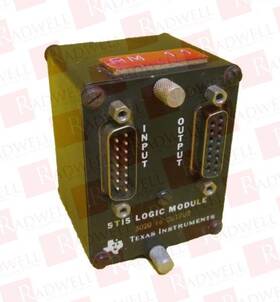
( Brand: Texas Instruments Plc ), ( Manufacturer Part Number: 5TI-5020 )
Review TEXAS INSTRUMENTS PLC Siemens 5ti5020 Used
The **Siemens PLC 5TI-5020** is a robust and versatile programmable logic controller (PLC) designed to meet the demanding requirements of industrial automation, particularly within applications requiring high reliability, modular flexibility, and seamless integration into legacy or modern control systems. Part of Siemens proven **SIMATIC S7-500 series**, this compact yet powerful controller is engineered to deliver exceptional performance in environments where precision, durability, and scalability are critical. The **5TI-5020** features a **20-bit architecture**, enabling it to handle complex control tasks with efficiency, including high-speed counting, precise timing, and advanced communication protocols. Its **CPU module** is built with a **16 MHz clock speed**, ensuring rapid processing of instructions and real-time responsiveness, which is essential for applications such as machine control, process automation, or discrete manufacturing where timing and accuracy are non-negotiable.
One of the standout attributes of the **5TI-5020** is its **modular design**, allowing users to configure the system precisely to their needs by expanding memory, I/O capacity, or communication interfaces. The controller supports up to **16 MB of user memory**, providing ample space for extensive programming, data storage, and complex logic sequences, while its **128 KB of program memory** ensures that even the most intricate control algorithms can be executed without performance bottlenecks. The **5TI-5020** also incorporates **high-speed counters** (up to 64 kHz) and **timers** with resolutions as fine as **1 s**, making it ideal for applications requiring precise motion control, synchronization, or event-based operations. Additionally, its **integrated watchdog timer** enhances system reliability by continuously monitoring the CPU s operation and resetting the controller if a failure is detected, thereby minimizing downtime and ensuring uninterrupted production.
Communication capabilities are another cornerstone of the **5TI-5020**, offering seamless connectivity to a wide range of devices and networks. The controller supports **PROFIBUS DP**, a robust industrial communication standard that facilitates high-speed data exchange with sensors, actuators, and other PLCs, enabling distributed control architectures. It also includes **AS-i (Actuator Sensor Interface)** ports for simple yet efficient communication with binary I/O devices, reducing wiring complexity in field installations. For higher-level integration, the **5TI-5020** can interface with **SIMATIC NET** or other industrial Ethernet protocols, allowing it to communicate with HMIs, SCADA systems, or enterprise-level software for centralized monitoring and control. This versatility ensures that the PLC can be easily integrated into both standalone and networked automation environments, adapting to the evolving needs of modern manufacturing and process industries.
Physically, the **5TI-5020** is housed in a **compact, ruggedized chassis** designed to withstand the harsh conditions of industrial settings, including temperature fluctuations, vibration, and electromagnetic interference. Its **backplane-mounted design** allows for easy expansion by adding additional I/O modules, power supplies, or communication modules as required, without compromising the system s stability. The controller s **front-panel indicators** provide real-time status updates, including power, run, fault, and communication status, making troubleshooting and maintenance straightforward. Furthermore, the **5TI-5020** is compatible with **SIMATIC STEP 7** programming software, a user-friendly yet powerful development environment that supports structured text, ladder logic (LD), function block diagrams (FBD), and other programming languages, catering to engineers with varying levels of expertise. This flexibility ensures that the PLC can be programmed efficiently, whether for simple control logic or sophisticated automation sequences.
In summary, the **Siemens PLC 5TI-5020** is a dependable and high-performance controller that bridges the gap between legacy automation systems and modern industrial demands. Its **20-bit processing power**, **modular expandability**, **high-speed I/O**, and **comprehensive communication options** make it an excellent choice for applications ranging from discrete manufacturing to process control. Whether deployed in a small-scale machine control setup or integrated into a larger distributed automation network, the **5TI-5020** delivers the reliability, precision, and scalability required to optimize productivity and operational efficiency. With its robust construction, intuitive programming environment, and seamless compatibility with Siemens ecosystem of automation products, this PLC remains a trusted workhorse in industrial automation for decades to come.
### **Pros and Cons of buying a Texas Instruments (TI) 5TI-5020 (Siemens TI5020) PLC**
#### **Pros**
1. **Compatibility with Siemens Systems**
- The TI5020 is designed to integrate seamlessly with Siemens TIA Portal and other Siemens automation platforms, reducing compatibility issues in industrial environments where Siemens hardware is already in use.
2. **High Performance and Reliability**
- As a Texas Instruments (TI) PLC, it is built on robust industrial-grade components, offering stable performance in harsh factory environments. It supports high-speed processing and real-time control, making it suitable for demanding applications.
3. **Scalability**
- The TI5020 supports modular expansion, allowing users to add I/O modules, communication interfaces, or additional processing power as their automation needs grow. This flexibility makes it a long-term investment.
4. **Advanced Communication Protocols**
- It supports multiple communication protocols, including **PROFINET, EtherNet/IP, Modbus TCP, and PROFIBUS DP**, enabling seamless integration with other PLCs, HMIs, and SCADA systems. This versatility simplifies networked automation setups.
5. **Energy Efficiency**
- Modern TI PLCs, including the TI5020, are designed with energy-saving features, reducing power consumption compared to older models while maintaining high performance.
6. **Support for Modern Industrial Standards**
- The TI5020 aligns with **IEC 61131-3** programming standards, ensuring compatibility with widely used programming languages (Ladder Logic, Structured Text, Function Block Diagram, etc.). It also supports **OPC UA**, a key standard for industrial data exchange.
7. **Cost-Effective Alternative to Siemens PLCs**
- While it is a Texas Instruments product, its compatibility with Siemens software and hardware can sometimes provide a cost-effective alternative to purchasing a full Siemens PLC, especially if Siemens licenses are already in use.
8. **Good Documentation and Community Support**
- Texas Instruments and Siemens provide extensive documentation, tutorials, and technical support. Additionally, the PLC has a user base that contributes to forums and troubleshooting resources.
9. **Compact and Space-Efficient Design**
- The TI5020 is designed to fit into standard industrial racks, making it suitable for installations where space is limited.
10. **Future-Proofing with TI s Advancements**
- Texas Instruments continues to innovate in industrial automation, and newer models may incorporate AI, predictive maintenance, or enhanced cybersecurity features. Upgrading paths may be available in the future.
---
#### **Cons**
1. **Limited Native Siemens Integration (Compared to Pure Siemens PLCs)**
- While the TI5020 works well with Siemens software, it is not a native Siemens product. Some advanced Siemens-specific features (e.g., certain TIA Portal tools or Siemens-exclusive communication protocols) may require additional configuration or workarounds.
2. **Potential Learning Curve for Siemens Users**
- Engineers familiar with Siemens PLCs (e.g., S7-1200, S7-1500) may need to adjust to the TI5020 s programming environment or hardware layout, especially if they are not accustomed to Texas Instruments tools.
3. **Dependence on Third-Party Support for Some Features**
- Certain advanced Siemens features (e.g., SIMATIC NET, advanced diagnostics tools) may not be fully optimized for the TI5020, requiring reliance on third-party solutions or manual adjustments.
4. **Limited Availability of Spare Parts**
- As a third-party PLC, spare parts (e.g., specific I/O modules, power supplies) may be harder to source compared to Siemens widely distributed components. This could lead to longer wait times for replacements.
5. **Potential Compatibility Issues with Legacy Siemens Systems**
- Older Siemens systems (e.g., pre-TIA Portal) may require additional drivers or firmware updates to work smoothly with the TI5020, adding complexity to integration.
6. **Licensing Costs for Siemens Software**
- If using **Siemens TIA Portal** for programming and debugging, users must still purchase Siemens licenses, which can be expensive. The TI5020 does not reduce these costs.
7. **Cybersecurity Considerations**
- Like all industrial PLCs, the TI5020 must be secured against cyber threats. While it supports modern security protocols (e.g., OPC UA with encryption), users must implement best practices (firmware updates, network segmentation) to mitigate risks.
8. **Limited Long-Term Vendor Support from TI**
- Texas Instruments is primarily known for semiconductors and DSPs, not industrial automation. While the TI5020 is a robust PLC, long-term technical support and product roadmaps may not be as extensive as those from dedicated automation vendors like Siemens or Allen-Bradley.
9. **Potential for Higher Total Cost of Ownership (TCO)**
- While the initial purchase price may be competitive, long-term costs (training, support, spare parts, and potential compatibility issues) could outweigh the savings of choosing a pure Siemens PLC in some cases.
10. **Firmware and Software Updates**
- Updates for the TI5020 may be less frequent or less comprehensive than those for Siemens PLCs, potentially leaving users with older firmware that may lack critical security patches or feature improvements.
---
### **Conclusion**
The **Texas Instruments TI5020 (Siemens TI5020) PLC** is a strong contender for applications where **Siemens compatibility is essential**, but it is not a direct replacement for a pure Siemens PLC. It excels in **performance, scalability, and modern communication protocols**, making it ideal for industries needing **high-speed control, modular expansion, and multi-protocol support**.
However, **integration challenges, potential support limitations, and licensing costs** for Siemens software must be carefully considered. If your automation system **already relies on Siemens TIA Portal** and you need a **cost-effective, high-performance PLC with Siemens-like compatibility**, the TI5020 is a viable choice. For **pure Siemens ecosystems** or applications requiring **deep integration with Siemens-specific tools**, a native Siemens PLC (e.g., S7-1500 or S7-1200) may be more straightforward.
---
### **Recommendation**
**Buy the TI5020 if:**- You are using **Siemens TIA Portal** and need a **high-performance, modular PLC** with **PROFINET/EtherNet/IP support**.
- Your budget is constrained, and you want to **avoid full Siemens PLC costs** while maintaining compatibility.
- Your application requires **fast processing, multiple communication protocols, and scalability**.
- You have **in-house expertise** or are willing to **train on TI s programming environment**.
**Avoid the TI5020 if:**- You need **deep integration with Siemens-specific tools** (e.g., advanced diagnostics, SIMATIC NET).
- Your system relies **heavily on Siemens legacy hardware** with known compatibility issues.
- **Spare parts availability** is a critical concern, and you prefer Siemens global support network.
- You require **long-term vendor commitment** and prefer a dedicated automation provider like Siemens.
**Alternative Considerations:**- If **full Siemens integration is non-negotiable**, opt for a **Siemens S7-1500 or S7-1200** for smoother compatibility.
- If **cost and flexibility** are priorities, explore **Allen-Bradley (Rockwell) ControlLogix** or **Beckhoff TwinCAT**, which also offer strong Siemens-like features.
- For **smaller applications**, a **Siemens S7-200** or **TI s smaller PLC models** (if available) may be more suitable.
Ultimately, the TI5020 is a **solid hybrid choice** for users bridging Siemens software with TI s hardware strengths, but careful planning is required to address potential integration gaps.
Details:
Sells new and surplus product develops channels to purchase such. Call to use a shipping service other than the ones listed. All products are guaranteed to be working but may show signs of use if purchasing a used product. Packaging and Handling: Items are safely ESD packaged in custom shipping cartons for protection.
part #: 5ti5020 prices
- $46.49-$100.00
specifications sensoindustria:
- brand: Texas Instruments Plc
- mpn: 5ti-5020
payments sensoindustria:
- wallet: Paypal
- credit card: Discover
- other
seller sensoindustria:
- # reviews: 197959
- rating: 99.6%
- city: 1 Millennium Dr, Willingboro, NJ 08046
shipping sensoindustria:
- type: Fixed
- cost: $12.90
- class: Standard
- transit: 23-35 Days
- service: Standard
returns sensoindustria:
- paid by: Buyer
- policy: Returns Accepted
- method: Money back
- time: 30 Days
offer sensoindustria:
- sold: 0
- quantity: 1
- started: April 4, 2026
- availability: In Stock
- options: Ship-to-home
general sensoindustria:
- condition: Used
- PLCs HMIs > PLC Peripheral Modules > PLC Input Output Modules
Texas Instruments Plc 5TI-5020 Is Similar To:
- 2586265-0003 Siemens New Texas Instruments (35.8% similar) This item is new in original packaging from the manufacturer, opened for inspection by our QC department...(December 7th, 2017)
- 305-01n Texas Instruments Input Module (48.4% similar) ...(December 5th, 2017)
- 305-02b Texas Instruments Series Plc Modules (47.4% similar) 305-02B main module D3-16TR D3-16NE3...(July 23rd, 2018)
- 305-05b Texas Instruments Programmable Controller Unit Cpu (45% similar) Inspected and tested for functionality through spartan integrated systems...(May 30th, 2018)
- 305-10t Texas Instruments Insturments Output Module (51.9% similar) ...(March 4th, 2018)
- 305-35t-c Texas Instruments 24vdc Output (47.3% similar) Shipping quotes are for the USA lower 48 states only. Please for shipping quote...(January 23rd, 2018)
- 305-55t Texas Instruments Output Module Used (51.5% similar) If another carrier such as ups or FedEx is required to ship due the size, then shipping costs may change...(October 25th, 2018)
- 500-2101 Texas Instruments Model Channel Controller (36.5% similar) Items are sold as is. Shipping: domestic shipping is to the lower 48 us. A small shipping charge is added to items purchased for less than 100 and weighing more 20 lbs. This charge is for shipping, handling and materials. All prices are negotiable...(March 19th, 2018)
- 500-2151a Siemens Ti Texas Instruments Power Supply Module (41.4% similar) ...(August 2nd, 2018)
- 500-50 Siemens Texas Instruments Output Module (44.4% similar) ...(August 16th, 2018)
- 500-5005 Texas Instruments Model Input Module Vac (37.3% similar) LOC:05 describe. We primary injection test and secondary all breakers that are listed as tested. Most items ship same day...(March 12th, 2019)
