SCHNEIDER 140-DAO-842-10 Module Tsx Quantum 3595861126985 Dao
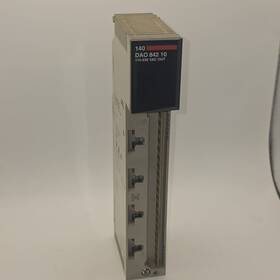
( Brand: Schneider ), ( Manufacturer Part Number: 140-DAO-842-10 ), ( Part Type: Module ), ( Country Of Origin: United States ), ( UPC: 595861126985 )
Review SCHNEIDER 140 Dao 842 Output Module Tsx Quantum
The **Schneider Electric TXQ Quantum 140 DAO 842 10 Module (Part Number: 595861126985)** is a high-performance, modular digital input/output (I/O) device designed to integrate seamlessly into modern industrial automation and control systems. Part of Schneider Electric s advanced **TXQ Quantum** series, this module represents a cutting-edge solution for applications requiring precise, scalable, and reliable data acquisition and control. Built with robust engineering, the **140 DAO 842 10** module features **10 discrete analog outputs**, each capable of delivering a high-precision, configurable voltage or current signal (0 10 VDC or 0 20 mA) with exceptional accuracy and stability. Its **140-series** designation underscores its compatibility with Schneider s **Modbus, Profibus, Ethernet/IP, and other industrial communication protocols**, ensuring seamless interoperability with PLCs, HMIs, and SCADA systems. The module s **842** variant emphasizes its **isolated design**, providing enhanced protection against electrical noise, voltage spikes, and ground loops critical for harsh industrial environments where reliability is non-negotiable. With a **10-channel output configuration**, it offers flexibility for applications such as motor control, process automation, sensor actuation, or signal conditioning, where multiple analog outputs must be managed in a compact, space-efficient package. The **TXQ Quantum** platform itself leverages Schneider s **Quantum** architecture, which combines **high-speed processing, deterministic communication, and energy-efficient operation**, making it ideal for next-generation automation systems demanding both performance and sustainability. Whether deployed in manufacturing, energy management, or building automation, this module ensures **consistent, repeatable output performance** with minimal latency, supported by Schneider s **industry-leading diagnostics and remote monitoring capabilities**. Its **modular design** allows for easy integration into larger systems, while its **compliance with international safety and environmental standards** (such as IEC 61131-2, UL, and CE) guarantees long-term operational integrity. For engineers and system integrators seeking a **highly configurable, future-proof I/O solution**, the **Schneider Electric TXQ Quantum 140 DAO 842 10 Module** delivers unmatched precision, scalability, and industrial resilience.
### **Pros and Cons of buying a Schneider Electric TXQ Quantum (Model 595861126985, 140 DAO 842, 10 Module, TSX Quantum)**
#### **Pros**
1. **High Reliability and Durability**
The TXQ Quantum series is part of Schneider Electric s industrial automation lineup, known for robust construction and long-term performance in harsh environments. The modular design ensures components can be replaced without replacing the entire unit, extending its lifespan.
2. **Scalability and Flexibility**
The 10-module configuration allows for expansion or reconfiguration based on future needs. This modularity makes it adaptable to changing process control requirements without major overhauls.
3. **Advanced Safety Features**
The TXQ Quantum includes built-in safety functions (e.g., fail-safe outputs, diagnostics, and compliance with IEC 61508/SIL standards). This reduces the need for additional safety relays or PLCs, simplifying system design and improving overall safety.
4. **Enhanced Diagnostics and Maintenance**
Schneider s Quantum platform provides detailed diagnostics via its built-in web server and integration with tools like EcoStruxure. Predictive maintenance features help prevent downtime by alerting operators to potential issues before they escalate.
5. **Compatibility with EcoStruxure Architecture**
The TXQ Quantum integrates seamlessly with Schneider s EcoStruxure platform, enabling cloud connectivity, remote monitoring, and advanced analytics. This supports Industry 4.0 initiatives and data-driven decision-making.
6. **Energy Efficiency**
Schneider Electric products are designed with energy-saving features, such as low-power modes and optimized control algorithms, which can reduce operational costs over time.
7. **Support for High-Speed I/O**
The 140 DAO (Digital Analog Output) modules support high-speed data acquisition and control, making it suitable for applications requiring precise timing and synchronization (e.g., motion control, process automation).
8. **Vendor Support and Warranty**
As a Schneider Electric product, it benefits from extensive technical support, global distribution, and warranty coverage. Schneider s reputation ensures availability of spare parts and firmware updates for the product s lifecycle.
9. **Future-Proofing**
The TXQ Quantum is designed with modern communication protocols (e.g., Ethernet/IP, Modbus TCP, PROFINET) and supports emerging standards, reducing the risk of obsolescence.
10. **Cost-Effective for Large-Scale Deployments**
While the upfront cost may be higher than basic PLCs, the long-term benefits such as reduced maintenance, improved safety, and scalability often justify the investment in industrial applications.
---
#### **Cons**
1. **High Initial Cost**
The TXQ Quantum is a premium product, and the 10-module configuration will likely be more expensive than entry-level PLCs or basic automation controllers. This may be a barrier for small businesses or startups with limited budgets.
2. **Complexity in Setup and Programming**
The advanced features of the TXQ Quantum require skilled engineers familiar with Schneider s software (e.g., EcoStruxure Machine Expert, Unity Pro) and programming languages like Structured Text or Ladder Logic. Training costs and learning curves can add to the total expense.
3. **Dependency on Schneider s Ecosystem**
While the EcoStruxure integration is a strength, it also creates vendor lock-in. Migrating to other automation platforms (e.g., Siemens, Allen-Bradley) in the future may require significant rework or additional costs.
4. **Potential Overkill for Simple Applications**
If the application only requires basic control logic (e.g., on/off operations, simple sequencing), the TXQ Quantum s advanced features may be unnecessary, making a lower-cost PLC (e.g., Siemens S7-1200, Allen-Bradley Micro800) a more economical choice.
5. **Maintenance and Training Requirements**
The advanced diagnostics and safety features, while beneficial, also require ongoing training for operators and technicians. Without proper training, the system s full potential may not be realized, leading to inefficiencies.
6. **Limited Offline Programming Capabilities**
Unlike some competitors (e.g., Rockwell Studio 5000), Schneider s software may have fewer offline simulation tools, which can slow down development and testing phases.
7. **Physical Size and Installation Space**
The modular design, while flexible, may require more installation space compared to compact PLCs. This could be a constraint in applications with limited panel space.
8. **Licensing Costs for Advanced Features**
Some advanced functionalities (e.g., high-availability clustering, advanced motion control) may require additional software licenses, increasing the total cost of ownership.
9. **Potential for Compatibility Issues**
While Schneider s products are widely compatible, integrating the TXQ Quantum with legacy systems or third-party devices may require additional gateways or interfaces, adding complexity.
10. **Resale Value and Depreciation**
Like most industrial automation equipment, the TXQ Quantum will depreciate over time. While Schneider products hold value, the resale market for high-end PLCs can be limited, making it less attractive for businesses planning to upgrade frequently.
---
### **Conclusion**
The **Schneider Electric TXQ Quantum (Model 595861126985, 140 DAO 842, 10 Module)** is a high-performance, scalable, and feature-rich automation controller ideal for industries requiring robust safety, advanced diagnostics, and long-term reliability. Its strengths lie in its integration with Schneider s EcoStruxure platform, predictive maintenance capabilities, and adaptability to complex control systems. However, the high upfront cost, complexity, and vendor dependency may not align with the needs of smaller operations or applications with simpler requirements.
### **Recommendation**
- **Buy if:**- You are investing in a long-term industrial automation solution with a focus on safety, scalability, and data-driven operations.
- Your application requires high-speed I/O, advanced diagnostics, or compliance with high SIL ratings (e.g., manufacturing, process control, critical infrastructure).
- You are already using or plan to adopt Schneider Electric s EcoStruxure ecosystem for unified automation and IT convergence.
- Budget constraints are not a limiting factor, and the total cost of ownership (including maintenance and efficiency gains) justifies the premium.
- **Avoid if:**- Your application is simple (e.g., basic motor control, discrete sequencing) and a lower-cost PLC (e.g., Siemens S7-1200, Allen-Bradley CompactLogix) would suffice.
- You have limited budget for training or technical support, as the system s complexity requires skilled personnel.
- You prioritize flexibility to switch vendors in the future, as the TXQ Quantum is tightly integrated with Schneider s ecosystem.
- Your installation space is constrained, and a compact PLC would be more practical.
For most **large-scale industrial, safety-critical, or data-intensive applications**, the TXQ Quantum is a **strong recommendation** due to its reliability and future-proofing. For smaller or simpler applications, evaluating alternatives like mid-range PLCs may be more cost-effective. Always conduct a detailed cost-benefit analysis and pilot testing before committing to large-scale deployment.
Details:
Worked great when removed. Tote 4 item 44. Good working used condition.
part #: 140dao84210 prices
- $390.00-$949.99
specifications sensoindustria:
- brand: Schneider
- mpn: 140-dao-842-10
- part type: Module
- country of origin: United States
- upc: 595861126985
returns sensoindustria:
- policy: Returns Accepted
- time: 30 Days
- method: Money back
- paid by: Buyer
shipping sensoindustria:
- cost: $0.00
- class: Standard
- carrier: USPS
- type: Calculated
- service: USPS Ground Advantage
- transit: 3-7 Days
payments sensoindustria:
- wallet: Apple-pay
- credit card: Visa
- other
offer sensoindustria:
- started: March 23, 2026
- quantity: 8
- availability: In Stock
- options: Ship-to-home
- best offers: True
- sold: 0
seller sensoindustria:
- rating: 99.8%
- # reviews: 4996
- city: Lake Orion, Michigan
general sensoindustria:
- condition: Used
- PLCs HMIs > PLC Peripheral Modules > PLC Input Output Modules
Schneider 140-DAO-842-10 Is Similar To:
- 140-aco-020-00 Modicon Brand New Schneider Electric Tsx Quantum An Out Current (31.4% similar) ...(September 24th, 2018)
- 140-aco-130-00 Modicon Schneider 140aco13000 Tsx 00785901327004 (34.8% similar) All factory sealed items must be unopened. The cut-off time for expedited shipping is 7 PO. Item must be in its original condition. Right part original new factory sealed products with the latest mfg dates and firmware releases. What makes us different is our 3 r business philosophy: right part in ...(January 27th, 2018)
- 140-ati-030-00 Schneider Modicon Thermocouple Input Module Tsx Tb (40% similar) This item is used. Schneider mod icon 140ATI03000 Thermopylae input module 140-ATI tsx tb manufacturer: model: type: used, in working condition. Marketing, listing apps, application...(March 7th, 2018)
- 140-ddi-841-00 Schneider Electric Modicon Vdc Sink Input Module New Tb (33.1% similar) Marketing, listing apps, application. Schneider mod icon 140DDI84100 CDC sink input module 140-DDI new tb manufacturer: model: type: new, in working condition. This item is new...(April 7th, 2018)
- 140-ddi-853-00 Schneider Automation Modicon Tsx Quantum Ch Input (43.2% similar) This item has been fully tested by our tech department and is in good working condition...(January 23rd, 2019)
- 140-ddo-843-00 Schneider Module Dc Out Source (35% similar) 60 CDC 2X8 source module switches discrete output mod icon quantum - 16 o these are refurbished and tested good from MRI electric supply company. 60 v dc quantum 140DDO84300 mod icon DOD output 10-60VDC 2X8 source the external power supplies may be mixed between groups. 2-SCHNEIDER 140-DDO I o ...(June 17th, 2019)
- 140ac002000 Modicon Schneider Quantum Output Module New In Box (40.9% similar) Schneider mod icon quantum 140AC002000 output module new in box location B1-D1-S2312-19-18...(December 19th, 2018)
- 140avi03000 Schneider Automation Tsx Quantum (45.4% similar) Smaller items will normally ship USPS and heavier FedEx ground. Please only bid if you understand this. Combined shipping: take 3 off shipping for each offer won after the first, if items are paid together...(October 5th, 2017)
- 140avo02000 Schneider Electric Analog Output (33.6% similar) If another carrier such as ups or FedEx is required to ship due the size, then shipping costs may change...(February 2nd, 2018)
- 140chs11000 Schneider Tsx Quantum S911 (37.2% similar) For cancelled orders, a 35 service fee will apply. 80 lbs shipping dimensions: Schneider 140CHS11000 tsx quantum S911 hot standby module D575895 product specifications brand: condition: used model: model line: shipping weight. Our daily shipping cut-off is 3:00PM eastern time...(August 31st, 2017)
- 140cps11410 Schneider Electric New Modicon Tsx Quantum Ac Power Supply (38.6% similar) This item details you are buying on:one new in non-original box Schneider electric 140CPS11410 mod icon tsx quantum ac power supply 115 230V to some hardware products may contain software and not be legally operated without first purchasing a proper license from the manufacturer of such. Notes:...(May 6th, 2018)
