ABB 53828U Bus Cluster Modem 3BSE013208R1
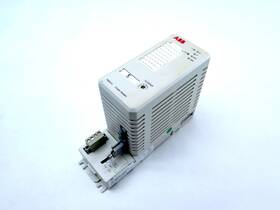
( Brand: Abb ), ( Manufacturer Part Number: 53828U ), ( Part Type: Modem )
Review ABB Bus Cluster Modem
The **ABB 53828U 3BSE013208R1 Bus Cluster Modem** is a high-performance, industrial-grade communication device engineered for robust and reliable data transmission within complex automation and control systems. Designed to operate seamlessly in demanding environments, this modem serves as a critical link between distributed control systems, PLCs (Programmable Logic Controllers), and other industrial networks, ensuring efficient and secure communication across vast and diverse infrastructure. Built with ABB s signature precision and engineering excellence, this device supports a wide range of communication protocols, including Modbus RTU, Profibus DP, and other fieldbus standards, making it an ideal solution for integration into factory automation, process control, and building management systems. Its robust construction features a compact yet durable housing, capable of withstanding harsh conditions such as temperature fluctuations, electrical noise, and mechanical stress, ensuring long-term reliability in industrial settings. The modem s advanced digital signal processing and error correction capabilities further enhance data integrity, minimizing disruptions and ensuring consistent performance even in challenging network conditions. Whether deployed in manufacturing plants, energy distribution networks, or critical infrastructure applications, the ABB 53828U 3BSE013208R1 Bus Cluster Modem delivers a dependable foundation for seamless communication, enabling real-time monitoring, control, and data exchange essential for modern industrial operations.
The **ABB 53828U (3BSE013208R1) Bus Cluster Modem** is a specialized communication device primarily used in industrial automation, particularly for connecting ABB drives, motors, and other control systems via the **Bus Cluster (BCL)** protocol. Below is a detailed analysis of its pros and cons, followed by a conclusion and recommendation.
---
### **Pros of the ABB 53828U Bus Cluster Modem**
1. **Compatibility with ABB Systems**
The modem is designed specifically for ABB s Bus Cluster communication protocol, ensuring seamless integration with ABB drives (e.g., ACS800, ACS880), motors, and other compatible devices. This eliminates the need for third-party adapters or converters in many ABB-based setups.
2. **Reliable Industrial Communication**
Bus Cluster is a robust, fieldbus-based protocol optimized for industrial environments, offering deterministic communication with low latency. The modem ensures stable data transmission between devices, reducing errors in control signals.
3. **Simplifies Wiring and Installation**
By replacing traditional point-to-point wiring (e.g., 4-20mA or analog signals) with a single Bus Cluster network, the modem reduces cable complexity and installation time, especially in large or distributed systems.
4. **Scalability**
The Bus Cluster network supports multiple devices (up to 32 nodes per segment), making it easy to expand or reconfigure systems without significant hardware changes. The modem facilitates this scalability by enabling communication between different ABB components.
5. **Diagnostic and Monitoring Capabilities**
Bus Cluster allows for real-time monitoring of motor and drive performance, fault detection, and parameter adjustments. The modem enables remote diagnostics, which can improve maintenance efficiency and reduce downtime.
6. **Backward and Forward Compatibility**
The 3BSE013208R1 model is part of ABB s Bus Cluster family, which has been widely used for decades. While newer ABB systems may support Ethernet or other protocols, the Bus Cluster modem remains relevant for legacy installations or mixed environments.
7. **Low Cost of Ownership for ABB Ecosystems**
For systems already using ABB drives and motors, purchasing the Bus Cluster modem can be cost-effective compared to migrating to alternative communication methods (e.g., Profibus, Modbus, or Ethernet/IP), which may require additional gateways or software.
8. **Redundancy and Fault Tolerance**
Bus Cluster supports redundant topologies (e.g., loop or star configurations), and the modem can help maintain communication integrity even if one device fails, improving system resilience.
9. **No Additional Software Licensing**
Unlike some communication protocols that require proprietary software (e.g., certain PLC systems), Bus Cluster operates at a hardware level, reducing software dependency and licensing costs.
10. **Proven Track Record**
ABB s Bus Cluster technology has a long history of reliability in industrial applications, particularly in motor control, HVAC, and process automation. The modem benefits from this established reputation.
---
### **Cons of the ABB 53828U Bus Cluster Modem**
1. **Limited to ABB Ecosystem**
The modem is **not compatible** with non-ABB devices (e.g., Siemens, Schneider Electric, or third-party drives). If your system requires integration with other brands, you ll need additional gateways or protocol converters, adding complexity and cost.
2. **Outdated Technology**
Bus Cluster is a legacy protocol compared to modern industrial standards like **Ethernet/IP, Profibus DP, Modbus TCP, or CC-Link**. While it works well for ABB systems, it lacks the flexibility and features of newer, more widely adopted protocols (e.g., support for higher data rates, integration with IoT platforms, or advanced diagnostics).
3. **No Built-in Security Features**
Bus Cluster does not natively support encryption, authentication, or cybersecurity measures common in modern industrial networks (e.g., TLS, VPNs, or firewalls). This makes the system vulnerable to unauthorized access or cyberattacks, which is a growing concern in industrial automation.
4. **Limited Distance and Speed**
Bus Cluster typically operates over **twisted-pair cables** with a maximum distance of **1,000 meters** (depending on configuration) and a data rate of **up to 1.5 Mbps**. This is sufficient for many applications but may be restrictive for large or high-speed systems. Ethernet-based solutions offer longer distances and higher speeds.
5. **Dependence on ABB Support**
As ABB continues to phase out Bus Cluster in favor of Ethernet-based protocols (e.g., ABB s **Drive Control Center** or **ABB Ability ** platforms), support for the modem may diminish over time. Future firmware updates or replacements may become harder to obtain.
6. **No Plug-and-Play with Modern HMI/SCADA**
Integrating Bus Cluster with modern **Human-Machine Interfaces (HMIs)** or **Supervisory Control and Data Acquisition (SCADA)** systems often requires custom programming or gateways. Ethernet-based protocols (e.g., Modbus TCP) are more easily compatible with off-the-shelf SCADA software.
7. **Single-Vendor Lock-In**
Purchasing the modem locks you into ABB s ecosystem. If you later decide to switch to a different drive or motor manufacturer, you may need to replace the entire communication infrastructure, leading to higher long-term costs.
8. **Limited Diagnostic and Remote Access Features**
While Bus Cluster allows basic diagnostics, it lacks the advanced features of modern protocols (e.g., predictive maintenance analytics, cloud connectivity, or remote parameter tuning via mobile apps). This can limit operational efficiency in smart factories.
9. **Physical Constraints**
The Bus Cluster network requires careful termination and cable management. Poor installation can lead to signal degradation, errors, or system failures, whereas Ethernet-based systems are generally more forgiving in this regard.
10. **Potential for Obsolescence**
ABB has been gradually migrating its products toward **Ethernet-based communication** (e.g., ABB s **ACS880 drives** support Ethernet/IP). While the Bus Cluster modem remains functional, investing in it may not align with ABB s long-term roadmap, potentially leading to future compatibility issues.
---
### **Conclusion**
The **ABB 53828U (3BSE013208R1) Bus Cluster Modem** is a **practical and cost-effective solution for systems that are entirely within ABB s ecosystem**, particularly those relying on legacy Bus Cluster communication. It excels in **reliability, simplicity, and compatibility** for ABB drives and motors, making it ideal for:
- **Maintaining existing ABB installations** without major rewiring.
- **Applications where Bus Cluster s deterministic nature is critical** (e.g., motor control in HVAC or process industries).
- **Budget-conscious projects** where third-party integration is not required.
However, for **new installations or systems needing future-proofing**, the modem s **limited compatibility, lack of security, and outdated technology** make it a less ideal choice. Modern alternatives like **Ethernet/IP, Modbus TCP, or Profibus** offer greater flexibility, security, and scalability, even if they require additional hardware (e.g., gateways).
If your system is **already using Bus Cluster and there are no plans to expand beyond ABB**, the modem is a **solid, low-risk purchase**. But if you anticipate **growth, multi-vendor integration, or long-term scalability**, investing in a more modern communication solution may be wiser.
---
### **Recommendation**
1. **If you are maintaining an all-ABB Bus Cluster system:**- **Buy the ABB 53828U modem** as a reliable, low-cost solution.
- Ensure you have spare parts and documentation in case of future support needs.
- Consider documenting your system for future technicians, as Bus Cluster expertise may become rarer.
2. **If you are starting a new project or need long-term flexibility:**- **Avoid the Bus Cluster modem** and opt for **Ethernet-based communication** (e.g., ABB s Drive Control Center with Ethernet/IP) or a **universal gateway** (e.g., for Modbus or Profibus) if multi-vendor integration is required.
- If you must use Bus Cluster, pair it with a **gateway** (e.g., ABB s **3BSE013208R1 with an Ethernet gateway**) to bridge to modern systems.
3. **If you are unsure about future needs:**- Conduct a **cost-benefit analysis** comparing the total ownership cost of Bus Cluster vs. Ethernet-based solutions over 5 10 years.
- Consult ABB s **product roadmap** to see if they are phasing out Bus Cluster in your specific product line.
- Evaluate whether your system s **criticality** justifies the risks of an outdated protocol (e.g., in safety-critical applications, redundancy and security are paramount).
**Final Verdict:**The ABB 53828U Bus Cluster Modem is a **good choice for legacy ABB systems** but is **not ideal for modern or expanding industrial networks**. Prioritize compatibility, security, and future-proofing when making your decision.
Details:
Condition: Used. Specifications. Manufacturer: ABB. Product: Bus Cluster Modem.
Part#: 3BSE013208R1.
part #: 53828u prices
- $129.99-$354.06
specifications sensoindustria:
- brand: Abb
- mpn: 53828u
- part type: Modem
general sensoindustria:
- condition: Used
- PLCs HMIs > PLC Peripheral Modules > PLC Input Output Modules
returns sensoindustria:
- time: 30 Days
- paid by: Buyer
- policy: Returns Accepted
- method: Money back
seller sensoindustria:
- rating: 99.7%
- city: Champlain, New York, United-States
- # reviews: 4151
offer sensoindustria:
- best offers: True
- started: March 27, 2026
- quantity: 1
- options: Ship-to-home
- sold: 0
- availability: In Stock
shipping sensoindustria:
- transit: 4-10 Days
- service: Expedited
- type: Fixed
- class: Expedited
- cost: $0.00
payments sensoindustria:
- wallet: Google-pay
- other
- credit card: Diners-club
Abb 53828U Is Similar To:
- 64083503 Abb Bus Administrator Code (39.5% similar) Abb bus administrator CI627A. Code, 3BSE017457R1...(March 31st, 2018)
- Abb 3bse031154r1 Used Bc810 S800 Cex-bus Interconnection Module Bc810k01 Pr F (42.4% similar) Part#: 3BSE031154R1. Type: BC810K01. Family: S800 i/o. Condition: used. Abb vex-bus interconnection module, brand. Location: Belgium, WI 53004, item no...(September 30th, 2025)
- Abb 53834u Tb846 3bse021439r1 Dual Module Bus Inlet (51.1% similar) Warranty: 6 months. Condition: used. Part#: TB846 / 3BSE021439R1. Product: dual module bus inlet. Manufacturer: Abb. Specifications...(March 27th, 2026)
