SIEMENS Sst Devicenet Module Device Net 5136-DNS-200S 6ES7 138-4CB10-0AB0
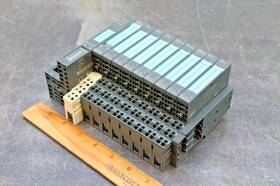
( Brand: Siemens ), ( Manufacturer Part Number: 5136-DNS-200 ), ( Part Type: Module Device )
Review SIEMENS Sst Devicenet Module Device Net
The **Siemens 5136-DNS-200 SST 5136-DNS-200S DeviceNet Module** (part number **6ES7 138-4CB10-0AB0**) is a high-performance communication interface designed to seamlessly integrate Siemens SIMATIC S7-300 or S7-400 programmable logic controllers (PLCs) with Allen-Bradley s DeviceNet network a robust, industrial-grade fieldbus system widely used in automation and manufacturing environments. This module serves as a critical bridge between Siemens proven PLC architecture and the DeviceNet protocol, enabling real-time data exchange, device integration, and distributed control within large-scale automation systems. Engineered for reliability and efficiency, the 5136-DNS-200S operates at a data transfer rate of up to **500 kbps**, ensuring rapid and dependable communication between master devices, such as Allen-Bradley PLCs, and Siemens controllers. Its compact yet rugged design adheres to strict industrial standards, making it suitable for harsh environments where temperature fluctuations, vibration, and electromagnetic interference are common challenges.
The module features a **dual-port architecture**, allowing it to connect directly to a DeviceNet network via a standard M12 connector while maintaining compatibility with Siemens TIA Portal or Step 7 software for seamless configuration and monitoring. Its **SST (Siemens Standard Terminal) interface** simplifies setup by providing intuitive access to device parameters, network diagnostics, and error logging, reducing downtime and streamlining troubleshooting. The 5136-DNS-200S supports **DeviceNet s master-slave communication model**, enabling it to act as a slave device on the network, where it can receive commands, data points, and status updates from a DeviceNet master (such as an Allen-Bradley CompactLogix or ControlLogix controller) while sending process data back to the Siemens PLC in real time. This bidirectional communication ensures synchronized operation between disparate systems, enhancing overall automation efficiency.
Beyond its technical capabilities, the module incorporates **Siemens robust error handling and diagnostics**, including built-in self-tests, fault detection, and automatic recovery mechanisms to minimize disruptions. Its **plug-and-play compatibility** with DeviceNet-compliant devices such as sensors, actuators, and I/O modules expands the flexibility of Siemens automation solutions, allowing engineers to leverage existing DeviceNet infrastructure without extensive reconfiguration. The module s **wide operating temperature range (from -25 C to 60 C)** and compliance with **EN 61131-2** and **IEC 62061** standards further reinforce its suitability for demanding industrial applications, including manufacturing plants, process control systems, and energy management networks. Whether deployed in a discrete manufacturing setting or a continuous process environment, the 5136-DNS-200S ensures seamless interoperability, scalability, and long-term reliability, making it an indispensable component for modern automation architectures.
### **Pros and Cons of buying a Siemens 5136-DNS-200 (SST 5136-DNS-200S) DeviceNet Module (6ES7 138-4CB10-0AB0)**
#### **Pros**
1. **Compatibility with Siemens S7-300/400 PLCs**
- The **5136-DNS-200** is a **DeviceNet slave module** designed specifically for Siemens S7-300 and S7-400 programmable logic controllers (PLCs). It allows seamless integration into existing Siemens automation networks, reducing the need for additional hardware or software modifications.
2. **Reliable Communication Protocol**
- DeviceNet is a **robust, industrial-grade communication protocol** optimized for real-time data exchange in harsh environments. It supports **deterministic communication**, ensuring low latency and consistent performance, which is critical in automation applications.
3. **Easy Integration with DeviceNet Networks**
- The module connects directly to a **DeviceNet master** (such as an Allen-Bradley PLC or a Siemens ET 200M) without requiring additional gateways. This simplifies wiring and reduces potential points of failure.
4. **Supports Multiple Data Types**
- The module can handle **discrete I/O (digital signals), analog signals, and structured data** (e.g., Siemens S7 data blocks). This flexibility makes it suitable for a wide range of applications, including motor control, sensor interfacing, and process automation.
5. **Siemens-Supported Hardware**
- Being an **official Siemens product**, it benefits from **long-term availability of spare parts, firmware updates, and technical support**. This reduces the risk of obsolescence compared to third-party or non-Siemens alternatives.
6. **Modular and Scalable**
- The **SST 5136-DNS-200S** variant includes **built-in diagnostics and status monitoring**, allowing for easier troubleshooting. It can be used in **standalone configurations or as part of a larger DeviceNet network**, making it adaptable to different system sizes.
7. **Proven Performance in Industrial Environments**
- Siemens modules are designed to operate reliably in **industrial settings**, including exposure to **temperature fluctuations, electrical noise, and vibration**. The **DeviceNet protocol itself is hardened for industrial use**, ensuring stable communication even in challenging conditions.
8. **Backward and Forward Compatibility**
- The module is compatible with **older Siemens PLCs (S7-300/400)** as well as newer systems, ensuring longevity. It also supports **modern DeviceNet standards**, making it future-proof for upgrades.
9. **Reduced Wiring Complexity**
- Since it connects directly to DeviceNet, it **eliminates the need for additional communication cards or converters**, simplifying wiring and reducing installation time.
10. **Documentation and Training Resources**
- Siemens provides **detailed technical documentation, programming examples, and training materials**, making it easier for engineers to implement and troubleshoot the module.
---
#### **Cons**
1. **Limited to DeviceNet Protocol**
- The module **only supports DeviceNet**, which may be a drawback if the system requires **Ethernet/IP, PROFIBUS, or Modbus** for other parts of the network. This could necessitate additional gateways or converters, increasing complexity and cost.
2. **Potential for Obsolescence**
- While Siemens modules are generally reliable, **older DeviceNet modules (like this one) may eventually be discontinued** as Siemens shifts focus to newer communication standards (e.g., **Ethernet-based protocols**). This could make **spare parts or replacements harder to find in the long term**.
3. **Higher Cost Compared to Alternatives**
- Siemens modules tend to be **more expensive than generic or third-party DeviceNet slaves**. If budget is a constraint, alternative brands (e.g., Allen-Bradley, Rockwell, or third-party suppliers) may offer similar functionality at a lower price.
4. **Requires Proper Configuration**
- Misconfiguration of the **S7 PLC parameters** or **DeviceNet network settings** can lead to **communication failures**. Engineers must have **experience with Siemens S7 programming and DeviceNet protocols** to set it up correctly.
5. **Physical Size and Installation Constraints**
- The module occupies a **specific slot in the S7 rack** and requires **proper termination and shielding** for DeviceNet cables. Poor installation (e.g., improper grounding or cable routing) can lead to **noise-induced communication errors**.
6. **Dependence on Siemens Ecosystem**
- If the system relies heavily on **Siemens software (TIA Portal, Step 7)**, switching to a non-Siemens DeviceNet master (e.g., Allen-Bradley) may require **additional software licenses or compatibility checks**, adding complexity.
7. **Limited Analog Input/Output Options**
- While the **5136-DNS-200** supports analog signals, it may not offer the **same resolution or range** as dedicated analog I/O modules. For high-precision applications, additional modules may be needed.
8. **Potential for Driver or Firmware Issues**
- Older Siemens modules occasionally face **driver incompatibilities** with newer versions of **TIA Portal or Step 7**. This may require **manual updates or workarounds**, adding maintenance overhead.
9. **No Built-in Redundancy (Unless Configured)**
- The standard **5136-DNS-200** does not include **built-in redundancy features** (e.g., dual power supplies or failover mechanisms). In critical applications, additional hardware may be required for high availability.
10. **Learning Curve for Non-Siemens Users**
- Engineers unfamiliar with **Siemens PLCs or DeviceNet** may find the setup and programming **more complex** compared to other automation platforms (e.g., Allen-Bradley s RSLogix or Rockwell s Studio 5000).
---
### **Conclusion**
The **Siemens 5136-DNS-200 (SST 5136-DNS-200S) DeviceNet module** is a **reliable, well-supported choice** for integrating DeviceNet devices into a **Siemens S7-300/400 PLC-based automation system**. Its **deterministic communication, ease of integration, and Siemens-backed reliability** make it ideal for **industrial applications where stability and compatibility are critical**.
However, its **limited protocol support (DeviceNet only), potential obsolescence risk, higher cost, and dependency on Siemens ecosystem** may be drawbacks depending on the specific use case. If the system **already uses Siemens PLCs and DeviceNet**, this module is a **strong, low-risk choice**. If **Ethernet-based communication or cost efficiency** is a priority, alternatives (e.g., **Allen-Bradley DeviceNet slaves or Ethernet/IP modules**) should be considered.
---
### **Recommendation**
- **Buy the Siemens 5136-DNS-200 if:**- You are **already using Siemens S7-300/400 PLCs** and need a **reliable DeviceNet slave**.
- Your system **requires deterministic, low-latency communication** in an industrial environment.
- You **value Siemens support and long-term availability** over cost savings.
- The **DeviceNet protocol is sufficient** for your application (no need for Ethernet/IP or PROFIBUS).
- **Consider alternatives if:**- You need **Ethernet/IP, PROFIBUS, or Modbus** for other parts of the network (may require additional gateways).
- **Budget is a constraint** third-party DeviceNet slaves or Allen-Bradley modules may offer similar functionality at a lower cost.
- You anticipate **long-term scalability** newer Ethernet-based modules (e.g., **Siemens ET 200SP, S7-1200/1500**) may be better for future-proofing.
- Your team lacks **experience with Siemens PLCs**, making setup and troubleshooting more challenging.
- **Additional Tips:**- **Verify compatibility** with your specific **S7 firmware version** before purchasing.
- **Check for newer Siemens DeviceNet modules** (e.g., **6ES7 138-4CB10-0AB0-0YA0**) that may offer improved features.
- **Consult Siemens documentation** or a **certified Siemens partner** for installation and programming guidance.
- If possible, **test the module in a lab environment** before full deployment to ensure seamless integration.
**Final Verdict:** For **Siemens-centric automation systems requiring DeviceNet**, the **5136-DNS-200 is a solid, dependable choice**. For **mixed-protocol or cost-sensitive applications**, alternatives should be evaluated.
Details:
Please visit the following address to do so. All that's included is shown in the photo's. One 5136-DNS-200S. One 138-4CB10-0AB0.
Expedited or next day air is available on your shippers number. Sale is for One 1 Used Siemens SST 5136-DNS-200S Devicenet Module Device Net 6ES7 138-4CB10-0AB0. We Combine Shipping. KAE Industrial.
Five- 131-4BD00-0AA0. This has light scratches shown in photos. Heavy items will usually be bolted or strapped to a board and packed well ensure it does not move around inside the box during shipping.
part #: 5136dns200 prices
- $201.84-$2871.00
specifications sensoindustria:
- brand: Siemens
- mpn: 5136-dns-200
- part type: Module Device
payments sensoindustria:
- credit card: Mastercard
- wallet: Google-pay
- other
seller sensoindustria:
- rating: 100.0%
- city: Wooster, Ohio
- # reviews: 11544
general sensoindustria:
- condition: Used
- PLCs HMIs > PLC Peripheral Modules > PLC Input Output Modules
shipping sensoindustria:
- transit: 4-7 Days
- cost: $0.00
- type: Calculated
- class: Standard
- service: FedEx Ground / FedEx Home Delivery
- carrier: FedEx
offer sensoindustria:
- best offers: True
- availability: In Stock
- options: Ship-to-home
- quantity: 1
- sold: 0
- started: March 26, 2026
returns sensoindustria:
- time: 30 Days
- policy: Returns Accepted
- paid by: Buyer
- method: Money back
Siemens 5136-DNS-200 Is Similar To:
- 132-4hb01-0ab0 Siemens Digital Output Module (27.7% similar) Digital output module 6ES7132-4HB01-0AB0...(December 24th, 2017)
- 222-1bf22-0xa0 Siemens Used Output Module Make Offer (31.9% similar) All technical questions problems should be addressed through messages for the fastest possible service. Any damaged package received should be addressed with the delivering USPS office and a claim filed there. This lot consists of: 1 used Siemens 6ES7 222-1BF22-0XA0 output module no box condition: ...(March 7th, 2019)
- 235-0kd20-0xa0 Siemens Analog Expansion Module (28.8% similar) Siemens 6ES7 235-0KD20-0XA0 EM235 analog I o expansion module in good used condition, recently removed from a working installation. Sold as pictured. No manual, cables or other accessories included...(April 21st, 2018)
- 235-0kd21-0xa0 Siemens Analog Expansion Module (28.8% similar) No manual, cables or other accessories included. Sold as pictured. Siemens 6ES7 235-0KD21-0XA0 EM235 analog I o expansion module in good used condition, recently removed from a working installation...(April 21st, 2018)
- 2586234-0001 Siemens New Sealed Digital Output Module (31.7% similar) This part is newly sealed inside its oem box. All parts repair items sold are final sales. A 30-DAY warranty included...(October 1st, 2018)
- 2586234-0002 Siemens Module Digital Output Dc New In Box Nib (32.9% similar) Only 235 with free shipping anywhere in north America. For regions other than north America, please a shipping quote. You are buying the best of for a fraction cost. The in very good condition all as visible pictures. Siemens module digital output 2a dc new in box nib with free shipping is old stock...(November 10th, 2018)
- 25862410-0001 Siemens New Relay Output Module (27.5% similar) A 30-DAY warranty included. All parts repair items sold are final sales. This part is newly sealed inside its oem box...(October 1st, 2018)
- 3ra1921-1ba00 Siemens New Factory Sealed Module Dc 4011209516496 (34.7% similar) 3RA1921-1BA00 Siemens new factory sealed 3RA19211BA00 dc link module for size s0 as shown item location 11D...(June 29th, 2018)
- 3rk1100-1cq00-0aa3 Siemens Electronic Module (27.7% similar) ...(March 8th, 2018)
- 3rk1304-0hs00-7aa0 Siemens Isolator Module Used (28.6% similar) If another carrier such as ups or FedEx is required to ship due the size, then shipping costs may change...(February 17th, 2018)
- 3rk1400-1ce01-0aa2 Siemens Digital Module (28.3% similar) Siemens 3RK1400-1CE01-0AA2 digital I module, 4DI 4DO condition: new old stock - see pictures brand: Siemens type: o 4DOP...(February 1st, 2019)
