TEXAS INSTRUMENTS PLC 500-5840 Siemens
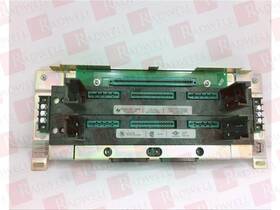
( Brand: Texas Instruments Plc ), ( Manufacturer Part Number: 500-5840 )
Review TEXAS INSTRUMENTS PLC Siemens 5005840 Used
The **Texas PLC 500-5840 Siemens 5005840** is a robust and versatile programmable logic controller (PLC) designed to meet the demanding requirements of industrial automation, particularly within manufacturing, process control, and discrete automation environments. Part of Siemens proven **SIMATIC S7-500 series**, this PLC is engineered to deliver high-performance computing, reliable operation, and seamless integration with other automation systems, making it an ideal choice for applications requiring precise control, scalability, and long-term dependability. With a **16-slot backplane architecture**, the 500-5840 serves as a central processing unit (CPU) module that can be paired with a variety of input/output (I/O) modules, communication processors, and special function units to create a customized automation solution tailored to specific industrial needs. Its **16-bit processing architecture** ensures rapid execution of control logic, enabling real-time responses to process variables, machine states, and external signals with minimal latency. The PLC operates on Siemens **STEP 7** programming environment, a user-friendly yet powerful tool that supports structured text, ladder logic (LD), function block diagrams (FBD), and other programming paradigms, allowing engineers to develop, debug, and maintain complex control algorithms efficiently.
One of the standout features of the **5005840** is its **high-speed processing capabilities**, which include a **16 MHz clock speed** and **16-bit data handling**, enabling it to manage large-scale applications with ease. The CPU module is equipped with **128 KB of user memory** (expandable via additional memory modules) and **16 KB of program memory**, providing ample space for storing control logic, data tables, and communication protocols. Its **dual-port Ethernet interface** facilitates high-speed data exchange with supervisory control and data acquisition (SCADA) systems, human-machine interfaces (HMIs), and other PLCs, supporting protocols such as **PROFIBUS DP, MPI (Multi-Point Interface), and industrial Ethernet (e.g., PROFINET)** for seamless network integration. The **500-5840** also features **real-time clock (RTC) and watchdog timer functions**, ensuring system stability and the ability to synchronize operations across distributed automation networks.
Built to withstand the rigors of industrial environments, the **Siemens 5005840** is housed in a **compact, rugged metal enclosure** that meets **IP65 protection ratings**, shielding it from dust, moisture, and temperature fluctuations typically encountered in factory floors, outdoor installations, or harsh manufacturing settings. The CPU module supports a wide **operating temperature range of -10 C to 60 C**, with optional extended temperature versions available for applications in extreme climates. Its **backplane design** allows for modular expansion, enabling users to scale their automation system by adding specialized modules such as analog input/output (AI/AO), discrete I/O, high-speed counters, or motion control units. The **500-5840** also includes **diagnostic tools and error handling features**, such as built-in fault detection, error logging, and remote monitoring capabilities, which enhance system reliability and reduce downtime.
The **SIMATIC S7-500 series**, of which the 500-5840 is a cornerstone, is renowned for its **proven reliability and compatibility** with a vast ecosystem of Siemens automation products, including **S7-300, S7-400, and TIA Portal** software. This interoperability simplifies migration between different Siemens PLC platforms and ensures backward and forward compatibility with existing automation infrastructure. The **5005840** is particularly well-suited for applications requiring **high-speed data acquisition, precise timing control, and integration with PLCopen-compliant motion control modules**, making it a preferred choice for industries such as **packaging, material handling, robotics, and process automation**. Whether deployed in a small-scale control system or as part of a larger distributed automation network, this PLC delivers **consistent performance, flexibility, and long-term operational efficiency**, reinforcing Siemens reputation for delivering industrial-grade automation solutions.
### **Analysis of Buying a Texas PLC (Model 500-5840) vs. Siemens PLC (Model 5005840)**
#### **Texas Instruments (TI) PLC 500-5840**
**Pros:**1. **Cost-Effective for Small Applications** The TI 500 series is designed for basic automation tasks, making it a budget-friendly option for small-scale or low-complexity control systems.
2. **Simplicity and Ease of Use** The hardware and software are straightforward, with minimal configuration requirements, which can be advantageous for users with limited programming experience.
3. **Compatibility with TI s Ecosystem** If you already use TI components (e.g., microcontrollers, sensors, or other automation tools), integrating this PLC may be seamless.
4. **Good for Educational or Prototyping** Its simplicity makes it suitable for teaching automation principles or testing control logic before deploying a more robust system.
5. **Modular Expansion (Limited)** While not as extensive as Siemens, it supports basic I/O expansion for simple applications.
**Cons:**1. **Limited Scalability** The 500 series is not designed for large or complex industrial applications. It lacks advanced features like high-speed counters, advanced communication protocols (beyond basic serial), or distributed I/O.
2. **Outdated Technology** TI s PLC lineup is not as actively developed as Siemens , meaning fewer updates, limited long-term support, and potential obsolescence risks.
3. **Weak Communication Protocols** It lacks support for modern industrial protocols like **Profinet, EtherNet/IP, or Modbus TCP** (depending on the exact model), which can limit integration with modern SCADA or MES systems.
4. **Limited Documentation and Community Support** Compared to Siemens, TI PLCs have a smaller user base, leading to fewer troubleshooting resources, forums, or third-party tools.
5. **No Built-in Safety Features** Unlike Siemens, which offers safety-certified PLCs (e.g., SIMATIC S7-1200 with TIA Portal), TI s 500 series does not support safety-rated applications.
6. **Poor Performance for High-Speed Tasks** The processing speed and I/O scan rates are not optimized for applications requiring real-time precision (e.g., motion control, high-speed packaging).
---
#### **Siemens PLC (Model 5005840, Likely SIMATIC S7-1200 or S7-1500 Series)**
**Pros:**1. **Industrial-Grade Reliability** Siemens PLCs are widely used in manufacturing, energy, and process industries due to their robustness, durability, and long-term support.
2. **Advanced Communication Protocols** Supports **Profinet, EtherNet/IP, Modbus RTU/TCP, OPC UA, and more**, enabling seamless integration with SCADA, MES, and other industrial networks.
3. **Scalability and Flexibility** The S7-1200 and S7-1500 series offer a wide range of I/O modules, expansion slots, and high-speed counters, making them suitable for both small and large applications.
4. **Strong Software Ecosystem** **TIA Portal** provides a unified environment for programming (LAD, FBD, STL, SCL), HMI development, and engineering, with extensive documentation and training resources.
5. **Safety and Compliance** Siemens offers **safety-certified PLCs** (e.g., S7-1200 with safety modules) and compliance with **IEC 61131-3, IEC 62061, and other standards**, making it ideal for applications requiring safety certification.
6. **High Performance** Faster scan times, better processing power, and support for **motion control (SINAMICS integration)** make it suitable for complex automation tasks.
7. **Global Support and Resale Value** Siemens has a vast dealer network, extensive documentation, and a large user community, ensuring easier troubleshooting and maintenance.
8. **Future-Proofing** Siemens continues to update its PLC lineup with new features (e.g., **AI integration, cloud connectivity, and digital twin support**), ensuring long-term viability.
**Cons:**1. **Higher Upfront Cost** Siemens PLCs are significantly more expensive than TI s 500 series, which may be a barrier for small businesses or startups.
2. **Steeper Learning Curve** The TIA Portal and Siemens programming environment require more training compared to TI s simpler interface.
3. **Complexity for Basic Applications** Overkill for very simple control tasks where a TI PLC or even a microcontroller might suffice.
4. **Licensing Costs for Advanced Features** Some high-end features (e.g., advanced diagnostics, cloud connectivity) may require additional licenses.
---
### **Ending Conclusion**
The choice between a **Texas Instruments PLC (500-5840)** and a **Siemens PLC (5005840)** depends entirely on the **specific requirements of your application**:
- **Choose the TI PLC (500-5840) if:**- You need a **low-cost, simple solution** for basic automation (e.g., small machinery, educational projects, or prototyping).
- Your application does **not** require advanced communication, safety, or scalability.
- You are already using TI components and prefer a cohesive ecosystem.
- Budget constraints make a Siemens PLC unaffordable.
- **Choose the Siemens PLC (5005840) if:**- You require **industrial-grade reliability, scalability, and advanced features** (e.g., motion control, safety certification, or integration with modern SCADA systems).
- Your application demands **high-speed processing, extensive I/O, or support for multiple communication protocols**.
- You plan to **future-proof** your system with long-term support and potential upgrades.
- Compliance with **industrial safety standards** (e.g., ISO, IEC) is mandatory.
- You are willing to invest in **training and higher initial costs** for a more robust solution.
---
### **Final Recommendation**
**For most industrial, commercial, or large-scale applications, a Siemens PLC (5005840) is the superior choice.** Its reliability, advanced features, and scalability far outweigh the limitations of the TI 500 series. The higher cost is justified by the long-term benefits, including easier integration, better performance, and stronger support.
**The TI PLC (500-5840) is only recommended for:**- **Very small, low-budget projects** where simplicity and cost are prioritized over advanced functionality.
- **Educational or non-critical applications** where robustness and industrial standards are not required.
If you are unsure, **conduct a cost-benefit analysis** comparing:- **Initial purchase price** vs. **long-term operational costs** (maintenance, downtime, scalability).
- **Application complexity** (does it need safety, high-speed I/O, or cloud integration?).
- **Future expansion plans** (will the system need upgrades in 3-5 years?).
For **anything beyond basic on/off control or small-scale automation, Siemens is the clear winner.**
Details:
Packaging and Handling: Items are safely ESD packaged in custom shipping cartons for protection. Call to use a shipping service other than the ones listed. All products are guaranteed to be working but may show signs of use if purchasing a used product. Sells new and surplus product develops channels to purchase such.
part #: 5005840 prices
- $37.07-$44.21
specifications sensoindustria:
- brand: Texas Instruments Plc
- mpn: 500-5840
returns sensoindustria:
- paid by: Buyer
- method: Money back
- policy: Returns Accepted
- time: 30 Days
shipping sensoindustria:
- class: Standard
- service: Standard
- transit: 30-35 Days
- type: Fixed
- cost: $12.90
offer sensoindustria:
- availability: In Stock
- started: March 26, 2026
- options: Ship-to-home
- quantity: 1
- sold: 0
seller sensoindustria:
- city: 1 Millennium Dr, Willingboro, NJ 08046
- rating: 99.6%
- # reviews: 196420
general sensoindustria:
- PLCs HMIs > PLC Peripheral Modules > PLC Input Output Modules
- condition: Used
payments sensoindustria:
- wallet: Apple-pay
- other
- credit card: Discover
Texas Instruments Plc 500-5840 Is Similar To:
- 2586265-0003 Siemens New Texas Instruments (35.8% similar) This item is new in original packaging from the manufacturer, opened for inspection by our QC department...(December 7th, 2017)
- 305-01n Texas Instruments Input Module (46.2% similar) ...(December 5th, 2017)
- 305-02b Texas Instruments Series Plc Modules (47.4% similar) 305-02B main module D3-16TR D3-16NE3...(July 23rd, 2018)
- 305-05b Texas Instruments Programmable Controller Unit Cpu (43.2% similar) Inspected and tested for functionality through spartan integrated systems...(May 30th, 2018)
- 305-10t Texas Instruments Insturments Output Module (48.1% similar) ...(March 4th, 2018)
- 305-35t-c Texas Instruments 24vdc Output (43% similar) Shipping quotes are for the USA lower 48 states only. Please for shipping quote...(January 23rd, 2018)
- 305-55t Texas Instruments Output Module Used (51.5% similar) If another carrier such as ups or FedEx is required to ship due the size, then shipping costs may change...(October 25th, 2018)
- 500-2101 Texas Instruments Model Channel Controller (36.5% similar) Items are sold as is. Shipping: domestic shipping is to the lower 48 us. A small shipping charge is added to items purchased for less than 100 and weighing more 20 lbs. This charge is for shipping, handling and materials. All prices are negotiable...(March 19th, 2018)
- 500-2151a Siemens Ti Texas Instruments Power Supply Module (41.4% similar) ...(August 2nd, 2018)
- 500-50 Siemens Texas Instruments Output Module (40.4% similar) ...(August 16th, 2018)
- 500-5005 Texas Instruments Model Input Module Vac (37.3% similar) LOC:05 describe. We primary injection test and secondary all breakers that are listed as tested. Most items ship same day...(March 12th, 2019)
