SIEMENS 500-5035 Programmable Module Plc Cable
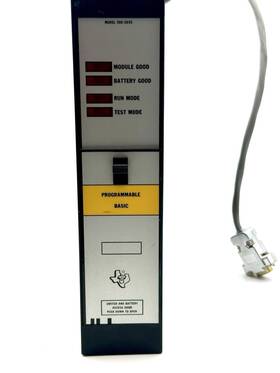
( Brand: Siemens ), ( Manufacturer Part Number: 500-5035 ), ( Part Type: Module Cable )
Review SIEMENS Programmable Basic Module Plc 5005035 Cable
The **Siemens 500-5035 Programmable Module (PLC 500 Series)** is a robust and versatile component designed to serve as the central processing unit within Siemens time-tested **SIMATIC S5-115U** programmable logic controller family, a legacy yet highly reliable system still favored in industrial automation for its durability and precision. This module, identified by its model number **500-5035**, is a **5-slot CPU unit** engineered to handle complex control tasks with exceptional efficiency, making it an ideal choice for applications requiring high-speed processing, extensive I/O expansion, and seamless integration with a wide array of peripheral devices. Built with Siemens signature engineering excellence, the **500-5035** features a **16-bit architecture**, enabling it to execute instructions at remarkable speeds while maintaining compatibility with the **S5 programming language (S5-PLC)**, a structured, ladder-diagram-based environment that has long been a staple in industrial automation. Its robust construction, including a **metal housing** and **industrial-grade components**, ensures resilience against harsh environmental conditions, such as temperature fluctuations, electrical noise, and mechanical stress, making it suitable for deployment in manufacturing plants, process industries, and other demanding operational environments.
At the heart of the **500-5035** lies its **5-slot backplane**, which accommodates a variety of **SIMATIC S5-115U modules**, including input/output (I/O) units, special function modules, and communication interfaces. This modular flexibility allows engineers to configure the system precisely to meet the specific requirements of their automation project, whether it involves discrete control for machinery, analog signal processing for process variables, or high-speed data acquisition for monitoring systems. The module s **integrated watchdog timer** enhances system reliability by continuously monitoring the CPU s operation, ensuring immediate recovery from potential malfunctions without prolonged downtime. Additionally, the **500-5035** supports **serial communication protocols**, such as **AS511** and **AS512**, enabling seamless data exchange with other PLCs, HMIs, or SCADA systems, thereby facilitating centralized control and real-time monitoring across distributed networks.
For those requiring a direct connection to the CPU, the **500-5035 cable** is a critical component, designed to establish a stable and high-performance link between the CPU module and its associated backplane or expansion units. Constructed from **high-quality, shielded twisted-pair wiring**, this cable ensures minimal signal interference and optimal data integrity, which is essential for maintaining the accuracy of control signals and diagnostic information. The cable s **durable connectors**, engineered to withstand repeated mating cycles, contribute to the overall longevity of the system, reducing the risk of connection failures that could disrupt production processes. Whether used in new installations or as a replacement in existing systems, the **500-5035 cable** plays a pivotal role in upholding the performance and reliability of the **SIMATIC S5-115U** platform, ensuring that the programmable logic controller operates at peak efficiency for years to come.
Beyond its technical specifications, the **Siemens 500-5035** and its associated cable exemplify Siemens commitment to **industrial automation innovation**, offering a blend of **proven performance, scalability, and ease of integration** that continues to make it a preferred solution for engineers and technicians in legacy and modernized automation environments. With its **backward compatibility** and **forward-thinking design**, this module not only supports legacy applications but also serves as a bridge to more advanced control systems, making it a versatile asset in both retrofitting and new-build projects. For industries where precision, reliability, and adaptability are non-negotiable, the **500-5035 programmable module** and its accompanying cable represent a cornerstone of dependable automation infrastructure.
### **Pros and Cons of buying a Siemens 500-5035 Programmable Module (PLC 5005035 Cable)**
#### **Pros:**The Siemens 500-5035 programmable module, along with its associated cable (5005035), offers several advantages for industrial automation applications, particularly within the Siemens SIMATIC S7-500 series:
1. **Compatibility and Integration** The module is designed specifically for the Siemens S7-500 PLC system, ensuring seamless integration with other Siemens components such as CPUs, power supplies, and I/O modules. This reduces compatibility issues and simplifies system configuration.
2. **Reliability and Durability** Siemens is a well-established brand in industrial automation, known for producing robust and long-lasting hardware. The 500-5035 module is built to withstand harsh industrial environments, including temperature fluctuations, electrical noise, and mechanical stress.
3. **Programmability and Flexibility** The module supports programmable logic control (PLC) functions, allowing users to customize logic, control sequences, and communication protocols. This flexibility makes it suitable for a wide range of applications, from simple control tasks to complex automation processes.
4. **Communication Capabilities** The 5005035 cable (likely a communication interface cable) enables data exchange between the PLC and other devices, such as HMIs (Human-Machine Interfaces), scanners, or higher-level systems (e.g., SCADA). This is essential for monitoring, diagnostics, and remote control.
5. **Support for Siemens Software Ecosystem** The module works with Siemens programming software, such as **SIMATIC STEP 7**, which provides a user-friendly environment for writing, debugging, and maintaining PLC programs. This software is widely used in industrial settings, ensuring familiarity among engineers.
6. **Backward and Forward Compatibility** While newer Siemens PLCs (e.g., S7-1200, S7-1500) have largely replaced the S7-500 series, the 500-5035 module remains relevant for legacy systems or applications where upgrading is not feasible. Siemens also provides documentation and support for older models, though it may be limited compared to newer products.
7. **Cost-Effective for Legacy Systems** If you are maintaining an existing Siemens S7-500 installation, purchasing the 500-5035 module and cable can be a cost-effective solution to extend the system s lifespan without a full replacement. Replacing an entire PLC system can be expensive, whereas individual modules and cables are often more affordable.
8. **Availability of Spare Parts** Siemens has a long history of producing industrial automation hardware, meaning that spare parts, including cables and modules, are still available through authorized distributors and Siemens support channels. This reduces the risk of obsolescence.
---
#### **Cons:** While the Siemens 500-5035 module has many strengths, there are also several drawbacks to consider:1. **Obsolescence** The S7-500 series is outdated compared to newer Siemens PLCs (e.g., S7-1200, S7-1500, or TIA Portal-based systems). Siemens has largely discontinued support for the S7-500, which means:
- Limited availability of new stock from some distributors.
- Reduced technical support and documentation for newer issues.
- Potential difficulty finding trained engineers familiar with the S7-500 programming environment.
2. **Limited Advanced Features** Newer PLCs offer advanced features such as:- Built-in Ethernet and PROFINET support (the S7-500 primarily uses PROFIBUS or MPI).
- Higher processing speeds and memory capacity.
- Integration with cloud-based monitoring and IoT platforms.
- The 500-5035 module lacks these modern capabilities, which may limit scalability or future-proofing.
3. **Higher Maintenance Costs Over Time** As the system ages, replacement parts, software updates, and troubleshooting may become more expensive. Siemens may no longer produce replacement modules or cables, forcing reliance on second-hand or refurbished parts.
4. **Compatibility with Modern Software** While the module can be programmed using STEP 7, newer Siemens software (e.g., TIA Portal) is not fully backward-compatible with the S7-500. This can complicate migration or integration with modern systems.
5. **Limited Scalability** The S7-500 series has lower I/O capacity and processing power compared to modern PLCs. If your application requires high-speed data processing, extensive networking, or large-scale automation, the 500-5035 module may not be sufficient.
6. **Dependence on Siemens Ecosystem** If you are locked into Siemens hardware and software, switching to a more open or modular system (e.g., Allen-Bradley, Beckhoff, or open-source PLCs) could offer greater flexibility in the long run. However, this requires additional investment in retraining or system redesign.
7. **Potential for Higher Long-Term Costs** While the initial purchase of the 500-5035 module and cable may be affordable, the cumulative cost of maintenance, spare parts, and potential downtime due to obsolescence could outweigh the benefits over time.
8. **Training and Skill Gaps** Engineers familiar with the S7-500 are becoming rarer, as training and certification programs have shifted toward newer PLC technologies. This can make it harder to find skilled personnel to maintain or troubleshoot the system.
---
### **Conclusion:**The Siemens 500-5035 programmable module and its associated cable (5005035) are a practical choice for **legacy Siemens S7-500 systems** where upgrading is not feasible or cost-effective. They offer reliability, compatibility, and flexibility within their intended ecosystem. However, their **obsolescence, limited advanced features, and potential long-term maintenance challenges** make them less ideal for new installations or applications requiring modern automation capabilities.
If your primary goal is to **maintain an existing S7-500 system**, purchasing the 500-5035 module and cable is a reasonable decision, provided you account for the risks of aging hardware. For **new projects or long-term scalability**, investing in a newer Siemens PLC (e.g., S7-1200 or S7-1500) or an alternative automation platform would be more strategic.
---
### **Recommendation:** 1. **If you are maintaining an existing S7-500 system:**- Proceed with purchasing the Siemens 500-5035 module and cable, ensuring you source them from an authorized Siemens distributor or a reputable reseller to guarantee authenticity and compatibility.
- Budget for potential future maintenance costs, including spare parts or training for personnel.
- Document the system thoroughly to facilitate troubleshooting and future upgrades.
2. **If you are starting a new project or planning long-term automation:**- Consider upgrading to a **Siemens S7-1200 or S7-1500 PLC**, which offers better performance, modern communication protocols, and long-term support.
- Evaluate alternative PLC brands (e.g., Allen-Bradley, Beckhoff, or open-source options) if Siemens ecosystem does not align with your future needs.
- Assess whether the cost of retrofitting an existing S7-500 system with newer components (e.g., adding Ethernet modules) could bridge the gap between legacy and modern technology.
3. **If you are unsure about the system s future:**- Conduct a **cost-benefit analysis** comparing the total cost of ownership (TCO) of maintaining the S7-500 versus upgrading. Factors to consider include:
- Immediate vs. long-term expenses.
- Potential downtime risks from obsolescence.
- Training costs for new or existing staff.
- Consult with a Siemens-certified integrator or automation specialist to assess the best path forward for your specific application.
Ultimately, the decision depends on your **budget, timeline, and long-term automation strategy**. For short-term or legacy system needs, the 500-5035 module remains a viable option, but for sustainable automation, modernizing the system is the more future-proof choice.
Details:
Includes attached communication cable as shown condition: Used condition. Details: Programmable BASIC configuration.
Model: 500-5035. For sale is one Siemens industrial programmable BASIC module. Removed from industrial environment. Cosmetic wear from normal use.
Siemens 500-5035 Programmable BASIC Module.
part #: 5005035 prices
- $1399.95-$5250.40
specifications sensoindustria:
- brand: Siemens
- mpn: 500-5035
- part type: Module Cable
returns sensoindustria:
- policy: Returns Accepted
- time: 14 Days
- method: Money back
- paid by: Buyer
payments sensoindustria:
- wallet: Google-pay
- other
- credit card: Diners-club
offer sensoindustria:
- options: Ship-to-home
- best offers: True
- quantity: 1
- started: February 27, 2026
- availability: In Stock
- sold: 0
seller sensoindustria:
- rating: 100.0%
- city: Salt Lake City, Utah
- # reviews: 206
general sensoindustria:
- condition: Used
- PLCs HMIs > PLC Peripheral Modules > PLC Input Output Modules
shipping sensoindustria:
- transit: 4-8 Days
- type: Calculated
- service: USPS Ground Advantage
- class: Standard
- cost: $12.27
- carrier: USPS
Siemens 500-5035 Is Similar To:
- 132-4hb01-0ab0 Siemens Digital Output Module (29.4% similar) Digital output module 6ES7132-4HB01-0AB0...(December 24th, 2017)
- 222-1bf22-0xa0 Siemens Used Output Module Make Offer (32.5% similar) All technical questions problems should be addressed through messages for the fastest possible service. Any damaged package received should be addressed with the delivering USPS office and a claim filed there. This lot consists of: 1 used Siemens 6ES7 222-1BF22-0XA0 output module no box condition: ...(March 7th, 2019)
- 235-0kd20-0xa0 Siemens Analog Expansion Module (37.8% similar) Siemens 6ES7 235-0KD20-0XA0 EM235 analog I o expansion module in good used condition, recently removed from a working installation. Sold as pictured. No manual, cables or other accessories included...(April 21st, 2018)
- 235-0kd21-0xa0 Siemens Analog Expansion Module (37.8% similar) No manual, cables or other accessories included. Sold as pictured. Siemens 6ES7 235-0KD21-0XA0 EM235 analog I o expansion module in good used condition, recently removed from a working installation...(April 21st, 2018)
- 2586234-0001 Siemens New Sealed Digital Output Module (35.6% similar) This part is newly sealed inside its oem box. All parts repair items sold are final sales. A 30-DAY warranty included...(October 1st, 2018)
- 2586234-0002 Siemens Module Digital Output Dc New In Box Nib (32% similar) Only 235 with free shipping anywhere in north America. For regions other than north America, please a shipping quote. You are buying the best of for a fraction cost. The in very good condition all as visible pictures. Siemens module digital output 2a dc new in box nib with free shipping is old stock...(November 10th, 2018)
- 25862410-0001 Siemens New Relay Output Module (32.7% similar) A 30-DAY warranty included. All parts repair items sold are final sales. This part is newly sealed inside its oem box...(October 1st, 2018)
- 3ra1921-1ba00 Siemens New Factory Sealed Module Dc 4011209516496 (40.3% similar) 3RA1921-1BA00 Siemens new factory sealed 3RA19211BA00 dc link module for size s0 as shown item location 11D...(June 29th, 2018)
- 3rk1100-1cq00-0aa3 Siemens Electronic Module (34.9% similar) ...(March 8th, 2018)
- 3rk1304-0hs00-7aa0 Siemens Isolator Module Used (32.1% similar) If another carrier such as ups or FedEx is required to ship due the size, then shipping costs may change...(February 17th, 2018)
- 3rk1400-1ce01-0aa2 Siemens Digital Module (30.2% similar) Siemens 3RK1400-1CE01-0AA2 digital I module, 4DI 4DO condition: new old stock - see pictures brand: Siemens type: o 4DOP...(February 1st, 2019)
