TEXAS INSTRUMENTS PLC 500-2153 Siemens
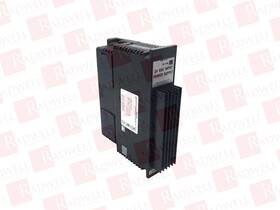
( Brand: Texas Instruments Plc ), ( Manufacturer Part Number: 500-2153 )
Review TEXAS INSTRUMENTS PLC Siemens 5002153 Used
The **Texas PLC 500-2153 (Siemens 5002153)** is a robust and versatile programmable logic controller (PLC) designed for industrial automation applications, offering reliable performance in demanding environments. Part of Siemens legacy 500 Series PLCs, this model is engineered to deliver high-speed processing and precise control for a wide range of manufacturing, process control, and automation tasks. The **500-2153** features a **16-point digital input module**, providing a compact yet powerful solution for interfacing with sensors, switches, and other discrete devices. Its modular design allows for easy expansion, accommodating additional I/O modules as system requirements grow, making it ideal for both small-scale and mid-sized automation projects. Built with durability in mind, this PLC is constructed with rugged materials to withstand harsh industrial conditions, including temperature fluctuations, vibration, and electrical noise, ensuring long-term reliability in factory floors or control rooms. The **500-2153** operates using Siemens proprietary programming environment, which supports ladder logic (LD), structured text (ST), and function block diagrams (FBD), offering flexibility for engineers and technicians familiar with industrial automation standards. Its **24V DC power supply compatibility** simplifies wiring and installation, while its **isolated inputs** enhance safety and reduce the risk of ground loops or signal interference. Whether integrated into a new automation system or retrofitted into an existing setup, the **Texas PLC 500-2153** provides a dependable foundation for efficient process control, making it a trusted choice for industries such as packaging, material handling, conveyor systems, and discrete manufacturing.
### **Analysis of Buying a Texas PLC 500 (Model 500-2153) vs. Siemens 5002153**
#### **Overview**
Both the **Texas Instruments (TI) PLC 500-2153** and the **Siemens 5002153** are legacy programmable logic controllers (PLCs) from the early 2000s, designed for industrial automation. While they share some similarities in architecture, they come from different manufacturers with distinct strengths and weaknesses. Below is a detailed comparison of their pros and cons.
---
### **Texas Instruments PLC 500-2153**
#### **Pros:**1. **Proven Reliability in Industrial Environments**
- TI PLCs were widely used in manufacturing, particularly in the U.S., and are known for durability in harsh conditions.
- The 500 series was designed for rugged applications, including high-temperature and vibration-prone environments.
2. **Compatibility with Older TI Systems**
- If your facility already uses TI PLCs, the 500-2153 integrates seamlessly with existing networks (e.g., ControlNet, DeviceNet).
- Easier troubleshooting and maintenance for teams familiar with TI s ecosystem.
3. **Lower Cost of Entry (Used Market)**
- Since TI PLCs are older, used units are often cheaper than Siemens equivalents, especially for basic I/O models.
- Spare parts (relays, modules) may be more affordable than Siemens equivalents.
4. **Simpler Programming for Basic Logic**
- TI s **ControlLogix** and **RSLogix 500** software were user-friendly for basic ladder logic programming.
- Less complex than Siemens TIA Portal for simple applications.
5. **Good for Legacy Automation Systems**
- If your plant still relies on TI-based systems, replacing a failing 500-2153 with a newer TI model (or migration to a different brand) may be more cost-effective than a full overhaul.
#### **Cons:**1. **Limited Modern Connectivity**
- Lacks built-in Ethernet/IP, Modbus TCP, or OPC UA support compared to newer Siemens or Allen-Bradley (Rockwell) PLCs.
- May require additional gateways for integration with modern SCADA or MES systems.
2. **Obsolete Hardware and Software**
- TI has largely exited the PLC market, meaning:- No official support for new firmware updates.
- Difficulty finding trained technicians familiar with TI systems.
- Software (RSLogix 500) may not run on modern Windows versions without compatibility issues.
3. **Scalability Limitations**
- The 500 series has lower I/O capacity compared to modern PLCs, making it unsuitable for large or complex automation tasks.
- Expansion requires additional rack-mounted modules, increasing system complexity.
4. **Deprecated by Industry Standards**
- Many new industrial protocols (e.g., IEC 61131-3 compliance, cybersecurity features) are absent.
- Compliance with modern safety standards (e.g., ISO 13849) may require additional hardware.
5. **Hardware Availability Issues**
- While parts may still be available, long-term reliability is uncertain due to lack of manufacturer backing.
- Some modules (e.g., analog I/O) may be discontinued, forcing reliance on third-party suppliers.
---
### **Siemens 5002153 (S7-200 Series, 224XP Variant)**
#### **Pros:**1. **Wider Industry Adoption and Support**
- Siemens PLCs (especially the S7-200 series) are globally recognized and widely used in Europe and beyond.
- Stronger aftermarket support, including certified refurbished units and spare parts.
2. **Better Modern Connectivity Options**
- Supports **PROFIBUS DP, Modbus RTU, and basic Ethernet** (via optional modules).
- Easier integration with modern HMI and SCADA systems compared to TI PLCs.
3. **More Scalable Architecture**
- The S7-200 series (including the 224XP) allows for expansion via **S7-200 expansion modules**, making it more flexible than the TI 500-2153 for growing applications.
- Can interface with higher-end Siemens PLCs (e.g., S7-300/400) if needed.
4. **Long-Term Availability of Parts**
- Siemens has kept some S7-200 models in production longer than TI, ensuring continued availability of modules and documentation.
- Third-party suppliers (e.g., Eurotech, AutomationDirect) offer compatible replacements.
5. **Better Programming Flexibility**
- Siemens **STEP 7** software supports **ladder logic, function blocks, and structured text**, making it more versatile for complex logic.
- Easier migration path to newer Siemens PLCs (e.g., S7-1200/1500) if needed.
6. **Cybersecurity Considerations**
- While not as secure as modern PLCs, the S7-200 series has better inherent security than TI s legacy systems.
- Can be integrated with Siemens **SIMATIC NET** for network security.
#### **Cons:**1. **Higher Cost (New vs. Used)**
- New Siemens S7-200 PLCs are more expensive than TI equivalents, even used.
- Refurbished units may still cost more than TI s used market.
2. **Physical Size and Rack Requirements**
- The S7-200 series requires more space in a control rack compared to compact TI PLCs.
- Some models need additional power supplies or cooling solutions.
3. **Software Complexity**
- STEP 7 is more complex than TI s RSLogix 500, requiring more training for operators.
- Licensing costs for full STEP 7 software can be prohibitive for small applications.
4. **Limited High-Speed I/O**
- Unlike newer Siemens PLCs, the S7-200 lacks high-speed counters or advanced motion control features.
- Not ideal for applications requiring precise timing or servo control.
5. **Deprecated in Favor of Newer Siemens Models**
- Siemens has shifted focus to **S7-1200/1500** and **ET 200SP**, making the S7-200 a legacy system.
- Future-proofing may require migration, adding long-term costs.
---
### **Direct Comparison Summary**
**Factor** **TI 500-2153** **Siemens 5002153 (S7-200 224XP)**
-------------------------- ------------------------------------------ ------------------------------------------
**Reliability** High (industrial-grade) High (but depends on module availability)
**Cost (Used/New)** Lower (used market) Higher (even used)
**Connectivity** Limited (legacy protocols) Better (PROFIBUS, Modbus, Ethernet)
**Programming** Simple (RSLogix 500) More complex (STEP 7)
**Scalability** Limited expansion options Better expansion via Siemens modules
**Support & Parts** Declining (TI exited market) Better (Siemens legacy support)
**Modern Integration** Difficult (requires gateways) Easier (but still limited)
**Best For** Legacy TI systems, simple applications Mixed environments, slightly better support
---
### **Ending Conclusion**
The choice between the **TI 500-2153** and **Siemens 5002153** depends on your specific needs: 1. **Choose the TI 500-2153 if:**- You are maintaining a **legacy TI-based system** and need a cost-effective replacement.
- Your application is **simple and does not require modern connectivity**.
- You have **existing TI expertise** on staff and can justify the long-term risks of obsolescence.
- Budget is a **primary concern**, and you can accept the limitations of an aging system.
2. **Choose the Siemens 5002153 if:**- You need **better connectivity** (PROFIBUS, Modbus) for integration with modern systems.
- You require **slightly better scalability** for future expansion.
- You prefer **Siemens ecosystem** and can tolerate higher costs.
- Your application is **not extremely complex**, but you want a more future-proof option than TI.
3. **Avoid Both if Possible:**- If your application is **critical or requires high-speed I/O, motion control, or cybersecurity**, consider **modern PLCs** (e.g., Allen-Bradley Micro800, Siemens S7-1200, or Rockwell Studio 5000).
- If migrating to a **new system**, evaluate **cloud-ready PLCs** with OPC UA and IIoT capabilities.
---
### **Recommendation**
- **For Short-Term Use (Replacement Only):**- If the
Details:
Packaging and Handling: Items are safely ESD packaged in custom shipping cartons for protection. Sells new and surplus product develops channels to purchase such. All products are guaranteed to be working but may show signs of use if purchasing a used product. Call to use a shipping service other than the ones listed.
part #: 5002153 prices
- $30.00-$319.00
specifications sensoindustria:
- brand: Texas Instruments Plc
- mpn: 500-2153
offer sensoindustria:
- quantity: 1
- options: Ship-to-home
- sold: 0
- started: April 6, 2026
- availability: In Stock
general sensoindustria:
- PLCs HMIs > PLC Peripheral Modules > PLC Input Output Modules
- condition: Used
returns sensoindustria:
- method: Money back
- paid by: Buyer
- policy: Returns Accepted
- time: 30 Days
seller sensoindustria:
- city: 1 Millennium Dr, Willingboro, NJ 08046
- rating: 99.6%
- # reviews: 197973
shipping sensoindustria:
- service: Standard
- type: Fixed
- class: Standard
- transit: 24-37 Days
- cost: $12.90
payments sensoindustria:
- credit card: Discover
- other
- wallet: Apple-pay
Texas Instruments Plc 500-2153 Is Similar To:
- 2586265-0003 Siemens New Texas Instruments (35.8% similar) This item is new in original packaging from the manufacturer, opened for inspection by our QC department...(December 7th, 2017)
- 305-01n Texas Instruments Input Module (46.2% similar) ...(December 5th, 2017)
- 305-02b Texas Instruments Series Plc Modules (47.4% similar) 305-02B main module D3-16TR D3-16NE3...(July 23rd, 2018)
- 305-05b Texas Instruments Programmable Controller Unit Cpu (43.2% similar) Inspected and tested for functionality through spartan integrated systems...(May 30th, 2018)
- 305-10t Texas Instruments Insturments Output Module (48.1% similar) ...(March 4th, 2018)
- 305-35t-c Texas Instruments 24vdc Output (43% similar) Shipping quotes are for the USA lower 48 states only. Please for shipping quote...(January 23rd, 2018)
- 305-55t Texas Instruments Output Module Used (51.5% similar) If another carrier such as ups or FedEx is required to ship due the size, then shipping costs may change...(October 25th, 2018)
- 500-2101 Texas Instruments Model Channel Controller (36.5% similar) Items are sold as is. Shipping: domestic shipping is to the lower 48 us. A small shipping charge is added to items purchased for less than 100 and weighing more 20 lbs. This charge is for shipping, handling and materials. All prices are negotiable...(March 19th, 2018)
- 500-2151a Siemens Ti Texas Instruments Power Supply Module (41.4% similar) ...(August 2nd, 2018)
- 500-50 Siemens Texas Instruments Output Module (40.4% similar) ...(August 16th, 2018)
- 500-5005 Texas Instruments Model Input Module Vac (37.3% similar) LOC:05 describe. We primary injection test and secondary all breakers that are listed as tested. Most items ship same day...(March 12th, 2019)
