TEXAS INSTRUMENTS PLC 500-2109 Siemens
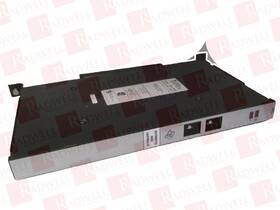
( Brand: Texas Instruments Plc ), ( Manufacturer Part Number: 500-2109 )
Review TEXAS INSTRUMENTS PLC Siemens 5002109 Used
The **Texas PLC 500-2109** (also known as the **Siemens 5002109**) is a robust and versatile programmable logic controller (PLC) designed for industrial automation applications, particularly within the Siemens 500 Series architecture. This compact yet powerful unit serves as a reliable workhorse in manufacturing, process control, and automation systems, offering a blend of flexibility, durability, and ease of integration. Engineered with Siemens proven engineering standards, the 500-2109 operates as a modular controller, allowing users to expand its functionality through a variety of input/output (I/O) modules, communication interfaces, and optional memory upgrades. Its solid-state construction ensures resistance to environmental challenges such as temperature fluctuations, vibration, and electrical noise, making it ideal for harsh industrial environments where reliability is paramount.
The PLC features a **2109-series CPU module**, which provides a balance of processing power and memory capacity, accommodating a wide range of control logic, data handling, and communication protocols. With **1,024 words of user memory** (expandable via optional memory extensions), the 500-2109 can manage complex control programs, including ladder logic, function block diagrams, and structured text, depending on the programming environment used. Its **16-bit architecture** enables efficient handling of arithmetic operations, data manipulation, and real-time control tasks, ensuring precise and responsive automation. The unit also supports multiple communication protocols, including **Siemens proprietary protocols (e.g., AS-i, PROFIBUS, and MPI)**, as well as industry-standard interfaces like **RS-232/422/485**, facilitating seamless integration with HMIs, scanners, and higher-level supervisory systems.
One of the standout features of the 500-2109 is its **modular I/O expansion capability**, allowing users to configure the system according to specific application requirements. Whether interfacing with discrete sensors, analog signals, or high-speed counters, the PLC can be extended with a variety of I/O modules, including digital inputs/outputs, analog inputs/outputs, and specialized modules for temperature, pressure, or motion control. This modularity not only enhances the system s adaptability but also simplifies maintenance and scalability, as additional modules can be added or replaced without disrupting the entire operation. The unit s **backplane architecture** ensures high-speed data transfer between the CPU and peripheral modules, reducing latency and improving overall system performance.
In terms of programming and diagnostics, the 500-2109 is supported by Siemens **STEP 5** or **STEP 7** software environments, depending on the specific model variant and application demands. These user-friendly development platforms provide intuitive tools for creating, debugging, and monitoring control programs, while built-in diagnostic features offer real-time error detection, fault logging, and status monitoring. The PLC s **watchdog timer** and **fail-safe mechanisms** further enhance reliability by ensuring system stability and rapid recovery from unexpected interruptions. Additionally, the 500-2109 s compatibility with **Siemens extensive library of function blocks and standard functions** accelerates programming efforts, allowing engineers to implement complex control strategies efficiently.
Beyond its technical specifications, the **Texas PLC 500-2109 (Siemens 5002109)** is renowned for its **long-term availability and legacy support**, making it a trusted choice for industries maintaining older automation systems or those transitioning from outdated controllers. Its **industrial-grade construction**, with a **wide operating temperature range (-25 C to 60 C)** and **high resistance to electrical surges**, ensures consistent performance even in demanding environments. Whether deployed in discrete manufacturing, continuous process control, or building automation, this PLC delivers a dependable foundation for modernizing and optimizing industrial operations. With its combination of performance, flexibility, and Siemens reputation for quality engineering, the 500-2109 remains a cornerstone in industrial automation, offering a proven solution for engineers and technicians seeking a balance of power and reliability.
### **Analysis of Buying a Texas PLC (Model 500-2109) and Siemens 5002109 (500-2109) Module**
The **Texas Instruments (TI) 500-2109** is a legacy **500 Series Programmable Logic Controller (PLC)**, while the **Siemens 5002109** is a **Siemens SIMATIC S5** module (a direct competitor in the industrial automation market). Both systems are outdated but still used in older industrial applications. Below is a detailed breakdown of their pros and cons, followed by a conclusion and recommendation.
---
### **Texas Instruments 500-2109 PLC**
#### **Pros:**1. **Compatibility with Legacy Systems** The TI 500 Series was widely used in the 1980s 1990s, making it a reliable choice for maintaining older control systems where replacement is impractical.
2. **Reliability in Industrial Environments** Designed for harsh industrial conditions, with robust construction and resistance to electrical noise.
3. **Proven Performance** If properly maintained, these PLCs can operate reliably for decades, especially in applications where frequent failures are unacceptable.
4. **Lower Cost of Replacement Parts** Since these systems are no longer in mass production, spare parts (relays, modules, power supplies) may still be available at reasonable prices from distributors or eBay.
5. **Simple Programming (Ladder Logic)** The TI 500 Series uses a straightforward ladder logic programming environment, which is easier for technicians familiar with basic PLC logic.
6. **Modular Expandability** The system allows for expansion via additional I/O modules (e.g., 500-2109 is a power supply/module, but compatible with other 500 Series I/O units).
7. **No Licensing or Subscription Costs** Unlike newer PLCs (e.g., Siemens TIA Portal, Allen-Bradley Studio 5000), there are no ongoing software licensing fees.
#### **Cons:** 1. **Obsolete Technology** No longer supported by TI, meaning:- No official firmware updates.
- Limited or no technical support from the manufacturer.
- Difficulty finding trained engineers familiar with the system.
2. **Limited I/O Capacity** The 500 Series has fewer I/O points compared to modern PLCs, which may require additional modules or external relays for complex applications.
3. **No Ethernet or Modern Communication Protocols** Relies on older interfaces (e.g., RS-232, proprietary TI communication), making integration with modern SCADA or HMI systems difficult.
4. **Hardware Degradation Over Time** Components like relays, capacitors, and memory chips may fail after years of use, requiring constant maintenance.
5. **No Cloud or Remote Monitoring** Unlike modern PLCs, there is no built-in support for remote diagnostics or cloud connectivity.
6. **Security Vulnerabilities** Older PLCs lack encryption and cybersecurity features, making them susceptible to unauthorized access or industrial espionage.
7. **Difficulty in Finding Skilled Technicians** Younger engineers are less likely to be trained on legacy systems, increasing operational risks.
---
### **Siemens 5002109 (SIMATIC S5 Module)**
*(Note: The "5002109" appears to be a specific I/O module for the Siemens S5-115U or S5-135U PLC, not a standalone PLC like the TI 500-2109.)*
#### **Pros:**1. **Widely Used in European/Global Industry** The Siemens S5 was a dominant PLC in the 1980s 1990s, with extensive documentation and community support.
2. **Modular and Expandable** The S5 system allows for easy addition of I/O modules (e.g., 5002109 may be a digital input/output module) to meet application needs.
3. **Better Documentation and Manuals** Siemens provided comprehensive manuals, and third-party resources (e.g., forums, books) are more abundant than for TI s 500 Series.
4. **Compatibility with Other Siemens Modules** Works seamlessly with other S5 modules, power supplies, and communication interfaces (e.g., AS-Interface, Profibus predecessors).
5. **Relatively Stable Hardware** Siemens S5 PLCs were generally more robust than TI s 500 Series, with fewer reported reliability issues.
6. **Ladder Logic Programming** Like the TI system, it uses ladder logic, making it accessible to technicians with basic PLC knowledge.
#### **Cons:** 1. **Also Obsolete with Limited Support** Siemens discontinued the S5 line in the late 1990s/early 2000s, meaning:- No official support or updates.
- Difficulty finding original Siemens parts (though aftermarket suppliers exist).
2. **Complexity in Programming** The S5 s programming environment (e.g., S5-GRAPH, S5-PAS) is more complex than TI s, requiring deeper training.
3. **No Modern Communication** Relies on older protocols (e.g., AS-Interface, early Profibus), limiting integration with contemporary systems.
4. **Higher Cost of Replacement Parts** Compared to TI, Siemens S5 parts may be harder to source, especially for rare modules.
5. **Cybersecurity Risks** Like the TI 500 Series, the S5 lacks modern security features, making it vulnerable to cyber threats.
6. **Deprecated Training Programs** Most industrial training programs no longer cover S5 or S5 programming, increasing the risk of operational gaps.
---
### **Comparison Summary**
**Factor** **TI 500-2109** **Siemens 5002109 (S5 Module)**
-------------------------- ---------------------------------------- ----------------------------------------
**Manufacturer Support** None (discontinued) None (discontinued)
**Reliability** Decent for legacy systems Generally more stable than TI 500
**Programming Complexity** Simple (ladder logic) More complex (S5-specific tools)
**I/O Capacity** Limited (requires additional modules) Modular but still limited by age
**Communication** RS-232, proprietary AS-Interface, early Profibus
**Cost of Parts** Moderate (some availability) Higher (less common than TI)
**Technician Availability** Very limited Limited but slightly better than TI
**Cybersecurity** None None
**Future-Proofing** Not applicable Not applicable
---
### **Conclusion**
Both the **Texas Instruments 500-2109** and **Siemens 5002109 (S5 module)** are **legacy systems** with significant limitations in today s industrial environment. While they may still function in **maintenance mode** for older applications, their **lack of support, outdated technology, and difficulty in finding skilled personnel** make them poor choices for new installations or long-term reliability.
- **If you must use a legacy PLC**, the **TI 500 Series** may be slightly easier to work with due to its simpler programming and broader availability of spare parts (especially for power supplies and basic I/O). However, the **Siemens S5** is more robust and has better documentation, which could be an advantage if you have access to experienced S5 technicians.
- **Neither system is recommended for new projects.** Modern PLCs (e.g., Siemens S7-1200/1500, Allen-Bradley Micro800, or Rockwell Logix) offer **Ethernet connectivity, cybersecurity, cloud integration, and easier programming**, making them far superior for future-proofing.
---
### **Recommendation**
1. **For Existing Legacy Systems:**- **Continue using the TI 500 or Siemens S5** only if the system is **critical to operations** and **no safer alternative exists**.
- **Invest in preventive maintenance** (e.g., replacing failing relays, cleaning contacts, backing up programs) to extend the system s life.
- **Document all procedures** in case technicians with legacy knowledge retire.
- **Consider a parallel modern PLC** for new control logic to gradually phase out the old system.
2. **For New Installations or Replacements:**- **Avoid purchasing new TI 500-2109 or Siemens 5002109 units.** Instead, source **used or refurbished modern PLCs** (e.g., Siemens S7-1200, Allen-Bradley CompactLogix) from reputable suppliers.
- **If budget is extremely limited**, a **used Siemens S5 or TI 500 PLC** can be sourced from industrial auctions (e.g., eBay, industrial surplus stores), but **only if absolutely necessary**.
- **Train staff on modern PLCs** to ensure long-term operability and reduce dependency on legacy systems.
3. **Long-Term Strategy:**- **Plan a migration to a modern PLC system** over
Details:
Sells new and surplus product develops channels to purchase such. Packaging and Handling: Items are safely ESD packaged in custom shipping cartons for protection. Call to use a shipping service other than the ones listed. All products are guaranteed to be working but may show signs of use if purchasing a used product.
part #: 5002109 prices
- $44.95-$399.00
specifications sensoindustria:
- brand: Texas Instruments Plc
- mpn: 500-2109
payments sensoindustria:
- credit card: Visa
- other
- wallet: Paypal
seller sensoindustria:
- # reviews: 196880
- rating: 99.6%
- city: 1 Millennium Dr, Willingboro, NJ 08046
shipping sensoindustria:
- class: Standard
- cost: $12.90
- transit: 27-32 Days
- type: Fixed
- service: Standard
returns sensoindustria:
- time: 30 Days
- paid by: Buyer
- method: Money back
- policy: Returns Accepted
general sensoindustria:
- PLCs HMIs > PLC Peripheral Modules > PLC Input Output Modules
- condition: Used
offer sensoindustria:
- quantity: 1
- availability: In Stock
- started: March 29, 2026
- options: Ship-to-home
- sold: 0
Texas Instruments Plc 500-2109 Is Similar To:
- 2586265-0003 Siemens New Texas Instruments (35.8% similar) This item is new in original packaging from the manufacturer, opened for inspection by our QC department...(December 7th, 2017)
- 305-01n Texas Instruments Input Module (46.2% similar) ...(December 5th, 2017)
- 305-02b Texas Instruments Series Plc Modules (47.4% similar) 305-02B main module D3-16TR D3-16NE3...(July 23rd, 2018)
- 305-05b Texas Instruments Programmable Controller Unit Cpu (43.2% similar) Inspected and tested for functionality through spartan integrated systems...(May 30th, 2018)
- 305-10t Texas Instruments Insturments Output Module (48.1% similar) ...(March 4th, 2018)
- 305-35t-c Texas Instruments 24vdc Output (43% similar) Shipping quotes are for the USA lower 48 states only. Please for shipping quote...(January 23rd, 2018)
- 305-55t Texas Instruments Output Module Used (51.5% similar) If another carrier such as ups or FedEx is required to ship due the size, then shipping costs may change...(October 25th, 2018)
- 500-2101 Texas Instruments Model Channel Controller (36.5% similar) Items are sold as is. Shipping: domestic shipping is to the lower 48 us. A small shipping charge is added to items purchased for less than 100 and weighing more 20 lbs. This charge is for shipping, handling and materials. All prices are negotiable...(March 19th, 2018)
- 500-2151a Siemens Ti Texas Instruments Power Supply Module (41.4% similar) ...(August 2nd, 2018)
- 500-50 Siemens Texas Instruments Output Module (40.4% similar) ...(August 16th, 2018)
- 500-5005 Texas Instruments Model Input Module Vac (37.3% similar) LOC:05 describe. We primary injection test and secondary all breakers that are listed as tested. Most items ship same day...(March 12th, 2019)
