SIEMENS 407-0KA01-0AA0 Simatic Plc Modules S7/400 Input/output 414-2XG03
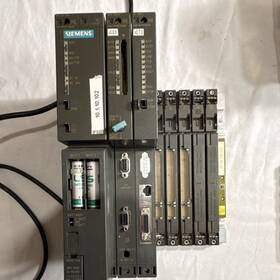
( Brand: Siemens ), ( Manufacturer Part Number: 407-0KA01-0AA0 ), ( Type: Plc Input/output Module ), ( Controller Platform: S7/400 )
Review SIEMENS Simatic S7 S7/400 Plc Input/output Modules 407-0ka01
The **Siemens 407-0KA01-0AA0 SIMATIC S7-400 CPU 414-2XG03** is a robust and versatile industrial automation solution designed to deliver high-performance control for demanding manufacturing, process automation, and machinery applications. As part of Siemens proven SIMATIC S7-400 series, this modular system combines cutting-edge processing power with flexible I/O expansion capabilities, making it an ideal choice for engineers seeking scalability, reliability, and seamless integration into modern industrial networks. The **CPU 414-2XG03**, a high-end processing unit, features a dual-core architecture with advanced instruction set support, enabling rapid execution of complex control algorithms, motion control tasks, and real-time data processing. Its integrated **PROFINET interface** ensures seamless communication with higher-level systems, SCADA platforms, and other PLCs, while its **S7 communication ports** maintain backward compatibility with legacy systems, ensuring long-term operational flexibility. The **407-0KA01-0AA0** designation refers to the **CPU 414-2XG03** itself, which operates with a clock speed of up to **200 MHz** and supports up to **16 MB of user memory**, expandable via optional memory extensions, allowing for the storage of extensive programs, data blocks, and historical logs. This CPU is engineered for high-speed data acquisition and processing, making it well-suited for applications requiring precise timing, such as CNC machine control, packaging systems, or energy management solutions.
Complementing the CPU is the **414-2XG03**, a **digital input/output module** designed for high-density, space-efficient integration into the S7-400 rack system. This module provides **24 digital inputs and 24 digital outputs**, each configurable as either **sink or source** depending on the application requirements, with a robust **24V DC supply voltage** ensuring compatibility with a wide range of sensors and actuators. The inputs feature **optically isolated, noise-resistant design**, protecting against voltage spikes and electromagnetic interference (EMI), while the outputs deliver **high switching capacity (up to 2A per channel)** with fast response times, making them suitable for driving relays, solenoids, and other high-power devices. The module s **PROFIBUS DP** and **S7 communication interfaces** enable high-speed data transfer, reducing cycle times and enhancing overall system responsiveness. Additionally, the **414-2XG03** supports **diagnostic functions**, including status monitoring and error logging, which simplify troubleshooting and maintenance by providing real-time feedback on module performance. Together, the **CPU 414-2XG03** and **414-2XG03 I/O module** form a powerful, modular automation solution that balances performance, reliability, and ease of integration, making it a cornerstone for modern industrial control systems.
For applications requiring even greater flexibility, the **407-0KA01-0AA0** CPU can be paired with a variety of **S7-400 I/O modules**, including analog, digital, and special-purpose units, allowing users to tailor their control system to specific process requirements. The **SIMATIC S7-400 architecture** itself is renowned for its **open, scalable design**, enabling seamless expansion as production demands evolve. Whether deployed in a small machine control setup or integrated into a large-scale automation network, this system leverages Siemens **TIA Portal** software for intuitive programming, simulation, and commissioning, reducing development time and minimizing errors. The **407-0KA01-0AA0** and **414-2XG03** modules are built to withstand the harsh conditions of industrial environments, with **IP20 protection rating** (extendable to IP65 with additional enclosures) and **wide operating temperature ranges (-25 C to 60 C)**, ensuring consistent performance in factories, warehouses, and outdoor installations. With its **high-speed processing, modular expandability, and industry-leading communication protocols**, this Siemens SIMATIC S7-400 solution delivers a future-proof foundation for efficient, high-performance industrial automation.
### **Pros and Cons of Buying Siemens 407-0KA01-0AA0 (SIMATIC S7-400) I/O Modules (407-0KA01 and 414-2XG03)**
#### **Pros**
1. **Reliability and Proven Performance**
The Siemens S7-400 series is a well-established industrial automation platform with decades of field-proven reliability. These modules are designed for harsh industrial environments, offering stable operation in factories, manufacturing plants, and process control systems.
2. **Compatibility with Existing Systems**
The **407-0KA01** (analog input module) and **414-2XG03** (digital input/output module) are part of the S7-400 family, which means they integrate seamlessly with other Siemens controllers (such as S7-400 CPUs) and software (TIA Portal, Step 7). This reduces integration challenges if you already have a Siemens-based system.
3. **Wide Range of Input/Output Options**
- The **407-0KA01** provides **8 analog inputs (0-20 mA or 4-20 mA)**, useful for temperature sensors, pressure transmitters, and other analog signals.
- The **414-2XG03** offers **24 digital inputs and 24 digital outputs**, suitable for discrete signals like limit switches, relays, and motor starters.
This flexibility allows for versatile application in various automation tasks.
4. **High Signal Integrity and Noise Immunity**
Siemens I/O modules are designed with robust signal conditioning, filtering, and isolation to handle noisy industrial environments. The **414-2XG03**, in particular, includes **optically isolated outputs**, reducing the risk of ground loops and electromagnetic interference (EMI).
5. **Long-Term Availability and Spare Parts Support**
Siemens continues to support the S7-400 platform, though newer models (like S7-1200/1500) are preferred for fresh installations. However, these modules remain available through authorized distributors and Siemens spare parts network, making them a reliable choice for legacy systems.
6. **Scalability and Modularity**
The S7-400 architecture allows for easy expansion by adding more I/O modules, communication modules (e.g., PROFIBUS, Ethernet), or additional CPUs. This modularity ensures that your system can grow with your automation needs.
7. **Proven Safety and Compliance**
Siemens I/O modules meet strict industrial safety and compliance standards (e.g., IEC 61131-2, UL, CE). The **414-2XG03** is particularly suitable for applications requiring high-speed digital signaling.
8. **Cost-Effective for Legacy Systems**
If you already have an S7-400 setup, purchasing these modules is often more cost-effective than migrating to a newer platform. Replacing a failing module is cheaper than overhauling an entire control system.
---
#### **Cons**
1. **Outdated Technology Compared to Modern Alternatives**
The S7-400 series is **over 20 years old** (introduced in the late 1990s), and newer platforms like **S7-1200, S7-1500, or even PLCs from competitors (e.g., Allen-Bradley, Beckhoff)** offer:
- Faster processing speeds
- Built-in Ethernet/IP and PROFINET
- Advanced diagnostics and remote access
- Smaller form factors and higher I/O densities
- Better integration with modern SCADA and cloud systems
2. **Limited Software Support**
While Siemens still supports the S7-400 in **TIA Portal (with some restrictions)**, newer features (e.g., advanced motion control, built-in safety functions) are primarily available in the S7-1200/1500. Debugging and programming may require older versions of **Step 7**, which are less intuitive than modern IDEs.
3. **Higher Power Consumption**
The S7-400 system, including I/O modules, tends to consume more power than modern PLCs. This can be a consideration in energy-sensitive applications.
4. **Physical Size and Space Requirements**
The **407-0KA01** and **414-2XG03** are **rack-mounted modules** (typically 19" rack or DIN rail), requiring more space compared to compact, panel-mounted PLCs like the S7-1200.
5. **Deprecated Communication Protocols**
While the S7-400 supports **PROFIBUS DP** and **MPI (Multi-Point Interface)**, these are being phased out in favor of **Ethernet-based protocols (PROFINET, Ethernet/IP)**. This can limit future scalability if your network evolves.
6. **Higher Maintenance and Replacement Costs Over Time**
As Siemens shifts focus to newer technologies, finding **authorized technicians** familiar with S7-400 may become harder. Additionally, **spare parts costs** may rise if demand for these modules declines.
7. **Limited Built-in Diagnostics**
Modern PLCs offer **real-time monitoring, predictive maintenance alerts, and remote diagnostics** via cloud or mobile apps. The S7-400 lacks these features, making troubleshooting less efficient.
8. **Potential for Obsolescence Risks**
While Siemens still supports these modules, there is a risk that:- **Firmware updates** may stop.
- **Third-party compatibility** (e.g., with newer HMIs or drives) may become limited.
- **Distributor availability** could reduce, leading to longer lead times or higher prices.
---
### **Conclusion**
The **Siemens 407-0KA01 (analog input) and 414-2XG03 (digital I/O) modules** are **excellent choices for maintaining or repairing an existing S7-400 automation system**. Their **reliability, signal integrity, and compatibility** make them ideal for legacy applications where migration is not feasible or cost-effective.
However, if you are **starting a new project or planning long-term scalability**, investing in a **modern PLC platform (e.g., S7-1200, S7-1500, or a competitor s system)** would be more advantageous due to:
- **Better performance and features**
- **Easier integration with modern networks and software**
- **Lower long-term maintenance costs**
- **Future-proofing against obsolescence**
---
### **Recommendation**
1. **If you have an existing S7-400 system and need replacement modules:**- **Proceed with purchasing the 407-0KA01 and 414-2XG03** if they are **direct replacements for failing components**.
- Ensure you have **backup documentation** (wiring diagrams, ladder logic) to avoid integration issues.
- Consider **upgrading the CPU or communication modules** to extend the system s lifespan.
2. **If you are designing a new automation system:** - **Avoid the S7-400** in favor of **S7-1200 or S7-1500**, which offer:- **Ethernet-based communication** (PROFINET, OPC UA)
- **Built-in safety functions** (S7-1500 Safety)
- **Simpler programming** (TIA Portal with improved tools)
- **Better scalability** (modular I/O expansion)
- Alternatively, evaluate **competitor PLCs** (e.g., Allen-Bradley Micro800, Beckhoff CX, or Mitsubishi FX5U) if Siemens ecosystem is not a priority.
3. **If budget allows for a phased upgrade:**- **Keep the S7-400 for critical legacy sections** where replacement is impractical.
- **Introduce a new PLC (e.g., S7-1200) for new control loops**, gradually migrating away from the older system.
4. **For long-term cost savings:**- **Train personnel on modern PLCs** to reduce dependency on S7-400 expertise.
- **Document all S7-400 systems thoroughly** before any potential shutdowns, as knowledge transfer may be difficult in the future.
### **Final Verdict**
The **407-0KA01 and 414-2XG03 are solid, reliable modules for S7-400 applications**, but they are **not the best choice for new installations**. If you must use them, ensure they fit within a **well-planned maintenance strategy**. For new projects, **modern PLCs offer superior long-term benefits**.
Details:
Siemens Simatic S7/400 PLC Input/Output Modules 407-0KA01 414-2XG03.
part #: 4070ka010aa0 prices
- $35.13-$255.35
specifications sensoindustria:
- brand: Siemens
- mpn: 407-0ka01-0aa0
- type: Plc Input/output Module
- controller platform: S7/400
payments sensoindustria:
- wallet: Apple-pay
- other
- credit card: Mastercard
returns sensoindustria:
- policy: No Returns
seller sensoindustria:
- city: Acworth, Georgia
- rating: 0.0%
- # reviews: 0
general sensoindustria:
- condition: For parts or not working
- PLCs HMIs > PLC Peripheral Modules > PLC Input Output Modules
shipping sensoindustria:
- type: Calculated
- service: USPS Priority Mail
- carrier: USPS
- transit: 5-12 Days
- cost: $12.58
- class: Expedited
offer sensoindustria:
- started: February 5, 2026
- options: Ship-to-home
- availability: In Stock
- best offers: True
- quantity: 1
- sold: 0
Siemens 407-0KA01-0AA0 Is Similar To:
- 132-4hb01-0ab0 Siemens Digital Output Module (35.7% similar) Digital output module 6ES7132-4HB01-0AB0...(December 24th, 2017)
- 214-1ad22-0xb0 Siemens Simatic S7-200 Power (37.5% similar) Please e-mail with any questions. This item is guaranteed to be as described...(February 24th, 2018)
- 222-1bf22-0xa0 Siemens Used Output Module Make Offer (35% similar) All technical questions problems should be addressed through messages for the fastest possible service. Any damaged package received should be addressed with the delivering USPS office and a claim filed there. This lot consists of: 1 used Siemens 6ES7 222-1BF22-0XA0 output module no box condition: ...(March 7th, 2019)
- 2586234-0001 Siemens New Sealed Digital Output Module (37.7% similar) This part is newly sealed inside its oem box. All parts repair items sold are final sales. A 30-DAY warranty included...(October 1st, 2018)
- 2586234-0002 Siemens Module Digital Output Dc New In Box Nib (22.1% similar) Only 235 with free shipping anywhere in north America. For regions other than north America, please a shipping quote. You are buying the best of for a fraction cost. The in very good condition all as visible pictures. Siemens module digital output 2a dc new in box nib with free shipping is old stock...(November 10th, 2018)
- 25862410-0001 Siemens New Relay Output Module (35.4% similar) A 30-DAY warranty included. All parts repair items sold are final sales. This part is newly sealed inside its oem box...(October 1st, 2018)
- 321-1bh02-0aa0 Siemens Simatic S7 I-o (34.4% similar) Siemens simatic s7 I o module 1p 6ES7 321-1BH02-0AA0 w connector 392-1AJ00-0AA0 this item is posted and managed courtesy of bonanza...(September 14th, 2017)
- 39vimccn Siemens New Voltage Input (26.9% similar) 02 dated 2013 FREE shipping in continental us. New Siemens 39VIMCCN voltage input module apace ROM...(November 18th, 2017)
- 430-4ua14 Siemens Digital Input Module Vat Invoice (40% similar) Used in good conditions 4LEFT...(November 2nd, 2018)
- 500-50 Siemens Texas Instruments Output Module (38.2% similar) ...(August 16th, 2018)
- 500-5007 Siemens Input Module (35.1% similar) ...(August 16th, 2018)
