SIEMENS 3RN2012-2BA30 Thermistor Motor Plc Module Input/output
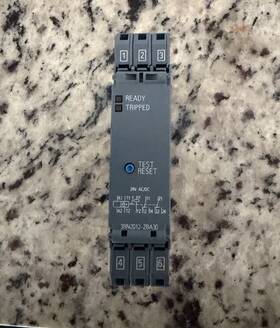
( Brand: Siemens ), ( Manufacturer Part Number: 3RN2012-2BA30 ), ( Type: Plc Input/output Module )
Review SIEMENS Thermistor Motor Protection Plc Input/output Module
The **Siemens 3RN2012-2BA30** is a high-performance thermistor-based input/output module designed for integration into Siemens programmable logic controllers (PLCs), specifically within the **SIMATIC ET 200** or **SIMATIC S7-1200/1500** systems. This compact yet robust module serves as a critical interface for monitoring and controlling temperature-sensitive processes with precision, making it ideal for applications in industrial automation, HVAC systems, chemical processing, food and beverage production, and other environments where accurate temperature feedback is essential. Engineered with Siemens signature reliability, the **3RN2012-2BA30** features a **thermistor input** (a temperature-sensitive resistor) paired with a **binary output**, allowing it to detect temperature variations and trigger corresponding actions such as activating cooling or heating systems through digital signals. The module operates within a temperature range of **-40 C to 85 C**, ensuring durability in harsh industrial conditions while maintaining optimal performance. Its **2-channel design** enables simultaneous monitoring of two distinct temperature points, providing flexibility for dual-process control or redundancy in critical applications. The thermistor input is calibrated to deliver highly accurate readings, minimizing measurement errors and enhancing process stability. Meanwhile, the **binary output** (rated for 24V DC) allows seamless integration with other PLC outputs, enabling automated responses to temperature deviations. With its **compact, DIN-rail-mountable form factor**, the module is designed for easy installation in control panels, reducing wiring complexity and maximizing space efficiency. Additionally, Siemens robust engineering ensures long-term reliability, low maintenance requirements, and compatibility with the broader **SIMATIC ecosystem**, including advanced diagnostics and communication protocols like **PROFIBUS DP** or **PROFINET**. Whether deployed in a manufacturing plant, energy management system, or precision laboratory, the **3RN2012-2BA30** delivers a dependable solution for temperature-sensitive automation, bridging the gap between physical processes and digital control with precision and efficiency.
### **Pros and Cons of buying a Siemens 3RN2012-2BA30 Thermistor Motor PLC Input/Output Module**
#### **Pros:**1. **Compatibility with Siemens PLC Systems** This module is designed specifically for Siemens S7-1200 and S7-1500 series PLCs, ensuring seamless integration with existing automation setups. It supports the PROFINET and PROFIBUS communication protocols, which are widely used in industrial environments.
2. **Thermistor-Based Temperature Monitoring** The module features a thermistor sensor, which provides accurate temperature measurement for applications such as motor winding protection, overheating detection, or environmental monitoring. Thermistors are highly sensitive to temperature changes, offering precise readings.
3. **Direct Motor Protection** The module can monitor motor temperatures in real time, helping prevent overheating, which reduces the risk of motor failure, downtime, and costly repairs. This is particularly useful in applications where motor reliability is critical, such as in HVAC systems, pumps, or conveyor belts.
4. **Easy Integration with Siemens Software** Since it is part of the Siemens ecosystem, it works seamlessly with TIA Portal, SIMATIC WinCC, and other Siemens engineering tools. This simplifies programming, diagnostics, and maintenance tasks.
5. **Compact and Modular Design** The module is part of Siemens modular I/O system, allowing for flexible expansion of the PLC s input/output capabilities without requiring significant space or complex wiring.
6. **Reliability and Durability** Siemens is known for producing high-quality industrial automation components with robust construction, ensuring long-term reliability in harsh environments.
7. **Support for Advanced Diagnostics** The module can provide fault codes and diagnostic information, making it easier to identify issues such as sensor failures, wiring problems, or temperature anomalies before they lead to equipment failure.
8. **Cost-Effective for Specific Applications** While the module itself may have a higher upfront cost compared to generic temperature sensors, its integration with Siemens PLCs can reduce overall system costs by eliminating the need for additional hardware or complex custom solutions.
---
#### **Cons:**1. **Limited to Siemens Ecosystem** If your system is not based on Siemens PLCs or if you are using third-party automation platforms, this module may not be compatible without additional adapters or interfaces. This could add complexity and cost to integration.
2. **Potential High Cost** Siemens industrial components, especially specialized modules like this one, can be more expensive than generic alternatives. For applications where only basic temperature monitoring is required, a simpler or cheaper sensor might suffice.
3. **Dependence on Siemens Support** If technical issues arise, troubleshooting or repairs may require Siemens-certified technicians or support, which could be time-consuming or costly, especially in regions with limited Siemens service centers.
4. **Single-Purpose Functionality** This module is specifically designed for thermistor-based temperature monitoring of motors. If your application requires additional functions (e.g., current monitoring, vibration sensing, or multiple temperature channels), you would need to purchase additional modules, increasing system complexity.
5. **Wiring and Installation Complexity** While modular, the installation of this module still requires careful wiring and configuration, particularly when connecting it to motors or other equipment. Improper installation could lead to false readings or system malfunctions.
6. **Potential for False Positives/Negatives** Like any sensor, thermistors can be affected by environmental factors (e.g., humidity, vibration, or electromagnetic interference), which might lead to inaccurate readings if not properly calibrated or shielded.
7. **Limited Lifespan of Thermistors** Thermistors, while durable, can degrade over time due to repeated temperature cycles or exposure to harsh conditions. This may require periodic recalibration or replacement, adding to maintenance costs.
8. **Learning Curve for Non-Siemens Users** Engineers or technicians unfamiliar with Siemens PLCs or TIA Portal may face a steep learning curve when configuring or troubleshooting this module, potentially increasing setup time.
---
### **Ending Conclusion:**The **Siemens 3RN2012-2BA30 thermistor motor PLC input/output module** is a highly specialized and reliable component for applications requiring precise motor temperature monitoring within Siemens-based automation systems. Its strengths lie in its seamless integration with Siemens PLCs, advanced diagnostic capabilities, and robust performance in industrial environments. However, its compatibility limitations, higher cost, and single-purpose design may make it less ideal for non-Siemens systems or applications where broader functionality is needed.
For users already invested in Siemens automation, this module offers significant advantages in terms of reliability, ease of integration, and motor protection. For others, a cost-benefit analysis is essential to determine whether the benefits outweigh the drawbacks, particularly if simpler or more versatile alternatives exist.
---
### **Recommendation:** - **Buy if:**- You are using a Siemens S7-1200 or S7-1500 PLC and need accurate motor temperature monitoring.
- Your application requires seamless integration with Siemens software (TIA Portal, WinCC, etc.).
- Preventing motor overheating is critical to reducing downtime and maintenance costs.
- You have access to Siemens support or certified technicians for installation and troubleshooting.
- **Avoid if:**- Your system is not Siemens-based, and compatibility issues or additional adapters would complicate integration.
- Your budget is constrained, and a simpler or cheaper temperature sensor would suffice for your application.
- You require additional functions beyond temperature monitoring (e.g., current sensing, multiple channels).
- You lack experience with Siemens PLCs, and the learning curve or support requirements are prohibitive.
- **Alternatives to Consider:**- If Siemens compatibility is not a requirement, explore generic thermistor-based temperature sensors or modules from other manufacturers (e.g., Allen-Bradley, Rockwell, or third-party industrial sensor brands).
- For broader functionality, consider Siemens modules that combine temperature monitoring with other inputs (e.g., current, voltage, or digital I/O).
- If cost is a concern, evaluate whether a simpler RTD (Resistance Temperature Detector) or thermocouple-based solution would meet your needs without the added complexity.
Details:
Siemens 3RN2012-2BA30 Thermistor Motor Protection PLC Input/Output Module.
part #: 3rn20122ba30 prices
- $87.07-$299.00
specifications sensoindustria:
- brand: Siemens
- mpn: 3rn2012-2ba30
- type: Plc Input/output Module
returns sensoindustria:
- policy: No Returns
general sensoindustria:
- PLCs HMIs > PLC Peripheral Modules > PLC Input Output Modules
- condition: Used
offer sensoindustria:
- availability: In Stock
- options: Ship-to-home
- best offers: True
- quantity: 1
- sold: 0
- started: April 18, 2026
shipping sensoindustria:
- cost: $8.72
- service: USPS Ground Advantage
- class: Standard
- transit: 6-10 Days
- carrier: USPS
- type: Calculated
payments sensoindustria:
- credit card: Discover
- wallet: Paypal
- other
seller sensoindustria:
- rating: 0.0%
- city: Windermere, Florida
- # reviews: 11
Siemens 3RN2012-2BA30 Is Similar To:
- 132-4hb01-0ab0 Siemens Digital Output Module (39.3% similar) Digital output module 6ES7132-4HB01-0AB0...(December 24th, 2017)
- 222-1bf22-0xa0 Siemens Used Output Module Make Offer (36.8% similar) All technical questions problems should be addressed through messages for the fastest possible service. Any damaged package received should be addressed with the delivering USPS office and a claim filed there. This lot consists of: 1 used Siemens 6ES7 222-1BF22-0XA0 output module no box condition: ...(March 7th, 2019)
- 235-0kd20-0xa0 Siemens Analog Expansion Module (37% similar) Siemens 6ES7 235-0KD20-0XA0 EM235 analog I o expansion module in good used condition, recently removed from a working installation. Sold as pictured. No manual, cables or other accessories included...(April 21st, 2018)
- 235-0kd21-0xa0 Siemens Analog Expansion Module (37% similar) No manual, cables or other accessories included. Sold as pictured. Siemens 6ES7 235-0KD21-0XA0 EM235 analog I o expansion module in good used condition, recently removed from a working installation...(April 21st, 2018)
- 2586234-0001 Siemens New Sealed Digital Output Module (41.3% similar) This part is newly sealed inside its oem box. All parts repair items sold are final sales. A 30-DAY warranty included...(October 1st, 2018)
- 2586234-0002 Siemens Module Digital Output Dc New In Box Nib (21.1% similar) Only 235 with free shipping anywhere in north America. For regions other than north America, please a shipping quote. You are buying the best of for a fraction cost. The in very good condition all as visible pictures. Siemens module digital output 2a dc new in box nib with free shipping is old stock...(November 10th, 2018)
- 25862410-0001 Siemens New Relay Output Module (42.4% similar) A 30-DAY warranty included. All parts repair items sold are final sales. This part is newly sealed inside its oem box...(October 1st, 2018)
- 39vimccn Siemens New Voltage Input (33.6% similar) 02 dated 2013 FREE shipping in continental us. New Siemens 39VIMCCN voltage input module apace ROM...(November 18th, 2017)
- 3ra1921-1ba00 Siemens New Factory Sealed Module Dc 4011209516496 (32.1% similar) 3RA1921-1BA00 Siemens new factory sealed 3RA19211BA00 dc link module for size s0 as shown item location 11D...(June 29th, 2018)
- 3rk1100-1cq00-0aa3 Siemens Electronic Module (35.9% similar) ...(March 8th, 2018)
- 3rk1304-0hs00-7aa0 Siemens Isolator Module Used (31.7% similar) If another carrier such as ups or FedEx is required to ship due the size, then shipping costs may change...(February 17th, 2018)
