OMRON 3G2A5-OD218 Unit Sysmac Plc Module C500-OD218
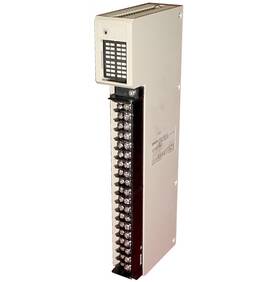
( Brand: Omron ), ( Manufacturer Part Number: 3G2A5-OD218 ), ( Type: Plc Output Module ), ( Unit Type: Unit ), ( Communication Standard: Cpu Direct ), ( Analog/digital: Digital ), ( Controller Platform: C500 ), ( Country Of Origin: Japan )
Review OMRON Output Unit Sysmac C500 Plc Module
The **Omron CJ2M-C500-OD218** and **CJ3G2A5-OD218** are high-performance, modular components of Omron s **Sysmac Studio** programmable logic controller (PLC) ecosystem, designed to deliver robust automation solutions for industrial applications requiring advanced connectivity, reliability, and scalability. These **OD218 communication modules** serve as critical bridges between the Sysmac C500 series PLCs and external networks, enabling seamless data exchange with other devices, enterprise systems, or field instruments via high-speed, deterministic communication protocols. The **CJ3G2A5-OD218** is specifically tailored for Omron s **CJ3 Series** PLCs, while the **C500-OD218** integrates directly with the **Sysmac CJ2M/CJ2H Series**, ensuring backward and forward compatibility within Omron s modular architecture. Both modules support **EtherNet/IP (Common Industrial Protocol, CIP)** and **Modbus TCP**, making them versatile for integration into **Rockwell Automation** networks, **Siemens** systems, or other third-party devices that adhere to these widely adopted industrial communication standards. With a **10/100 Mbps Ethernet interface**, these modules ensure rapid, low-latency data transmission, which is essential for real-time monitoring, motion control, and distributed automation applications. The robust **industrial-grade construction** featuring a metal enclosure, wide operating temperature range (-20 C to 60 C), and compliance with **IEC 61131-2** and **IEC 62061** safety standards ensures reliable operation in harsh factory environments, including exposure to dust, moisture, and electrical noise. Whether deployed in **discrete manufacturing, process control, or building automation**, these modules provide engineers with the flexibility to expand network capabilities without compromising performance, making them an indispensable asset for modern, interconnected automation systems. Their intuitive **Sysmac Studio integration** simplifies configuration, diagnostics, and troubleshooting, allowing operators to visualize network status, monitor data flow, and optimize system efficiency with minimal downtime.
### **Pros and Cons of buying a Omron CJ2M-C500H CPU Unit (3G2A5-OD218) with C500 PLC Module**
#### **Pros**
1. **High Performance and Reliability**
The CJ2M-C500H is part of Omron s CJ2M series, known for robust industrial automation performance. It supports high-speed processing, making it suitable for complex control applications. The CPU module is designed for durability, with features like extended temperature ranges and resistance to electrical noise, ensuring long-term reliability in harsh environments.
2. **Scalability and Flexibility**
The CJ2M series is modular, allowing easy expansion with additional I/O modules, communication interfaces (Ethernet, DeviceNet, CC-Link, etc.), and optional memory upgrades. This modularity makes it adaptable to growing automation needs without requiring a complete system overhaul.
3. **Advanced Communication Capabilities**
The C500 CPU supports multiple communication protocols, including:- **Ethernet/IP** (for integration with Allen-Bradley systems)
- **CC-Link** (high-speed industrial networking)
- **DeviceNet** (fieldbus communication)
- **Modbus RTU/TCP** (for third-party device compatibility)
This versatility simplifies integration with other PLCs, HMIs, and SCADA systems.
4. **High-Speed Processing and Timing**
The CJ2M-C500H offers high-speed scan rates (up to 10 s per instruction) and precise timing functions, which are critical for applications requiring real-time control, such as motion control, synchronization, or high-speed packaging.
5. **Omron s Software Support**
The unit is compatible with **Sysmac Studio**, Omron s unified engineering software for PLC, HMI, and motion control. This software provides a user-friendly interface for programming, debugging, and monitoring, reducing development time and improving efficiency.
6. **Energy Efficiency**
Omron s CPUs are designed with power-saving features, such as sleep modes and optimized power consumption during idle periods, which can reduce operational costs in large-scale systems.
7. **Global Support and Aftermarket Availability**
Omron has a widespread distribution network, making parts and technical support readily available worldwide. This is particularly advantageous for maintenance and troubleshooting in remote or critical applications.
8. **Compatibility with Legacy and Modern Systems**
The CJ2M series can interface with older Omron PLCs (e.g., CP1E, C200H) while also supporting modern trends like Industry 4.0 through Ethernet/IP and OPC UA (via optional modules).
9. **Motion Control Capabilities**
The C500 CPU can be paired with Omron s **NJ Servo Drives** or **CV Servo Motors** for advanced motion control applications, such as CNC machines, robotics, or conveyor systems.
10. **Cost-Effective for Mid-to-Large Applications**
While not the cheapest entry-level PLC, the CJ2M-C500H offers a balanced combination of performance and cost for applications that require more power than basic PLCs (e.g., CP1E) but do not necessitate the high-end features of Omron s CJ2H or CJ2N series.
---
#### **Cons**
1. **Higher Initial Cost Compared to Entry-Level PLCs**
The CJ2M-C500H is more expensive than basic PLCs like Omron s CP1E or Siemens LOGO! or MicroLogix. For small-scale or simple applications, this cost may not be justified.
2. **Complexity for Beginners**
The CJ2M series, especially with advanced features like high-speed counters, motion control, and multi-protocol communication, has a steeper learning curve. Engineers new to PLC programming may require additional training to fully utilize its capabilities.
3. **Limited Built-In Memory (Compared to Some Competitors)**
The standard CJ2M-C500H has a fixed amount of internal memory (e.g., 128KB for data memory in some models). While expandable via optional memory modules, this can be a limitation for applications requiring extensive data logging or large programs.
4. **Dependence on Omron s Ecosystem**
While the CJ2M supports multiple protocols, some advanced features (e.g., certain motion control algorithms) are tightly integrated with Omron s hardware and software. Users heavily reliant on non-Omron systems (e.g., Allen-Bradley, Beckhoff) may face compatibility challenges without additional gateways.
5. **Firmware and Software Updates**
Omron occasionally releases firmware updates for its PLCs, which may require re-programming or re-configuration. While generally stable, this can occasionally lead to downtime if not managed properly.
6. **Physical Size and Installation Space**
The CJ2M-C500H is larger than compact PLCs (e.g., CP1E), requiring more space in control panels. This may be a constraint in applications with limited cabinet space.
7. **Potential for Overkill in Simple Applications**
For basic on/off control, sequencing, or small-scale automation, the CJ2M-C500H may offer more features than needed, leading to unnecessary complexity and higher costs.
8. **Resale Value and Obsolescence Risk**
While Omron is a stable brand, older PLC models (even recent ones like the CJ2M) may become obsolete as newer series (e.g., CJ2N, CJ2H) are introduced. This could affect resale value or long-term support for legacy systems.
9. **Training and Maintenance Costs**
Organizations without existing Omron expertise may incur additional costs for training personnel to effectively use the CJ2M-C500H. Maintenance also requires familiarity with Omron s software and hardware.
10. **Limited Analog Input/Output Channels in Base Model**
The base CJ2M-C500H may not include high-resolution analog I/O, requiring additional modules (e.g., AI/AO units) for precise process control applications like temperature or pressure monitoring.
---
### **Conclusion**
The **Omron CJ2M-C500H CPU (3G2A5-OD218)** with the C500 PLC module is a **strong choice for mid-to-large-scale industrial automation applications** that require high performance, scalability, and advanced communication capabilities. Its strengths lie in its **reliability, speed, flexibility, and compatibility with Omron s ecosystem**, making it ideal for:
- **Motion control systems** (e.g., CNC machines, robotics)
- **Complex process automation** (e.g., packaging, material handling)
- **Systems requiring multi-protocol communication** (e.g., integration with HMIs, SCADA, or other PLCs)
- **Applications needing high-speed scanning or precise timing**
However, it may be **overkill for simple or small-scale applications**, where a lower-cost PLC (e.g., CP1E, Siemens S7-1200, or Allen-Bradley Micro800) would suffice. Additionally, the **learning curve and dependency on Omron s software** could pose challenges for users without prior experience.
For **new projects requiring robust, future-proof automation**, the CJ2M-C500H is a **highly recommended investment**, especially when paired with Omron s **Sysmac Studio** for seamless programming and maintenance. For **budget-conscious or simple applications**, alternatives like the **CP1E or CJ2N series** (if available) may offer a better cost-performance balance.
### **Final Recommendation**
**Buy the Omron CJ2M-C500H CPU if:**- Your application demands **high-speed processing, motion control, or multi-protocol communication**.
- You are already using Omron s ecosystem (e.g., NJ servo drives, CJ2M I/O modules, Sysmac Studio).
- The system will require **scalability and long-term reliability** in an industrial environment.
- You have **engineering resources** to handle the programming complexity.
**Consider alternatives if:**- Your project is **small-scale or simple**, and a lower-cost PLC (e.g., CP1E, Allen-Bradley Micro800) would meet your needs.
- You prefer **open-standard PLCs** (e.g., Siemens S7-1200, Beckhoff TwinCAT) with broader third-party support.
- Budget constraints make the CJ2M-C500H **too expensive** without justifying features.
For most **industrial automation projects requiring performance and flexibility**, the CJ2M-C500H remains a **solid and well-supported choice**.
Details:
0.4 kg, Module Type: Digital Transistor Output. Point Capacity: 32-point / 16-point Mounting Type: Panel Mount.
part #: 3g2a5od218 prices
- $50.00-$276.79
specifications sensoindustria:
- brand: Omron
- mpn: 3g2a5-od218
- type: Plc Output Module
- unit type: Unit
- communication standard: Cpu Direct
- analog/digital: Digital
- controller platform: C500
- country of origin: Japan
returns sensoindustria:
- policy: Returns Accepted
- method: Money back
- time: 30 Days
- paid by: Seller
general sensoindustria:
- PLCs HMIs > PLC Peripheral Modules > PLC Input Output Modules
- condition: Used
offer sensoindustria:
- options: Ship-to-home
- quantity: 5
- started: May 22, 2026
- availability: In Stock
- best offers: True
- sold: 0
shipping sensoindustria:
- cost: $0.00
- class: Standard
- type: Fixed
- carrier: USPS
- transit: 5-11 Days
- service: USPS Ground Advantage
seller sensoindustria:
- # reviews: 5841
- city: Sparta, Tennessee
- rating: 100.0%
payments sensoindustria:
- other
- wallet: Apple-pay
- credit card: Diners-club
Omron 3G2A5-OD218 Is Similar To:
- 32et1 Omron Output Unit For (42.2% similar) Get business information that counts...(March 19th, 2019)
- 3g2a3-ia221 Omron Input Ouput Module Unit Type (33% similar) Omron 3G2A3-IA221 input output I o module unit type IA221 s6 4-POINT has been repaired...(January 7th, 2019)
- 3g2a3-oc221 Omron Output Module Nnb (38.8% similar) Omron 3G2A3-OC221 output card new no box...(January 3rd, 2018)
- 3g2a5-0a222 Omron Output Unit C500-0a222 (48.5% similar) Used Omron 3G2A5-0A222 output unit C500-0A222...(December 5th, 2017)
- 3g2a5-od213 Omron Output Module (55.3% similar) Used Omron 3G2A5-OD213 output module C500-OD213...(November 3rd, 2018)
- 3g2a5-od412 Omron Output Unit (47.8% similar) Omron C500-OD4123G2A5-OD412 output unit removed from working installation, nice condition...(April 9th, 2018)
- 3g2a5-rm201 Omron Remote Master Unit Plc Module (52.7% similar) Unit is missing some components but connections are in good cosmetic condition. Cosmetics unit has light scratches and discoloration from normal use. Function this unit is in very good working condition. Features an RS485 connection...(May 12th, 2018)
- 3g2c4-sc021e Omron Expansion Unit Outputs And Inputs (34.8% similar) Used Omron plc expansion part number 3G2C4-SC021 input module C120-D217 for 24 volt inputs. 32 inputs and outputs total. Pulled from working system. The output module is a C120-OD412 transistor for CDC out...(March 21st, 2018)
- 3g2t4-id218 Omron New In Box Input Module (38.5% similar) Shelving number L40...(August 11th, 2018)
- 3g8b2-nio21 Omron Input Module Board For Plc (29.9% similar) Test results of items in offer are described to the best our ability ad. Money must be drawn against a us bank. Let us know if there is an issue with the shipping costs, as they are automatically calculated by. Omron 3G8B2-NIO21 I o input module board for plc N1021 8a 8AP NI021 we gladly ship to ...(October 9th, 2018)
- 3g8b2-no020 Omron Output Module Board For Plc (35.2% similar) Omron 3G8B2-NO020 I o output module board for plc 7c comes with interface connector as seen in pictures. Money must be drawn against a us bank. Omron 3G8B2-NO020 I o output module board for plc N0O20 N0020 7c we gladly ship to most countries. Test results of items in offer are described to the best ...(October 9th, 2018)
