WESTELL 3140-026 Plc Modules Automation
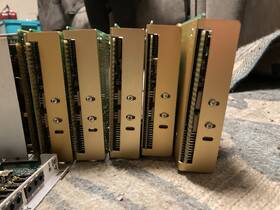
( Brand: Westell ), ( Manufacturer Part Number: 3140-026 ), ( Part Type: Module Unit )
Review WESTELL Plc Modules Industrial Automation Facility Units
The **Westell 3140-026 PLC Module** is a high-performance, industrial-grade Programmable Logic Controller (PLC) designed to deliver robust automation solutions for demanding applications in manufacturing, process control, and facility management. Engineered with precision and reliability in mind, this module integrates seamlessly into Westell s advanced automation ecosystems, offering a scalable and flexible platform for controlling complex machinery, monitoring critical parameters, and optimizing operational efficiency. Built with a compact yet durable design, the 3140-026 features a robust housing that withstands harsh environmental conditions, including temperature fluctuations, humidity, and electromagnetic interference, ensuring uninterrupted performance in industrial settings. At its core, this PLC module operates on a powerful, real-time processing architecture, enabling rapid execution of control logic, seamless communication with peripheral devices, and precise synchronization of automated processes. With a wide range of configurable input/output (I/O) options including digital I/O, analog signals, and communication interfaces it accommodates diverse automation requirements, from simple sensor monitoring to intricate motion control systems.
The 3140-026 excels in its communication capabilities, supporting multiple industry-standard protocols such as Modbus, Profibus, Ethernet/IP, and DeviceNet, which facilitate seamless integration with other PLCs, HMIs (Human-Machine Interfaces), SCADA systems, and enterprise-level software. This interoperability allows for centralized control and real-time data acquisition, enabling operators to remotely monitor and manage automation processes with ease. The module s programming environment is intuitive and versatile, supporting ladder logic, structured text, and other programming languages, making it accessible to both experienced engineers and newcomers to industrial automation. Additionally, its built-in diagnostics and self-healing features ensure minimal downtime by quickly identifying and resolving issues, while its modular design allows for easy expansion or reconfiguration to adapt to evolving operational needs.
Beyond its technical prowess, the Westell 3140-026 PLC module emphasizes energy efficiency and sustainability, incorporating power-saving features that reduce operational costs without compromising performance. Its compact form factor and efficient cooling mechanisms further enhance its suitability for space-constrained environments, making it an ideal choice for retrofitting existing systems or deploying in new, high-density automation setups. Whether deployed in a factory floor, a water treatment facility, or a smart building infrastructure, this PLC module delivers a blend of reliability, flexibility, and cutting-edge functionality, empowering businesses to achieve higher levels of automation, precision, and productivity. With Westell s commitment to innovation and quality, the 3140-026 stands as a cornerstone for modern industrial automation, driving efficiency and innovation across diverse sectors.
### **Pros and Cons of buying a Westell 3140-026 PLC Module for Automation**
#### **Pros**
1. **Compatibility with Westell Systems** The 3140-026 is designed specifically for Westell s VoIP and broadband access platforms (such as the XM4000 or XM4000i), ensuring seamless integration with existing infrastructure.
2. **Reliable Performance for Automation** As a Programmable Logic Controller (PLC) module, it can automate tasks such as call routing, QoS management, and fault detection in telecom and network environments, reducing manual intervention.
3. **Modular and Upgradable** The Westell 3140-026 fits into a larger ecosystem of Westell hardware, allowing for scalability and future upgrades without a complete system overhaul.
4. **Industry-Specific Use Case** Ideal for telecom providers, ISPs, or enterprise networks requiring automated control over VoIP, broadband, or hybrid networks, where precise timing and synchronization are critical.
5. **Support for Advanced Features** The module supports features like **TR-069 remote management**, **SNMP monitoring**, and **VoIP call processing**, making it useful for automated network diagnostics and troubleshooting.
6. **Proven Track Record** Westell (now part of **Cisco s legacy telecom hardware**) has a history of reliability in carrier-grade networking equipment, suggesting durability in long-term deployments.
7. **Cost-Effective for Legacy Systems** If you already have Westell equipment, replacing or upgrading a failing module may be cheaper than migrating to a new vendor s solution.
---
#### **Cons**
1. **Limited New Market Support** Westell s hardware is no longer actively developed by Cisco, meaning **no official firmware updates, security patches, or long-term technical support** from the original manufacturer.
2. **Hardware Obsolescence** The 3140-026 may become difficult to source as Westell s legacy products phase out, leading to potential supply chain disruptions.
3. **Lack of Modern Protocols** Unlike newer PLC modules, it may not support **latest security standards (e.g., TLS 1.3, modern encryption)** or **cloud-based automation tools**, limiting flexibility in modern networks.
4. **Dependence on Proprietary Ecosystem** If your network expands beyond Westell s platforms, integrating this module may require additional bridges or adapters, increasing complexity.
5. **Potential Compatibility Issues** If you plan to mix it with non-Westell hardware (e.g., Cisco IOS, Juniper, or Linux-based PLCs), you may face **driver or firmware incompatibility challenges**.
6. **No Official Warranty Beyond Original Purchase** Since Westell is no longer in active production, any warranty claims would likely be handled through resellers or third-party vendors, which may not offer the same level of service.
7. **Learning Curve for Automation** Westell s documentation and development tools for PLC automation may be outdated, requiring additional time to master compared to modern open-source or vendor-neutral alternatives.
8. **Energy Efficiency Concerns** Older PLC modules may consume more power than newer, optimized hardware, which could impact operational costs in large deployments.
---
### **Conclusion**
The **Westell 3140-026 PLC module** is a **practical choice for organizations deeply embedded in Westell s ecosystem** who need automation for VoIP, broadband, or legacy telecom systems. Its strengths lie in **seamless integration, reliability for specific use cases, and cost efficiency** when paired with existing hardware.
However, **long-term risks** such as **lack of updates, obsolescence, and limited vendor support** make it a **short-to-medium-term solution at best**. For new deployments or future-proofing, **modern PLC alternatives (e.g., Cisco IOS-based, Linux-based, or open-source PLCs like SBC or FreePBX)** may offer better scalability, security, and longevity.
---
### **Recommendation**
- **Buy if:**- You **must maintain compatibility** with existing Westell infrastructure.
- The module is **critical for a legacy system** where migration is not feasible.
- You have **limited budget** and can accept the risks of obsolescence.
- **Avoid if:**- You plan to **expand beyond Westell s ecosystem** in the next 3 5 years.
- **Security and updates** are a priority (consider newer, supported PLC platforms).
- You need **cloud integration, AI-driven automation, or modern protocol support**.
- **Alternative Considerations:**- **Cisco IOS-based PLC modules** (for Cisco-compatible networks).
- **Open-source PLC solutions** (e.g., **FreePBX, Asterisk, or Linux-based automation tools**).
- **Third-party resellers** offering **refurbished or supported Westell modules** with extended warranties.
For most **new automation projects**, investing in a **supported, modern PLC platform** would mitigate long-term risks while providing better flexibility. However, if the 3140-026 is the **only viable option** for your current setup, proceed with caution and **plan for a future migration path**.
Details:
6 total units.
part #: 3140026 prices
- $10.00-$15.59
specifications sensoindustria:
- brand: Westell
- mpn: 3140-026
- part type: Module Unit
returns sensoindustria:
- policy: No Returns
seller sensoindustria:
- rating: 0.0%
- city: Indianapolis, Indiana
- # reviews: 0
shipping sensoindustria:
- service: USPS Ground Advantage
- carrier: USPS
- type: Calculated
- cost: $6.87
- transit: 4-10 Days
- class: Standard
payments sensoindustria:
- other
- wallet: Google-pay
- credit card: Visa
offer sensoindustria:
- sold: 0
- best offers: True
- quantity: 1
- availability: In Stock
- started: March 10, 2026
- options: Ship-to-home
general sensoindustria:
- PLCs HMIs > PLC Peripheral Modules > PLC Input Output Modules
- condition: Used
Westell 3140-026 Is Similar To:
- Westell A90-343001 Rev Ad Circuit Board Industrial Automation Plc Controller (55.2% similar) Condition: this item is a Westell A90-343001 circuit board. This component is suitable for industrial automation and control systems, potentially as a part of plc or controller. Model: A90-343001. Revision: ad. Key features:: manufacturer: Westell. It is in good condition with some minor signs of ...(March 9th, 2026)
