ASCOR 3000-4802 Cmos Module I/o
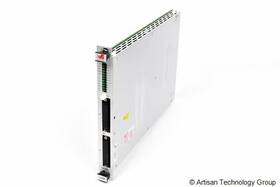
( Brand: Ascor ), ( Manufacturer Part Number: 3000-4802 ), ( Part Type: Module ), ( Country Of Origin: United States )
Review ASCOR Cmos I/o Module
The **Ascor 3000-4802 80 cmOS I/O Module** is a high-performance, modular input/output device designed to integrate seamlessly into industrial automation and control systems, offering robust and flexible connectivity for a wide range of applications. Part of Ascor s advanced 3000 series, this module provides a compact yet powerful solution for managing digital and analog signals with exceptional reliability and precision. Built with a **CMOS-based architecture**, it ensures low power consumption while maintaining high-speed data processing, making it ideal for demanding environments where efficiency and stability are critical. The module features **80 configurable I/O channels**, accommodating a versatile mix of digital inputs, digital outputs, analog inputs, and analog outputs, all configurable via intuitive software tools or direct hardware settings. Its **modular design** allows for easy integration into larger control systems, whether in PLCs, distributed control networks, or standalone automation setups, ensuring scalability and adaptability to evolving industrial needs.
The **80 cmOS (Complementary Metal-Oxide-Semiconductor) technology** employed in this module enhances its durability and performance, providing superior noise immunity and signal integrity in harsh conditions such as high-voltage environments, temperature fluctuations, or electromagnetic interference. Each I/O channel is meticulously engineered to deliver **high-speed signal processing**, with response times optimized for real-time applications, including motion control, process automation, and machine monitoring. The module supports a variety of signal types, including **TTL, PNP/NPN, 0-10V, 4-20mA, and RTD/Pt100 thermocouple inputs**, ensuring compatibility with diverse sensors and actuators commonly found in industrial settings. Additionally, its **isolated design** enhances safety by preventing ground loops and electrical noise, protecting both the module and connected equipment from potential damage.
For ease of implementation and configuration, the **3000-4802 module** is equipped with **Ascor s proprietary software tools**, allowing engineers to define I/O functions, set thresholds, and configure communication protocols with minimal effort. It supports industry-standard communication interfaces such as **PROFIBUS DP, CANopen, EtherCAT, and Modbus RTU/TCP**, enabling seamless integration with existing automation networks. The module s **compact footprint** and **industrial-grade construction** featuring rugged metal housing, wide operating temperature range (-40 C to 70 C), and high resistance to vibration and shock make it suitable for deployment in demanding environments such as manufacturing plants, energy systems, or transportation infrastructure. Whether used for monitoring critical process variables, controlling machinery, or interfacing with field devices, the **Ascor 3000-4802** delivers a balance of performance, flexibility, and reliability, making it a cornerstone for modern industrial automation solutions.
The **ASCOM 3000-4802 80 cmOS I/O Module** is a versatile input/output module designed for automation systems, particularly in astronomical observatories, industrial control, or other applications requiring precise digital and analog signal control. Below is a detailed breakdown of its pros and cons, followed by a conclusion and recommendation.
---
### **Pros of the ASCOM 3000-4802 80 cmOS I/O Module**
1. **High Reliability and Durability**
The module is built for industrial and astronomical use, where reliability is critical. It is designed to withstand environmental stresses such as temperature fluctuations, humidity, and potential electrical noise, making it suitable for long-term deployment in observatories or remote sites.
2. **Versatile I/O Capabilities**
The module provides a mix of digital and analog inputs/outputs (cmOS-level signals), which allows for flexible integration with various sensors, actuators, and control systems. This versatility makes it adaptable to different automation tasks, from telescope control to environmental monitoring.
3. **ASCOM Compatibility**
Being part of the ASCOM (Astronomy Software Control) ecosystem, this module is designed to work seamlessly with ASCOM-compatible software platforms. This is particularly advantageous for astronomers and observatory operators who rely on standardized control protocols for telescopes, filters, and other equipment.
4. **Modular and Scalable Design**
The ASCOM 3000 series is modular, meaning it can be expanded or integrated into larger systems with other ASCOM-compatible modules. This scalability allows users to grow their automation setup without significant redesign or reconfiguration.
5. **Low Latency and High Precision**
The cmOS (complementary metal-oxide-semiconductor) technology ensures fast signal processing and low latency, which is essential for applications requiring real-time control, such as telescope tracking or rapid response systems.
6. **Easy Integration with Automation Software**
The module can be integrated with popular automation and control software like LabVIEW, MATLAB, or custom scripts via ASCOM drivers or APIs. This simplifies programming and reduces the need for custom hardware development.
7. **Support for Both Digital and Analog Signals**
The ability to handle both digital (e.g., limit switches, relays) and analog signals (e.g., potentiometers, sensors) makes it a one-stop solution for many control tasks. This reduces the need for multiple specialized modules.
8. **Robust Communication Protocols**
The module likely supports reliable communication protocols such as USB, Ethernet, or serial interfaces, ensuring stable data transfer between the module and the controlling system.
9. **Backward and Forward Compatibility**
ASCOM modules are often designed with compatibility in mind, allowing them to work with older systems while also supporting newer technologies. This reduces the risk of obsolescence over time.
10. **Community and Technical Support**
ASCOM has a strong user community and technical support network, which can be invaluable for troubleshooting, software updates, or integration challenges. This support is particularly helpful for users who may not have extensive hardware expertise.
---
### **Cons of the ASCOM 3000-4802 80 cmOS I/O Module**
1. **Limited to ASCOM Ecosystem**
While the ASCOM compatibility is a major advantage, it also means the module is not universally compatible with non-ASCOM systems. Users outside the astronomy or ASCOM-supported automation fields may need additional adapters or custom interfaces.
2. **Potential Learning Curve**
For users unfamiliar with ASCOM or cmOS technology, integrating this module may require time to understand the software drivers, signal levels, and communication protocols. This could slow down initial setup or require additional training.
3. **Cost**
ASCOM modules, especially those designed for high-precision applications like astronomy, can be more expensive than generic I/O modules. The cost may be justified by the reliability and support, but it could still be a barrier for budget-conscious projects.
4. **Physical Size and Space Requirements**
The 80 cmOS module is part of a larger series, and while it is compact for its capabilities, it may still require dedicated space in a control cabinet or observatory setup. Users with limited space may need to carefully plan its placement.
5. **Dependence on Software**
The module s functionality is heavily reliant on compatible software (e.g., ASCOM drivers, control software). If the software is not properly configured or updated, the module may not perform as expected. This introduces a single point of failure if the software crashes or becomes incompatible.
6. **Signal Level Sensitivity**
cmOS signals are sensitive to noise and voltage fluctuations. While the module is designed to handle industrial environments, improper wiring or power supply issues could lead to signal degradation or failure. Users must ensure proper grounding and shielding.
7. **Limited Documentation for Non-Astronomy Use Cases**
The primary use case for ASCOM modules is astronomy, so documentation and community support may be more focused on telescope control, filters, and similar applications. Users applying it to non-astronomical tasks (e.g., industrial automation) may need to adapt examples or seek additional resources.
8. **Potential for Driver or Firmware Issues**
Like any hardware-software integration, there is a risk of driver conflicts, firmware bugs, or compatibility issues with newer operating systems. Users may need to stay updated with ASCOM s releases or seek workarounds.
9. **No Built-in Isolation**
Some I/O modules include isolation for safety and noise reduction. The ASCOM 3000-4802 may not offer built-in isolation, which could pose risks in environments with high electrical noise or voltage spikes. Users may need to add external isolation components.
10. **Vendor Lock-In**
Relying heavily on ASCOM s ecosystem can create vendor lock-in, making it difficult to switch to alternative I/O solutions in the future. This could be a concern for users who prioritize flexibility or open-source alternatives.
---
### **Conclusion**
The **ASCOM 3000-4802 80 cmOS I/O Module** is a powerful and reliable choice for users within the ASCOM ecosystem, particularly those in astronomy, observatory automation, or applications requiring precise digital and analog control. Its strengths lie in its reliability, compatibility with ASCOM software, modularity, and support for both digital and analog signals. These advantages make it ideal for environments where long-term stability and ease of integration are critical.
However, the module s limitations such as its dependence on ASCOM software, potential cost, and sensitivity to signal noise may not suit all users. It is particularly well-suited for astronomers, observatory operators, or automation engineers already familiar with ASCOM protocols. For users outside these fields or those seeking more generic I/O solutions, the module may require additional effort to justify its use.
---
### **Recommendation**
**Buy the ASCOM 3000-4802 80 cmOS I/O Module if:**- You are working within the ASCOM ecosystem (e.g., astronomy, observatory control).
- Reliability, modularity, and compatibility with ASCOM software are top priorities.
- You need a versatile module that handles both digital and analog signals with low latency.
- You have the budget and technical resources to integrate it with your existing systems.
**Avoid or Consider Alternatives if:**- You are not using ASCOM software and require universal compatibility.
- Your application does not justify the cost or complexity of ASCOM integration.
- You need built-in isolation or more robust noise protection.
- You prefer open-source or vendor-independent solutions.
For users outside the ASCOM community, alternatives like **Arduino-compatible I/O shields, PLC modules (e.g., Siemens, Allen-Bradley), or Raspberry Pi-based solutions** might offer more flexibility and lower costs, depending on the specific requirements. Always evaluate the total cost of ownership, including software, training, and long-term support, before making a decision.
Details:
Fast and hassle-free. Ascor 3000-4802 80 CMOS I/O Module:: This unit replaces. Hours / Location. Are not included with this equipment unless pictured and/or listed in the above.
part #: 30004802 price
- $1245.00
specifications sensoindustria:
- brand: Ascor
- mpn: 3000-4802
- part type: Module
- country of origin: United States
returns sensoindustria:
- method: Money back
- policy: Returns Accepted
- time: 30 Days
- paid by: Buyer
seller sensoindustria:
- city: Champaign, Illinois
- rating: 99.9%
- # reviews: 17765
general sensoindustria:
- PLCs HMIs > PLC Peripheral Modules > PLC Input Output Modules
- condition: Used
offer sensoindustria:
- options: Ship-to-home
- quantity: 1
- started: April 27, 2026
- sold: 0
- availability: In Stock
payments sensoindustria:
- wallet: Apple-pay
- credit card: Diners-club
- other
shipping sensoindustria:
- carrier: FedEx
- service: FedEx Ground / FedEx Home Delivery, FedEx Standard Overnight, FedEx Ground Economy
- cost: $33.19
- class: Standard, One-day, Economy
- type: Calculated
- transit: 3-8 Days
Ascor 3000-4802 Is Similar To:
- Ascor 3000-506 Multi-function Digital Input-output Interface Vxi Module (45.7% similar) Fast and hassle-free. Ascor 3000-506 multi-function digital input-output interface xvi module:: this module provides two channels with a single differential input driving four outputs; 8:1 multiplexers inputs and output; 1:8 4:1 ended output. Are not included with this equipment unless pictured and/...(May 1st, 2026)
