ALLEN-BRADLEY 2801-AMX Vision Platform Digital Plc Module I/o
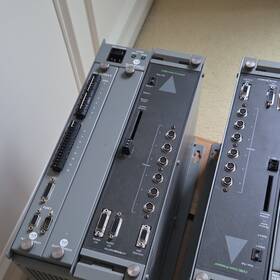
( Brand: Allen-bradley ), ( Manufacturer Part Number: 2801-AMX ), ( Type: Plc Input/output Module ), ( Communication Standard: Serial ), ( Analog/digital: Digital ), ( Controller Platform: Vision Platform )
Review ALLEN BRADLEY Vision Platform Digital Plc I/o Module Serial
The **Allen-Bradley 2801-AMX Vision Platform Digital PLC I/O Module** represents a cutting-edge integration of industrial automation and advanced machine vision technology, designed to elevate the capabilities of Allen-Bradley CompactLogix and ControlLogix programmable logic controllers (PLCs). This high-performance module serves as a seamless bridge between traditional discrete I/O processing and real-time vision-based inspection, analysis, and decision-making, making it an indispensable component for manufacturers seeking to enhance quality control, optimize production processes, and reduce downtime. Engineered with Allen-Bradley s signature reliability and precision, the 2801-AMX leverages the power of the **Machine Vision Platform (MVP)** a robust software framework that enables direct communication between the PLC and vision systems, such as those from **Cognex, Keyence, or other OEM vision providers**, without the need for external vision controllers or additional programming interfaces. This eliminates the complexity of traditional vision integration, where separate vision systems often required proprietary protocols and manual data translation, thereby streamlining workflows and reducing system latency. The module supports a wide array of digital inputs and outputs, allowing it to interface with a variety of sensors, actuators, and vision system triggers while maintaining high-speed data acquisition and processing capabilities. With support for **Ethernet/IP** connectivity, the 2801-AMX ensures low-latency, high-bandwidth communication with the host PLC, enabling real-time feedback loops where vision data can dynamically influence machine operations such as adjusting feed rates, triggering sorting mechanisms, or initiating corrective actions based on defect detection. Its compact yet robust design ensures easy installation within Allen-Bradley s modular I/O chassis, making it ideal for applications in industries like automotive assembly, electronics manufacturing, pharmaceuticals, and food and beverage production, where precision and consistency are paramount. Whether deployed for barcode verification, surface inspection, or assembly verification, the 2801-AMX empowers operators to achieve unprecedented levels of automation intelligence, transforming vision systems from standalone inspection tools into fully integrated, decision-making elements within the broader control architecture. By combining the deterministic control of a PLC with the analytical power of machine vision, this module not only enhances product quality but also paves the way for smarter, more adaptive manufacturing environments.
### **Pros and Cons of buying a Allen-Bradley 2801-AMX Vision Platform Digital PLC I/O Module**
#### **Pros**
1. **Integration with Rockwell Automation Ecosystem**
The 2801-AMX is designed to work seamlessly with other Allen-Bradley (Rockwell Automation) products, including PLCs, HMIs, and control systems. This ensures compatibility with existing infrastructure, reducing integration challenges and simplifying system upgrades.
2. **High-Speed Digital I/O**
The module provides fast digital input/output signals, making it suitable for applications requiring precise timing and real-time control. This is particularly useful in automation tasks where quick response times are critical.
3. **Vision Platform Compatibility**
As part of the Allen-Bradley Vision Platform, this module supports advanced machine vision applications. It can interface with cameras and vision systems, enabling automated inspection, sorting, and quality control in manufacturing processes.
4. **Reliability and Durability**
Allen-Bradley products are known for their robustness and long-term reliability. The 2801-AMX is built to withstand industrial environments, including temperature fluctuations, electrical noise, and mechanical stress, ensuring consistent performance over extended periods.
5. **Scalability and Flexibility**
The module can be easily integrated into larger control systems, allowing for scalability as production needs grow. It supports modular expansion, making it adaptable to various automation setups without requiring a complete system overhaul.
6. **Support for Allen-Bradley Software**
The module works with Rockwell s Studio 5000 software, which provides a user-friendly interface for programming, monitoring, and troubleshooting. This simplifies development and maintenance tasks for engineers and technicians.
7. **Industrial-Grade Protection**
The module is designed with industrial standards in mind, offering protection against voltage spikes, surges, and other electrical anomalies. This reduces the risk of equipment failure and downtime.
8. **Backward and Forward Compatibility**
Allen-Bradley products often maintain compatibility with older systems while supporting newer technologies. This ensures that investments in the 2801-AMX will remain relevant as automation standards evolve.
---
#### **Cons**
1. **Cost**
Allen-Bradley products, while high-quality, can be expensive compared to alternatives from other manufacturers. The 2801-AMX may represent a significant upfront investment, particularly for small businesses or startups with limited budgets.
2. **Vendor Lock-In**
Heavy reliance on Allen-Bradley products can create vendor lock-in, making it difficult to switch to other automation platforms in the future. This could limit flexibility if future needs require different technologies or if cost-effective alternatives become available.
3. **Learning Curve for Non-Rockwell Users**
Engineers or technicians unfamiliar with Rockwell Automation s software and hardware may require additional training to effectively program and maintain the 2801-AMX. This can increase implementation time and operational costs.
4. **Limited Availability of Third-Party Support**
While Allen-Bradley has a strong support network, third-party vendors may offer fewer resources, updates, or custom solutions compared to more open-platform alternatives. This could be a drawback for specialized applications.
5. **Potential for Overkill in Simple Applications**
For basic digital I/O needs without vision integration, the 2801-AMX may offer more features than necessary. Smaller or simpler automation projects might benefit from cheaper, more basic I/O modules that serve the same purpose without extra complexity.
6. **Maintenance and Repair Costs**
Due to its specialized nature, repairs or replacements may require certified Rockwell technicians, which can be costly. Additionally, sourcing replacement parts for older models may become difficult as the product line evolves.
7. **Software Dependency**
The module s full functionality relies on Rockwell s software ecosystem. If the software is discontinued or becomes outdated, it could limit the module s usability in the long term.
8. **Physical Space Requirements**
The 2801-AMX, like many industrial I/O modules, requires dedicated space in a control panel or rack. In compact or space-constrained environments, this could pose a challenge.
---
### **Conclusion**
The **Allen-Bradley 2801-AMX Vision Platform Digital PLC I/O Module** is a powerful and reliable choice for applications requiring high-speed digital I/O and integration with machine vision systems. Its strengths lie in its seamless compatibility with Rockwell Automation s ecosystem, industrial-grade reliability, and support for advanced automation tasks. These advantages make it ideal for manufacturing environments where precision, scalability, and long-term performance are critical.
However, the module s higher cost, potential vendor lock-in, and the need for specialized knowledge or training may present challenges, particularly for smaller operations or those with limited budgets. Additionally, its complexity may not be justified for simpler digital I/O needs.
### **Recommendation**
**Purchase the 2801-AMX if:**- You are already using or plan to integrate with Rockwell Automation s ecosystem.
- Your application requires high-speed digital I/O with machine vision capabilities.
- Reliability, scalability, and long-term support are top priorities.
- Your budget can accommodate the upfront and operational costs associated with Allen-Bradley products.
**Consider alternatives if:**- Your project has a tight budget and simpler I/O requirements.
- You prefer open-platform solutions to avoid vendor lock-in.
- Your team lacks experience with Rockwell Automation s software and hardware.
- The application does not require vision integration, and a more cost-effective I/O module would suffice.
For most industrial automation projects involving vision systems or complex control logic, the **2801-AMX is a strong recommendation** due to its proven performance and ecosystem support. However, weigh the costs and long-term implications carefully to ensure it aligns with your specific needs.
Details:
Allen-Bradley Vision Platform Digital PLC I/O Module Serial 2801-AMX.
part #: 2801 prices
- $25.26-$215.99
specifications sensoindustria:
- brand: Allen-bradley
- mpn: 2801-amx
- type: Plc Input/output Module
- communication standard: Serial
- analog/digital: Digital
- controller platform: Vision Platform
payments sensoindustria:
- other
- wallet: Apple-pay
- credit card: Visa
shipping sensoindustria:
- service: USPS Ground Advantage
- transit: 3-7 Days
- type: Calculated
- class: Standard
- carrier: USPS
- cost: $6.87
offer sensoindustria:
- options: Ship-to-home
- availability: In Stock
- started: February 17, 2026
- best offers: True
- quantity: 1
- sold: 0
seller sensoindustria:
- # reviews: 3
- rating: 100.0%
- city: Naperville, Illinois
returns sensoindustria:
- policy: No Returns
general sensoindustria:
- PLCs HMIs > PLC Peripheral Modules > PLC Input Output Modules
- condition: Used
Allen-bradley 2801 Is Similar To:
- 17560a16 17560a16 Allen-bradley Allen Bradley Series (38.5% similar) Allen bradley cat 17560A16 series a nib...(January 18th, 2018)
- 04eky00001 Allen Bradley Part Flat Power Unused Old Stock (31.7% similar) System ships via USPS and FedEx ground express. Buyer has option to select alternate transport carrier Ats expense. Allen bradley part: flat power cable. Fob phoenix...(May 7th, 2018)
- 061259830213 Allen-bradley 2015 Factory Sealed (42.2% similar) Thanks a buyer: member id clobbers private during past month Cisco WS-C3750X-48PF-S brand new sealed 3750X Poe us 2,400. Honest and stood by the product working. 00BEST offer price was accepted view item Allen-bradley 1756-EN2F EN2F b series new sealed arrived as described. E-mail us first if you ...(July 21st, 2017)
- 081159752880 Allen Bradley 1771-oa 120 (28.3% similar) This item is used. Allen bradley 1771-OA 120 vac output module 1771OA 1771 manufacturer: bradley model: 1771-OATYPE: module controller platform: plc 5 used, in working condition...(January 22nd, 2018)
- 100-a09nd3 b B Rockwell Automation Allen-bradley (27.5% similar) Auxiliary contact, 110 120V ac 50 60HZ coil, fully tested, in excellent working and cosmetic condition. Notes:the unit is series condition: pup used in a plc hardware. The serial number in pictures has been altered for privacy purposes...(May 5th, 2017)
- 100-c09 10 Allen Bradley Series Contactor (27.6% similar) Allen bradley 100-C09 10 series a contractor location 14E...(August 23rd, 2018)
- 100-c23d 10 Allen-bradley Allen Bradley (39.7% similar) Previously used, in very good working condition allen bradley 100-C23D 10 contractor coil 32A 600V-690V...(May 5th, 2017)
- 10000134269 Allen Bradley 1756-rio Series (35.8% similar) Comes with wiring connector. Working when pulled. Appears new, not in original box...(November 13th, 2017)
- 100s-c09ej14bc Allen Bradley New Contactor (33.9% similar) A contractor 24VDC part 100S-C09EJ14BC great price pic. New allen bradley ser...(June 1st, 2018)
- 1025732 Allen-braldye Allen-bradley Memory Module (53.4% similar) Allen-bradley memory module cat 1772MEB part this unit appears to be new and in the original box, but I cannot verify...(July 5th, 2017)
- 104-a09nd3 Allen Bradley Reversing Contactor (27% similar) Reversing contractor, includes the interlocking end switches to protect from inadvertently shorting power supply...(July 18th, 2018)
