TELESIS 19819 Mini Interface Controller Usip Input/output
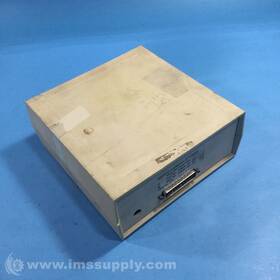
( Brand: Telesis ), ( Manufacturer Part Number: 19819 ), ( Part Type: Controller )
Review TELESIS 1981 Mini Dc Input/output Interface Controller Usip
The **Telesis 19819 Mini Input/Output Interface Controller (USIP)** is a compact yet highly versatile communication interface module designed to bridge the gap between modern data networks and legacy systems, making it an indispensable component for integration tasks in industrial, commercial, and enterprise environments. Part of Telesis s robust line of Universal Serial Interface Processors (USIP), this device operates as a seamless translator between diverse communication protocols, enabling seamless data exchange between devices that might otherwise operate in incompatible formats. Weighing in at just a few ounces and measuring under 4.5 inches in length, the 19819 s miniature form factor belies its powerful functionality, making it ideal for installations where space is at a premium, such as in server racks, control panels, or embedded systems. Engineered with a focus on reliability and ease of deployment, this interface controller supports a wide array of communication standards, including RS-232, RS-422, RS-485, and proprietary serial protocols, while also accommodating both synchronous and asynchronous data transmission modes. Its modular design allows for flexible configuration, enabling users to tailor the device to specific applications through software-defined parameters, such as baud rate, parity, stop bits, and flow control settings. Beyond its technical capabilities, the 19819 excels in providing real-time data conversion and buffering, ensuring smooth and uninterrupted communication between disparate systems without sacrificing performance. Whether used in automation systems, telemetry networks, or legacy system upgrades, this interface controller delivers a balance of simplicity and sophistication, empowering engineers and IT professionals to extend the lifespan of existing infrastructure while future-proofing their operations. With robust diagnostics, configurable error handling, and minimal power consumption, the Telesis 19819 stands as a dependable solution for any application requiring precise and efficient serial communication interfacing.
The Telesis 19819 Mini I/O Interface Controller (USIP) is a legacy device designed for integrating building automation systems, particularly for controlling and monitoring environmental conditions like HVAC, lighting, and security. Below is a detailed analysis of its pros and cons, followed by a conclusion and recommendation.
---
### **Pros of the Telesis 19819 Mini I/O Controller**
1. **Compatibility with Legacy Systems**
The 19819 is part of Telesis s USIP (Universal Serial Interface Protocol) ecosystem, which was widely used in commercial and institutional buildings during the 1990s and early 2000s. If your building automation system (BAS) or control network already relies on USIP or Telesis hardware, this device will seamlessly integrate without requiring costly retrofits or protocol conversions. It supports common functions like analog input/output (e.g., temperature, pressure, relay control) and digital I/O (e.g., on/off signals for pumps, fans, or alarms).
2. **Reliability and Durability**
Telesis devices were built for industrial and commercial environments, where uptime and robustness are critical. The 19819 is designed to operate in harsh conditions (e.g., temperature fluctuations, electrical noise), and its modular design allows for easy replacement of individual components if failures occur. Many users report long lifespans with minimal maintenance, especially when paired with redundant power supplies or backup systems.
3. **Scalability and Flexibility**
The controller supports multiple I/O modules (e.g., analog inputs/outputs, dry contacts, pulse counters), allowing it to adapt to various control scenarios. It can interface with sensors, actuators, and other field devices, making it versatile for tasks like zone control, energy management, or security integration. Additionally, it can communicate over serial (RS-485) or other legacy protocols, which may be preferable in environments where IP-based systems are not yet implemented.
4. **Cost-Effective for Maintenance**
For organizations already invested in Telesis infrastructure, purchasing spare 19819 units or replacement modules can be cheaper than migrating to newer, proprietary systems. The device s simplicity reduces the need for specialized programming or advanced technical expertise to deploy or troubleshoot.
5. **Proven Performance in Critical Applications**
The 19819 has been used in applications where reliability is non-negotiable, such as hospitals, data centers, or manufacturing plants. Its deterministic operation ensures consistent performance, which is valuable in scenarios where delays or failures could lead to operational disruptions or safety risks.
---
### **Cons of the Telesis 19819 Mini I/O Controller**
1. **Obsolete Technology and Limited Support**
The 19819 is a legacy device, and Telesis (now part of Honeywell) has largely discontinued support for its older USIP-based products. This means:- **No official software updates or security patches**: The device lacks modern cybersecurity protections (e.g., encryption, firewall integration) that are critical in today s connected environments. Vulnerabilities could expose the BAS to hacking or unauthorized access.
- **Difficulty finding spare parts**: While some third-party suppliers or eBay may offer used units, sourcing original Telesis parts (e.g., firmware, cables, or specific I/O modules) can be challenging and expensive. Counterfeit or incompatible parts may pose reliability risks.
- **Lack of integration with modern systems**: Newer BAS platforms (e.g., BACnet, Modbus TCP, or cloud-based solutions) often require gateways or converters to interface with legacy devices like the 19819. This adds complexity and potential points of failure.
2. **Limited Connectivity Options**
The 19819 primarily communicates via serial (RS-485) or other legacy protocols, which are incompatible with modern Ethernet or IP-based networks. To integrate it with contemporary systems, you may need:
- **Protocol converters**: Devices that translate USIP to BACnet, Modbus, or other protocols, adding cost and potential latency.
- **Custom development**: Writing middleware to bridge the gap, which requires engineering resources and ongoing maintenance.
This can create bottlenecks in real-time control or data analytics.
3. **Human Resources Challenges**
Finding technicians familiar with USIP or Telesis systems is increasingly difficult. Younger engineers may lack experience with these legacy protocols, leading to:
- Higher training costs for existing staff.
- Slower troubleshooting or longer downtimes during maintenance.
- Dependency on retired or outsourced experts for critical support.
4. **Energy Efficiency and Smart Features**
Modern BAS solutions incorporate advanced features like predictive maintenance, AI-driven optimization, or remote monitoring via mobile apps. The 19819 lacks these capabilities, limiting its ability to contribute to energy savings or operational efficiency in today s context. For example:
- No built-in data logging or trend analysis tools.
- No support for cloud connectivity or integration with IoT platforms.
- Limited diagnostic capabilities compared to modern devices.
5. **Regulatory and Compliance Risks**
As building automation systems become more critical to safety and sustainability (e.g., under LEED, ASHRAE, or local energy codes), reliance on outdated hardware may create compliance challenges. For instance:
- Lack of support for newer sensor technologies (e.g., wireless or smart sensors).
- Difficulty meeting cybersecurity standards (e.g., NIST, ISO 27001) due to unpatched vulnerabilities.
- Potential issues with insurance or liability if the system fails due to obsolescence.
6. **Total Cost of Ownership (TCO) Over Time**
While the initial purchase price may be low, the long-term costs of maintaining the 19819 can outweigh its benefits:- **Higher operational costs**: Frequent part replacements, custom development, or outsourcing support add up.
- **Downtime risks**: Without modern redundancy or failover mechanisms, a single failure can disrupt operations.
- **Opportunity costs**: The inability to leverage modern efficiency or automation may lead to higher energy consumption or missed optimization opportunities.
---
### **Conclusion**
The Telesis 19819 Mini I/O Controller is a robust and reliable device for specific use cases where legacy USIP infrastructure is already in place. Its strengths lie in its compatibility with older systems, durability, and proven performance in critical applications. However, its obsolescence, lack of modern connectivity, and limited support create significant long-term challenges. The decision to purchase or continue using the 19819 should be based on a cost-benefit analysis that considers:
- The criticality of the system to your operations.
- The feasibility of integrating it with future-proof solutions.
- The availability of skilled personnel to maintain it.
- The risks associated with cybersecurity and compliance.
---
### **Recommendation**
1. **Short-Term Use (Bridge or Legacy Maintenance):**If the 19819 is part of a stable, low-risk system where migration is not urgent, purchasing it as a spare or replacement unit may be justified. Pair it with a **protocol converter** (e.g., to BACnet or Modbus) to extend its lifespan and enable gradual integration with modern systems. Document all configurations and vulnerabilities, and implement basic cybersecurity measures (e.g., isolating it from the main network).
2. **Long-Term Strategy: Migration to Modern Systems:**For most organizations, the risks of relying on legacy hardware outweigh the benefits. A phased migration to a **BACnet or Modbus-based BAS** with IP connectivity, cloud integration, and cybersecurity features is strongly recommended. Prioritize:
- **Compatibility**: Choose a new system that supports your existing sensors and actuators, minimizing the need for field device replacements.
- **Scalability**: Select a platform that can grow with your needs (e.g., support for IoT, AI, or energy management systems).
- **Support and Training**: Ensure the vendor offers robust technical support and training for your team.
- **Cybersecurity**: Implement firewalls, encryption, and regular audits to protect the BAS from cyber threats.
3. **Hybrid Approach (If Migration Is Not Immediate):**If a full migration is not feasible in the short term, consider using the 19819 in **non-critical zones** while gradually replacing it with modern controllers. Use gateways to isolate the legacy system from the main network and monitor its performance closely. Budget for a migration plan within 3 5 years to avoid technical debt.
4. **Cost Considerations:**- If budget is a constraint, prioritize purchasing the 19819 only for critical spares, not as a primary solution.
- Compare the total cost of maintaining the legacy system against the investment required for a modern upgrade. Often, the long-term savings in efficiency, reliability, and support outweigh the upfront costs of new hardware.
5. **Vendor and Community Support:**Before committing, explore whether any third-party vendors or open-source communities (e.g., for USIP protocol emulation) can provide ongoing support. Some legacy systems have niche user groups that share documentation or workarounds.
---
**Final Verdict:**The Telesis 19819 is a viable **temporary or niche solution** for maintaining legacy USIP systems, but it is not a sustainable long-term choice. Organizations should treat it as a bridge to modernization rather than a permanent fixture. For new installations or critical systems, investing in a modern, supported BAS platform is the best path forward to ensure reliability, security, and efficiency.
Details:
Telesis 1981 9 Mini DC Input/Output Interface Controller. Telesis 1981 9 Mini DC Input/Output Interface Controller Manufactured by TELESIS. 2-Year MRO Shield Protection Plan Included. Most items are in stock when they listed.
Manufacturer Part Number: 1981 9 DC I/O. A previously used, fully functional product that may have some signs of cosmetic wear. Special Instructions. The product must be the original item shipped, with matching serial numbers if applicable.
part #: 19819 price
- $13.80
specifications sensoindustria:
- brand: Telesis
- mpn: 19819
- part type: Controller
payments sensoindustria:
- credit card: Diners-club
- wallet: Apple-pay
- other
shipping sensoindustria:
- transit: 5-11 Days
- type: Calculated
- service: USPS Ground Advantage, USPS Priority Mail, UPS Ground, UPS Next Day Air
- carrier: USPS, UPS
- cost: $16.45
- class: Standard, Expedited, One-day
returns sensoindustria:
- time: 30 Days
- method: Money back
- paid by: Buyer
- policy: Returns Accepted
offer sensoindustria:
- availability: In Stock
- best offers: True
- quantity: 3
- started: June 4, 2026
- options: Ship-to-home
- sold: 0
seller sensoindustria:
- rating: 99.8%
- city: Mount Sterling, Kentucky
- # reviews: 26263
general sensoindustria:
- PLCs HMIs > PLC Peripheral Modules > PLC Input Output Modules
- condition: Used
