ALLEN-BRADLEY 1794-ACNR Controlnet Adapter Module
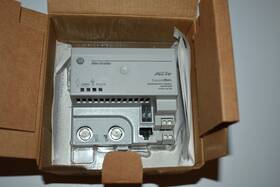
( Brand: Allen-bradley ), ( Manufacturer Part Number: 1794-ACNR ), ( Part Type: Adapter Module )
Review ALLEN BRADLEY Controlnet Adapter Module New Surplus
The **Allen-Bradley 1794-ACNR ControlNet Adapter Module** is a robust and versatile communication interface designed to bridge legacy ControlLogix and CompactLogix programmable logic controller (PLC) systems with the ControlNet industrial Ethernet network. This high-performance adapter module enables seamless integration between ControlNet devices and the ControlLogix processor, facilitating efficient data exchange, real-time control, and scalable automation solutions in demanding industrial environments. Built with Allen-Bradley s signature reliability and precision engineering, the 1794-ACNR module adheres to strict industrial standards, ensuring compatibility with a wide range of ControlNet-compatible devices, including drives, sensors, and other field instruments. Its compact yet durable design allows for easy installation within a ControlLogix chassis, maximizing space efficiency while maintaining optimal performance. The module supports full-duplex communication at speeds up to 5 Mbps, enabling high-speed data transmission critical for applications requiring real-time monitoring and control, such as manufacturing, process automation, and material handling systems. With built-in diagnostics and error-checking capabilities, the 1794-ACNR provides operators with real-time feedback on network health, reducing downtime and enhancing system uptime. Additionally, its compatibility with Rockwell Automation s Studio 5000 software suite allows for streamlined configuration, troubleshooting, and maintenance, further simplifying the integration process for engineers and technicians. Whether deployed in a new installation or as part of an existing ControlNet infrastructure, the 1794-ACNR serves as a reliable bridge, ensuring smooth communication between legacy and modern automation systems while supporting the evolving demands of industrial automation.
The **Allen-Bradley 1794-ACNR** is a ControlNet adapter module designed to connect non-ControlNet devices (such as Ethernet/IP or DeviceNet) to a ControlNet network. Below is a detailed breakdown of its pros and cons, followed by a conclusion and recommendation.
---
### **Pros of the 1794-ACNR**
1. **Compatibility with Legacy Systems**
The module allows integration of older Allen-Bradley devices (e.g., PLC-5, SLC 500, or older ControlLogix) that do not natively support ControlNet. This extends the lifespan of existing hardware without requiring full replacement.
2. **Seamless Network Integration**
It enables communication between ControlNet and other networks (e.g., Ethernet/IP or DeviceNet) without the need for additional gateways or complex configurations. This simplifies network architecture in mixed environments.
3. **High-Speed Data Transfer**
ControlNet is a high-performance network (up to 12.5 Mbps), ensuring low-latency communication between devices. The adapter preserves this speed when bridging to other networks.
4. **Reliability and Redundancy Support**
ControlNet is known for its robustness, including support for redundant communication paths (via ControlNet redundancy modules). The 1794-ACNR maintains this reliability when interfacing with other networks.
5. **Backward Compatibility**
It works with older ControlNet devices, making it useful for plants or facilities that have already invested in ControlNet infrastructure but need to connect newer or non-ControlNet equipment.
6. **Reduced Wiring Complexity**
By converting signals to ControlNet, it can simplify wiring in distributed control systems where multiple networks converge at a central PLC or controller.
7. **Allen-Bradley Support and Documentation**
As a Rockwell Automation product, it benefits from comprehensive technical support, firmware updates, and integration tools (e.g., Studio 5000).
---
### **Cons of the 1794-ACNR**
1. **Limited to Specific Networks**
The module only bridges to **Ethernet/IP** or **DeviceNet** not other industrial protocols like Profibus, Modbus, or CANopen. If your system requires additional protocols, you may need multiple adapters or a dedicated gateway.
2. **Cost**
The 1794-ACNR is a specialized adapter, and its price (typically $500 $800 USD) may be higher than generic protocol converters. For large-scale deployments, costs can add up quickly.
3. **Complex Configuration**
Setting up the adapter requires familiarity with ControlNet, the target network (e.g., Ethernet/IP or DeviceNet), and Allen-Bradley programming (e.g., Studio 5000). Misconfigurations can lead to communication failures.
4. **Deprecation Risk**
While still supported, ControlNet is an older network protocol compared to Ethernet/IP or PROFINET. Future-proofing may require migrating to more modern solutions if the system is expected to scale or integrate with newer technologies.
5. **Physical Space and Slot Requirements**
The module occupies a slot in a **1756-A8 or 1756-A16** chassis, which may limit availability in systems with constrained I/O space. If the host controller lacks free slots, additional hardware may be needed.
6. **Latency in Mixed Environments**
While ControlNet itself is fast, bridging to a slower network (e.g., DeviceNet) can introduce minor latency. For high-speed motion control or real-time applications, this may not be critical but should be evaluated.
7. **Limited Scalability**
If the system grows significantly, the adapter may become a bottleneck. A dedicated gateway or a more scalable network architecture (e.g., full Ethernet/IP) might be preferable for large installations.
---
### **Conclusion**
The **Allen-Bradley 1794-ACNR** is a practical solution for connecting non-ControlNet devices to a ControlNet network in environments where legacy equipment must coexist with modern systems. Its strengths lie in **compatibility, speed, and reliability**, making it ideal for plants with existing ControlNet infrastructure that need to integrate older or alternative protocols. However, its **limited protocol support, cost, and configuration complexity** may make it less suitable for large-scale deployments or systems requiring diverse networking options.
For **small to medium-sized systems with mixed networks (Ethernet/IP or DeviceNet)**, the 1794-ACNR is a viable and well-supported choice. For **new installations or systems needing broader protocol support**, a more modern gateway or a full Ethernet/IP-based architecture may be preferable.
---
### **Recommendation**
- **Use the 1794-ACNR if:**- You have an existing ControlNet network and need to connect **Ethernet/IP or DeviceNet** devices.
- Your system is **small to medium-sized** and does not require additional protocols.
- You prioritize **low-latency, high-reliability** communication with minimal wiring changes.
- **Consider alternatives if:**- You need **multiple protocols** (e.g., Modbus, Profibus) Use a **dedicated protocol gateway** (e.g., Rockwell s 1794-GT or third-party solutions like Siemens or Beckhoff).
- Your system is **large-scale or future-proofing** Migrate to **Ethernet/IP or PROFINET** for better scalability.
- You lack **ControlNet expertise** Evaluate simpler, more user-friendly gateways or consult a systems integrator.
For most **legacy ControlNet environments with Ethernet/IP or DeviceNet integration needs**, the 1794-ACNR remains a **solid, supported choice**. However, always assess long-term network requirements before committing to avoid potential migration challenges later.
Details:
1794-ACNR SER.
part #: 1794 prices
- $125.00-$400.00
specifications sensoindustria:
- brand: Allen-bradley
- mpn: 1794-acnr
- part type: Adapter Module
payments sensoindustria:
- other
- wallet: Google-pay
- credit card: Diners-club
offer sensoindustria:
- quantity: 3
- options: Ship-to-home
- started: March 22, 2026
- sold: 0
- availability: In Stock
shipping sensoindustria:
- carrier: FedEx, UPS
- cost: $0.00
- type: Calculated
- transit: 3-5 Days
- service: FedEx Ground / FedEx Home Delivery, UPS Next Day Air, UPS 2nd Day Air
- class: Standard, One-day, Expedited
seller sensoindustria:
- city: Mountain Home, Arkansas
- # reviews: 6145
- rating: 100.0%
returns sensoindustria:
- policy: Returns Accepted
- method: Money back
- paid by: Seller
- time: 60 Days
general sensoindustria:
- PLCs HMIs > PLC Peripheral Modules > PLC Input Output Modules
- condition: Used
Allen-bradley 1794 Is Similar To:
- 17560a16 17560a16 Allen-bradley Allen Bradley Series (40.4% similar) Allen bradley cat 17560A16 series a nib...(January 18th, 2018)
- 04eky00001 Allen Bradley Part Flat Power Unused Old Stock (39% similar) System ships via USPS and FedEx ground express. Buyer has option to select alternate transport carrier Ats expense. Allen bradley part: flat power cable. Fob phoenix...(May 7th, 2018)
- 061259830213 Allen-bradley 2015 Factory Sealed (43% similar) Thanks a buyer: member id clobbers private during past month Cisco WS-C3750X-48PF-S brand new sealed 3750X Poe us 2,400. Honest and stood by the product working. 00BEST offer price was accepted view item Allen-bradley 1756-EN2F EN2F b series new sealed arrived as described. E-mail us first if you ...(July 21st, 2017)
- 081159752880 Allen Bradley 1771-oa 120 (36.4% similar) This item is used. Allen bradley 1771-OA 120 vac output module 1771OA 1771 manufacturer: bradley model: 1771-OATYPE: module controller platform: plc 5 used, in working condition...(January 22nd, 2018)
- 100-a09nd3 b B Rockwell Automation Allen-bradley (23.6% similar) Auxiliary contact, 110 120V ac 50 60HZ coil, fully tested, in excellent working and cosmetic condition. Notes:the unit is series condition: pup used in a plc hardware. The serial number in pictures has been altered for privacy purposes...(May 5th, 2017)
- 100-c09 10 Allen Bradley Series Contactor (43.1% similar) Allen bradley 100-C09 10 series a contractor location 14E...(August 23rd, 2018)
- 100-c23d 10 Allen-bradley Allen Bradley (40% similar) Previously used, in very good working condition allen bradley 100-C23D 10 contractor coil 32A 600V-690V...(May 5th, 2017)
- 10000134269 Allen Bradley 1756-rio Series (41.2% similar) Comes with wiring connector. Working when pulled. Appears new, not in original box...(November 13th, 2017)
- 100s-c09ej14bc Allen Bradley New Contactor (40.8% similar) A contractor 24VDC part 100S-C09EJ14BC great price pic. New allen bradley sear...(June 1st, 2018)
- 1025732 Allen-braldye Allen-bradley Memory Module (41.8% similar) Allen-bradley memory module cat 1772MEB part this unit appears to be new and in the original box, but I cannot verify...(July 5th, 2017)
- 104-a09nd3 Allen Bradley Reversing Contactor (41.9% similar) Reversing contractor, includes the interlocking end switches to protect from inadvertently shorting power supply...(July 18th, 2018)
