ALLEN-BRADLEY 1784-PCMC Plc Modules
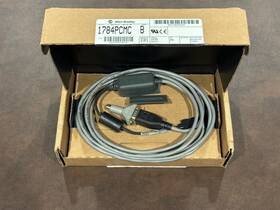
( Brand: Allen-bradley ), ( Manufacturer Part Number: 1784-PCMC ), ( Part Type: Module ), ( Communication Standard: 1756-dhrio ), ( Controller Platform: Plc-5, Slc 500, And Controllogix ), ( Country Of Origin: United States )
Review ALLEN BRADLEY 1784pcmc
The **Allen-Bradley 1784-PCMC** is a high-performance, modular **CompactLogix** controller designed to deliver robust automation solutions for industrial applications requiring advanced processing power, scalability, and seamless integration with modern control systems. Part of Rockwell Automation s **CompactLogix 5560 series**, this programmable logic controller (PLC) combines the reliability of Allen-Bradley s legacy systems with cutting-edge features, making it an ideal choice for manufacturers seeking efficient, flexible, and future-proof control solutions. The 1784-PCMC operates as a **standalone or networked controller**, leveraging the **ControlLogix architecture** to execute complex control logic, motion control, and data acquisition tasks with precision. Its **1.5 GHz dual-core processor** ensures rapid execution of user programs, handling high-speed I/O operations, real-time data processing, and deterministic control critical for applications in discrete manufacturing, process automation, and machine integration. With **up to 256 MB of user memory**, the 1784-PCMC accommodates large-scale programming environments, including structured text, ladder logic, function block diagrams, and sequential function charts, catering to engineers with diverse programming preferences. This controller supports **EtherNet/IP communication**, enabling seamless integration with other Allen-Bradley devices, such as **CompactLogix, ControlLogix, and Studio 5000 Logix Designer** platforms, while also interfacing with third-party systems via **Modbus TCP, OPC UA, or other industrial protocols**. The 1784-PCMC is housed in a **compact, ruggedized enclosure** designed for harsh industrial environments, featuring **industrial-grade cooling** and **wide operating temperature ranges** to ensure reliable performance in demanding settings. Its **modular design** allows for easy expansion through the addition of **1784-series I/O modules**, including analog, digital, and specialized function modules, providing the flexibility to adapt to evolving process requirements without significant downtime. Additionally, the controller supports **remote I/O configurations**, enabling distributed control architectures that optimize wiring complexity and reduce installation costs. Security is a key consideration in modern automation, and the 1784-PCMC incorporates **Rockwell s security features**, including **EtherNet/IP security policies, firmware encryption, and user authentication**, to protect against unauthorized access and cyber threats. This controller also supports **remote diagnostics and predictive maintenance tools**, allowing operators to monitor system health, detect potential failures, and perform proactive maintenance reducing downtime and extending equipment lifespan. Whether deployed in a **small-scale automation project** or integrated into a **large-scale control network**, the Allen-Bradley 1784-PCMC delivers a balance of **performance, scalability, and reliability**, making it a versatile and high-value solution for industries demanding precision and efficiency in their automation processes.
### **Pros and Cons of buying a Allen-Bradley 1784-PCMC (1784PCMC)**
The **Allen-Bradley 1784-PCMC** is a programmable communication module used in Rockwell Automation s ControlLogix and CompactLogix PLC systems. It provides high-speed communication via Ethernet/IP, enabling data exchange between PLCs and other devices. Below is a detailed analysis of its advantages and disadvantages.
---
### **Pros**
1. **High-Speed Ethernet/IP Communication**
- The 1784-PCMC supports **Ethernet/IP**, a high-performance industrial networking protocol optimized for real-time control applications. This allows for fast, reliable data transfer between PLCs and other devices, reducing latency in automation systems.
2. **Seamless Integration with Rockwell Automation Ecosystem**
- Designed specifically for **ControlLogix and CompactLogix** platforms, it integrates effortlessly with other Rockwell products such as **Studio 5000, FactoryTalk View, and RSLogix 5000**. This ensures compatibility with existing systems and simplifies programming and troubleshooting.
3. **Scalability and Flexibility**
- The module supports **multiple communication modes**, including **CIP (Common Industrial Protocol) and CIP Sync**, allowing for synchronized motion control and time-sensitive networking (TSN) applications. This makes it suitable for both simple data logging and complex, high-speed control tasks.
4. **Redundancy and Reliability**
- The 1784-PCMC supports **Ethernet/IP redundancy**, which helps maintain network uptime in critical applications by automatically switching to a backup link if the primary connection fails.
5. **Easy Configuration and Setup**
- Configuration is straightforward using **RSLogix 5000 or Studio 5000**, with built-in tools for network setup, IP addressing, and protocol tuning. This reduces the need for external hardware or complex software.
6. **Cost-Effective for Medium to Large Systems**
- While not the cheapest communication module, its **performance and reliability** often justify the cost in industrial environments where downtime is costly. It eliminates the need for additional gateways or converters in many cases.
7. **Support for Advanced Features**
- The module supports **CIP Sync**, enabling precise timing for motion control applications, and **CIP Safety**, which integrates safety protocols into the network. This is valuable for applications requiring both control and safety functions.
8. **Long-Term Availability and Support**
- As a legacy but widely used module, it remains supported by Rockwell Automation, with availability of spare parts and technical documentation for years to come.
---
### **Cons**
1. **Limited to Rockwell Automation Ecosystem**
- The 1784-PCMC is **not compatible** with non-Rockwell PLCs or third-party systems without additional gateways or protocol converters. This can be restrictive if integration with other brands (e.g., Siemens, Schneider Electric) is required.
2. **Higher Upfront Cost Compared to Alternatives**
- While cost-effective in the long run for Rockwell systems, the **initial purchase price** is higher than some generic Ethernet/IP modules or simpler communication adapters. For small-scale applications, this may not be justified.
3. **Requires Expertise for Advanced Configurations**
- While basic setup is simple, **optimizing performance for high-speed or synchronized applications** (e.g., CIP Sync) requires knowledge of Ethernet/IP and Rockwell s programming tools. Misconfiguration can lead to network instability or performance issues.
4. **Physical Size and Space Constraints**
- The module occupies a **17-slot** space in a ControlLogix chassis, which may not be ideal for compact systems where space is limited. This can be a drawback in retrofitting older or smaller PLC racks.
5. **Potential for Network Congestion**
- In large networks with multiple high-speed devices, the 1784-PCMC may contribute to **Ethernet/IP traffic congestion**, especially if not properly prioritized. This can lead to latency issues if the network is not designed with sufficient bandwidth.
6. **Deprecated Status (Legacy Product)**
- While still functional, the 1784-PCMC is **not a new product**, and Rockwell Automation has shifted focus to newer modules like the **1784-PCMC2** or **1784-PCMC3** for newer ControlLogix platforms. This means:
- Limited stock availability in some regions.
- Potential compatibility issues with very recent firmware or software updates.
- Possible lack of long-term support for very cutting-edge applications.
7. **No Built-in Security Features**
- Like many industrial Ethernet modules, the 1784-PCMC lacks **built-in cybersecurity features** such as encryption or authentication. Users must implement additional security measures (e.g., firewalls, VLANs) to protect against cyber threats.
8. **Dependence on Rockwell s Software**
- Configuration and troubleshooting rely heavily on **Rockwell s proprietary software** (e.g., Studio 5000). This can be a drawback if the user prefers open-source or third-party tools for network management.
---
### **Conclusion**
The **Allen-Bradley 1784-PCMC** is a **reliable, high-performance Ethernet/IP communication module** that excels in **Rockwell Automation-based industrial control systems**. Its strengths lie in **seamless integration, high-speed data transfer, redundancy support, and scalability**, making it ideal for applications requiring **real-time control, synchronized motion, or large-scale data logging**.
However, its **limited compatibility with non-Rockwell systems, higher cost, and legacy status** may make it less suitable for **small-scale, mixed-brand, or future-proofing-focused** applications. Additionally, the **lack of advanced security features** and **dependence on Rockwell s software ecosystem** could be drawbacks in certain environments.
---
### **Recommendation**
- **Buy the 1784-PCMC if:**- You are working **exclusively within a Rockwell Automation environment** (ControlLogix/CompactLogix).
- Your application requires **high-speed Ethernet/IP communication, CIP Sync, or redundancy**.
- You need a **proven, reliable module** with long-term availability and support.
- Your budget allows for the **upfront cost**, and the module will be used in a **medium to large-scale system**.
- **Consider Alternatives if:**- You need **cross-platform compatibility** (e.g., integrating with Siemens, Schneider, or other PLC brands). In this case, a **generic Ethernet/IP module** or a **protocol converter** may be more appropriate.
- Your application is **small-scale or low-budget**, and the cost of the 1784-PCMC is not justified. A **simpler communication adapter** (e.g., Allen-Bradley 1784-NET) or a **USB-to-Ethernet module** might suffice.
- You require **advanced cybersecurity features**, as the 1784-PCMC lacks built-in protection. In this case, a **managed switch with VLAN support** or a **dedicated security gateway** should be added.
- You are working with **very recent ControlLogix platforms** (e.g., 5580 series). In this case, **newer modules like the 1784-PCMC2 or 1784-PCMC3** may offer better compatibility and features.
- **For Future-Proofing:**- If possible, **evaluate newer Rockwell modules** (e.g., **1784-PCMC3**) that may offer improved performance, security, and compatibility with the latest firmware.
- If budget allows, **pair the 1784-PCMC with a managed switch** to improve network reliability and security.
In summary, the **1784-PCMC remains a strong choice for Rockwell-centric automation systems** where its strengths are fully utilized. However, **careful consideration of alternatives** is recommended for mixed-brand environments or cost-sensitive applications.
Details:
Key Features and Specifications: Series: B provides significant enhancements over Series A, including improved, locking connector cables. Hardware Interface: PCMCIA Type II slot required. The Allen-Bradley 1784-PCMC Series B is a Type II PCMCIA communication card designed for notebook computers to interface with Data Highway Plus DH , Remote I/O RIO, and DH-485 networks. Functionality: Supports DH up to 230 Bps, RIO, and DH-485 protocols.
Compatibility: designed for older or legacy industrial laptops with PCMCIA support. Required Cables Series B: 1784-PCM2/B PLC-2, 1784-PCM4/B DH-485, 1784-PCM5/B PLC-5/3/250, 1784-PCM6/B SLC 5/04, DH , 1784-PCMS/A RIO.
part #: 1784 prices
- $35.00-$132.25
specifications sensoindustria:
- brand: Allen-bradley
- mpn: 1784-pcmc
- part type: Module
- communication standard: 1756-dhrio
- controller platform: Plc-5, Slc 500, And Controllogix
- country of origin: United States
returns sensoindustria:
- policy: No Returns
offer sensoindustria:
- quantity: 1
- availability: In Stock
- sold: 0
- options: Ship-to-home
- best offers: True
- started: January 31, 2026
general sensoindustria:
- condition: Used
- PLCs HMIs > PLC Peripheral Modules > PLC Input Output Modules
seller sensoindustria:
- # reviews: 67
- city: Middletown, Ohio
- rating: 100.0%
payments sensoindustria:
- other
- credit card: Diners-club
- wallet: Google-pay
shipping sensoindustria:
- class: Standard
- carrier: USPS
- service: USPS Ground Advantage
- cost: $10.50
- type: Calculated
- transit: 5-11 Days
Allen-bradley 1784 Is Similar To:
- 17560a16 17560a16 Allen-bradley Allen Bradley Series (36.8% similar) Allen bradley cat 17560A16 series a nib...(January 18th, 2018)
- 04eky00001 Allen Bradley Part Flat Power Unused Old Stock (33% similar) System ships via USPS and FedEx ground express. Buyer has option to select alternate transport carrier Ats expense. Allen bradley part: flat power cable. Fob phoenix...(May 7th, 2018)
- 061259830213 Allen-bradley 2015 Factory Sealed (42.5% similar) Thanks a buyer: member id clobbers private during past month Cisco WS-C3750X-48PF-S brand new sealed 3750X Poe us 2,400. Honest and stood by the product working. 00BEST offer price was accepted view item Allen-bradley 1756-EN2F EN2F b series new sealed arrived as described. E-mail us first if you ...(July 21st, 2017)
- 081159752880 Allen Bradley 1771-oa 120 (47.2% similar) This item is used. Allen bradley 1771-OA 120 vac output module 1771OA 1771 manufacturer: bradley model: 1771-OATYPE: module controller platform: plc 5 used, in working condition...(January 22nd, 2018)
- 100-a09nd3 b B Rockwell Automation Allen-bradley (31.3% similar) Auxiliary contact, 110 120V ac 50 60HZ coil, fully tested, in excellent working and cosmetic condition. Notes:the unit is series condition: pup used in a plc hardware. The serial number in pictures has been altered for privacy purposes...(May 5th, 2017)
- 100-c09 10 Allen Bradley Series Contactor (37.3% similar) Allen bradley 100-C09 10 series a contractor location 14E...(August 23rd, 2018)
- 100-c23d 10 Allen-bradley Allen Bradley (41.1% similar) Previously used, in very good working condition allen bradley 100-C23D 10 contractor coil 32A 600V-690V...(May 5th, 2017)
- 10000134269 Allen Bradley 1756-rio Series (42.7% similar) Comes with wiring connector. Working when pulled. Appears new, not in original box...(November 13th, 2017)
- 100s-c09ej14bc Allen Bradley New Contactor (36.8% similar) A contractor 24VDC part 100S-C09EJ14BC great price pic. New allen bradley sear...(June 1st, 2018)
- 1025732 Allen-braldye Allen-bradley Memory Module (38.6% similar) Allen-bradley memory module cat 1772MEB part this unit appears to be new and in the original box, but I cannot verify...(July 5th, 2017)
- 104-a09nd3 Allen Bradley Reversing Contactor (35.9% similar) Reversing contractor, includes the interlocking end switches to protect from inadvertently shorting power supply...(July 18th, 2018)
