ALLEN BRADLEY 1778-IFC Plc Modules
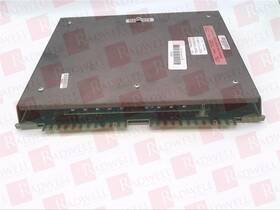
( Brand: Allen Bradley ), ( Manufacturer Part Number: 1778-IFC ), ( Part Type: Module )
Review ALLEN BRADLEY 1778ifc Used
The **Allen-Bradley 1778-IFC (1778IFC)** is a high-performance, modular input/output (I/O) controller designed to integrate seamlessly into Rockwell Automation s CompactLogix and ControlLogix programming environments, offering a versatile and scalable solution for industrial automation applications. Part of the **1778 series**, this device serves as a compact yet powerful interface for connecting field devices to a PLC system, enabling real-time data acquisition, control, and communication across distributed networks. With its **1778-IFC designation**, it is specifically engineered to function as a **remote I/O controller**, allowing for the expansion of control capabilities beyond the primary PLC rack while maintaining deterministic communication through the **ControlNet** or **EtherNet/IP** protocols. This device supports a wide range of analog and digital I/O modules, including voltage, current, temperature, and discrete signals, making it ideal for applications in manufacturing, process control, and machine automation where precise timing and reliable data exchange are critical.
The **1778-IFC** operates as a standalone controller, capable of managing up to **128 I/O points** through its modular expansion slots, which accommodate a variety of **1778-series I/O modules** such as discrete inputs/outputs, analog inputs/outputs, and special-function modules like counter/timer or high-speed pulse outputs. Its **deterministic communication** ensures minimal latency, making it suitable for applications requiring synchronized control, such as motion systems, robotic cells, or high-speed packaging lines. The device features a **compact, ruggedized design** with a **1778-IFC base unit**, which houses the processor and communication interfaces, while the **1778-IFM (I/O module frame)** provides the expansion slots for additional modules. This modularity allows for easy scalability, enabling users to tailor the system to specific application requirements without over-provisioning resources.
At its core, the **1778-IFC** leverages **Rockwell Automation s Studio 5000 software**, allowing engineers to program, configure, and monitor the device using **RSLogix 5000 or FactoryTalk View Studio**. The controller supports **structured text, ladder logic, and function block programming**, ensuring compatibility with existing automation systems while enabling advanced control strategies. Its **EtherNet/IP connectivity** facilitates integration with other Rockwell devices, such as **CompactLogix, ControlLogix, or Studio 5000 Logix Designers**, while **ControlNet support** ensures high-speed, deterministic communication for time-sensitive applications. Additionally, the **1778-IFC** includes built-in diagnostics and fault reporting, providing real-time status updates and troubleshooting capabilities to minimize downtime and enhance system reliability.
Beyond its technical capabilities, the **Allen-Bradley 1778-IFC** is designed with **industrial durability in mind**, featuring a **wide operating temperature range (-20 C to 60 C)** and **high resistance to electrical noise and environmental interference**, making it suitable for harsh factory environments. Its **plug-and-play configuration** simplifies installation and reduces wiring complexity, as modules can be hot-swapped without disrupting system operation. Whether deployed as a **remote I/O controller, a distributed control node, or part of a larger automation network**, the **1778-IFC** delivers a robust, flexible, and high-performance solution for modern industrial automation challenges. Its seamless integration with Rockwell s ecosystem, combined with its modular expandability and deterministic communication, positions it as an essential component for engineers and technicians seeking to optimize efficiency, scalability, and reliability in their automation systems.
### **Pros and Cons of Buying an Allen-Bradley 1778-IFC (1778IFC) Controller**
The **Allen-Bradley 1778-IFC** is a compact, modular controller designed for industrial automation applications, particularly in machine control, motion, and process automation. Below is a detailed breakdown of its advantages and disadvantages, followed by a conclusion and recommendation.
---
### **Pros of the 1778-IFC**
1. **Compact and Space-Efficient Design**
- The 1778-IFC is a **compact I/O controller** that integrates I/O modules directly into its chassis, reducing the need for additional rack space compared to traditional PLCs with separate I/O racks.
- Ideal for applications where space is limited, such as in retrofitting existing machinery or in tight control panels.
2. **Modular and Scalable I/O**
- Supports a variety of **digital, analog, and special function I/O modules** (e.g., temperature, encoder, servo drives) within the same chassis.
- Allows for **easy expansion** by adding more modules as needed, without requiring a full PLC upgrade.
- Compatible with **Allen-Bradley s full line of I/O modules**, including high-speed and safety-rated options.
3. **High Performance and Speed**
- Designed for **real-time control applications**, including motion control, servo drives, and high-speed discrete I/O.
- Offers **fast scan times** and **low latency**, making it suitable for applications requiring precise timing (e.g., CNC machines, packaging systems).
- Supports **deterministic communication** with other devices via **EtherNet/IP** and **ControlNet**.
4. **Integration with Rockwell Automation Ecosystem**
- Fully compatible with **Studio 5000**, **FactoryTalk View**, and other Rockwell software platforms, ensuring seamless programming and HMI integration.
- Works with **Allen-Bradley drives (e.g., PowerFlex, Kinetix)** for motion control applications.
- Supports **OPC UA** and other industry standards for interoperability with third-party systems.
5. **Reduced Wiring Complexity**
- Since I/O modules are integrated into the controller, **wiring is simplified** compared to traditional PLCs with external I/O racks.
- Fewer cables and connections mean **lower installation time and reduced maintenance**.
6. **Energy Efficiency**
- Designed with **power-saving features**, including sleep modes and optimized power consumption, which can reduce operational costs in long-running applications.
7. **Reliability and Durability**
- Built to **industrial standards**, with robust construction for harsh environments (dust, vibration, temperature fluctuations).
- Long-term availability of parts and support from Rockwell Automation, reducing obsolescence risks.
8. **Cost-Effective for Mid-Sized Applications**
- More affordable than a full **ControlLogix** or **CompactLogix** system for applications that don t require the full feature set of a larger PLC.
- A good **mid-range solution** for machines needing advanced control without the complexity of a high-end system.
---
### **Cons of the 1778-IFC**
1. **Limited Processing Power Compared to Larger PLCs**
- While powerful for its size, the **1778-IFC is not as robust as a ControlLogix or CompactLogix** for very complex, high-performance applications.
- May struggle with **large-scale process control** or applications requiring extensive math-intensive calculations.
- **Not suitable for distributed control systems** where multiple controllers are needed (e.g., large factory automation).
2. **Fewer Advanced Features Than High-End PLCs**
- Lacks some **advanced diagnostics and predictive maintenance tools** found in higher-end Rockwell systems (e.g., certain FactoryTalk assets).
- **Limited built-in safety features** compared to dedicated safety PLCs (e.g., GuardLogix).
- **No integrated motion control engine** as powerful as a Kinetix or PowerFlex drive system.
3. **Dependence on Rockwell Ecosystem**
- **Vendor lock-in risk** while Rockwell s ecosystem is strong, migrating to other brands (e.g., Siemens, Schneider) may require significant reprogramming.
- **Software licensing costs** can add up, especially for advanced features in Studio 5000.
4. **Scalability Limitations**
- While expandable, the **1778-IFC has a finite number of slots** (typically 7 8, depending on the model), which may limit future expansion in large systems.
- For **very large I/O requirements**, a traditional PLC rack or distributed I/O system may be more appropriate.
5. **Learning Curve for New Users**
- Rockwell Automation s software (e.g., Studio 5000) has a **steeper learning curve** compared to simpler PLC brands.
- Requires **training** for engineers familiar with ladder logic, Structured Text, or Function Block Diagram programming.
6. **Potential for Higher Initial Cost Than Basic PLCs**
- While more affordable than a full ControlLogix system, the **1778-IFC may still be more expensive** than a basic **Micro800 or Micro850** for very simple applications.
- **I/O modules** can add up in cost, especially for specialized functions (e.g., high-speed counters, analog modules).
7. **Limited Offline Programming Capabilities**
- While Studio 5000 is powerful, **offline debugging and simulation** may not be as robust as some third-party PLC programming tools.
- Some users report **slower compile times** compared to competitors like Siemens TIA Portal.
8. **Fewer Third-Party Support Options**
- While Rockwell has strong industry support, **third-party I/O or communication modules** may not be as widely available as for more mainstream PLC brands.
---
### **Conclusion**
The **Allen-Bradley 1778-IFC** is a **strong mid-range controller** ideal for applications requiring **compact design, modular I/O, and real-time control** without the complexity of a full PLC rack. It excels in **machine automation, motion control, and process applications** where space efficiency and performance are critical.
However, it is **not the best choice** for:- **Very large-scale systems** requiring distributed control.
- **Highly complex process automation** needing advanced diagnostics.
- **Applications where vendor lock-in is a concern** (e.g., mixed automation environments).
- **Budget-sensitive projects** where a simpler PLC (e.g., Micro800) would suffice.
If your application **fits within its capabilities** such as a **retrofit project, a compact machine control system, or a mid-sized automation task** the **1778-IFC offers a balanced mix of performance, flexibility, and integration with Rockwell s ecosystem**.
---
### **Recommendation**
**Buy the 1778-IFC if:**You need a **compact, modular controller** for a **machine or process automation application**.
Your system requires **EtherNet/IP or ControlNet communication** with other Rockwell devices.
You are already using **Rockwell Automation software (Studio 5000, FactoryTalk)** and want seamless integration.
You need **high-speed I/O or motion control** without the complexity of a full PLC rack.
Your budget allows for a **mid-range PLC** with long-term support availability.
**Consider alternatives if:**Your application is **very large-scale** (consider **ControlLogix** or **CompactLogix**).
You need **advanced safety features** (consider **GuardLogix** or **SafetyLogix**).
You want **maximum cost efficiency** (consider **Micro800, Micro850, or Siemens S7-1200**).
You require **extensive third-party I/O support** (consider **Siemens, Schneider, or Beckhoff**).
Your team is **not familiar with Rockwell software** (training may be required).
**Final Verdict:**The **1778-IFC is a solid choice for many industrial automation needs**, particularly where **compactness, modularity, and Rockwell integration** are priorities. However, carefully assess your application s requirements to ensure it meets your long-term needs without unnecessary limitations.
Details:
Sells new and surplus product develops channels to purchase such. ALLEN BRADLEY 1778-IFC / 1778IFC USED DISCONTINUED BY MANUFACTURER, ANALOG INPUT MODULE, 8/16 INPUT, TO 60 DEGREES CELSIUS. Call to use a shipping service other than the ones listed. Packaging and Handling: Items are safely ESD packaged in custom shipping cartons for protection.
All products are guaranteed to be working but may show signs of use if purchasing a used product.
part #: 1778 prices
- $34.98-$200.00
specifications sensoindustria:
- brand: Allen Bradley
- mpn: 1778-ifc
- part type: Module
general sensoindustria:
- PLCs HMIs > PLC Peripheral Modules > PLC Input Output Modules
- condition: Used
seller sensoindustria:
- rating: 99.7%
- city: 1 Millennium Dr, Willingboro, NJ 08046
- # reviews: 202738
payments sensoindustria:
- other
- credit card: Diners-club
- wallet: Google-pay
returns sensoindustria:
- method: Money back
- policy: Returns Accepted
- time: 30 Days
- paid by: Buyer
shipping sensoindustria:
- type: Fixed
- class: Standard
- service: Standard
- transit: 24-37 Days
- cost: $12.90
offer sensoindustria:
- options: Ship-to-home
- started: May 5, 2026
- best offers: True
- quantity: 1
- sold: 0
- availability: In Stock
Allen Bradley 1778 Is Similar To:
- 17560a16 17560a16 Allen-bradley Allen Bradley Series (33.3% similar) Allen Bradley cat 17560A16 series a nib...(January 18th, 2018)
- 04eky00001 Allen Bradley Part Flat Power Unused Old Stock (44.7% similar) System ships via USPS and FedEx ground express. Buyer has option to select alternate transport carrier Ats expense. Allen Bradley part: flat power cable. Fob phoenix...(May 7th, 2018)
- 061259830213 Allen-bradley 2015 Factory Sealed (43.4% similar) Thanks a buyer: member id clobbers private during past month Cisco WS-C3750X-48PF-S brand new sealed 3750X Poe us 2,400. Honest and stood by the product working. 00BEST offer price was accepted view item Allen-Bradley 1756-EN2F EN2F b series new sealed arrived as described. E-mail us first if you ...(July 21st, 2017)
- 081159752880 Allen Bradley 1771-oa 120 (53.3% similar) This item is used. Allen Bradley 1771-OA 120 vac output module 1771OA 1771 manufacturer: Bradley model: 1771-OATYPE: module controller platform: plc 5 used, in working condition...(January 22nd, 2018)
- 100-a09nd3 b B Rockwell Automation Allen-bradley (25.6% similar) Auxiliary contact, 110 120V ac 50 60HZ coil, fully tested, in excellent working and cosmetic condition. Notes:the unit is series condition: pup used in a plc hardware. The serial number in pictures has been altered for privacy purposes...(May 5th, 2017)
- 100-c09 10 Allen Bradley Series Contactor (38.5% similar) Allen Bradley 100-C09 10 series a contractor location 14E...(August 23rd, 2018)
- 100-c23d 10 Allen-bradley Allen Bradley (34.2% similar) Previously used, in very good working condition Allen Bradley 100-C23D 10 contractor coil 32A 600V-690V...(May 5th, 2017)
- 10000134269 Allen Bradley 1756-rio Series (51.3% similar) Comes with wiring connector. Working when pulled. Appears new, not in original box...(November 13th, 2017)
- 100s-c09ej14bc Allen Bradley New Contactor (38% similar) A contractor 24VDC part 100S-C09EJ14BC great price pic. New Allen Bradley sear...(June 1st, 2018)
- 1025732 Allen-braldye Allen-bradley Memory Module (34.9% similar) Allen-bradley memory module cat 1772MEB part this unit appears to be new and in the original box, but I cannot verify...(July 5th, 2017)
- 104-a09nd3 Allen Bradley Reversing Contactor (37% similar) Reversing contractor, includes the interlocking end switches to protect from inadvertently shorting power supply...(July 18th, 2018)
