ALLEN BRADLEY 1775-MEA Plc Modules
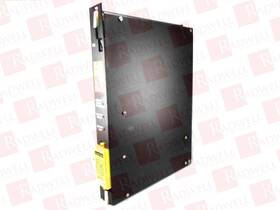
( Brand: Allen Bradley ), ( Manufacturer Part Number: 1775-MEA ), ( Part Type: Module )
Review ALLEN BRADLEY 1775mea Used
The **Allen-Bradley 1775-MEA (1775MEA)** is a high-performance, modular, and scalable control system designed for industrial automation applications requiring robust, flexible, and reliable operation. Part of Rockwell Automation s **CompactLogix 1775 series**, this controller is engineered to deliver advanced processing power, deterministic control, and seamless integration with a wide range of field devices, HMI systems, and enterprise-level software. The 1775-MEA model is specifically configured as a **base unit with integrated Ethernet/IP and serial communication modules**, making it an ideal choice for applications where compact form factor, high-speed data exchange, and real-time control are critical. With a **1.5 GHz dual-core processor**, the 1775-MEA provides superior computational performance, enabling complex logic, motion control, and high-speed I/O processing without sacrificing responsiveness. Its **modular design** allows for easy expansion through the addition of **1775-series I/O modules**, including analog, discrete, and special-purpose modules, ensuring adaptability to evolving automation requirements. The controller supports **Ethernet/IP, CIP Safety, and Modbus TCP** protocols, facilitating seamless communication with PLCs, drives, sensors, and supervisory systems, while its **deterministic Ethernet/IP network** ensures minimal latency for time-sensitive applications. Built to withstand the rigors of industrial environments, the 1775-MEA features **industrial-grade construction**, including **wide operating temperature ranges (-40 C to 60 C)**, **vibration resistance**, and **IP65-rated connectivity**, making it suitable for harsh manufacturing, process control, and automation settings. Additionally, its **compact, rack-mountable form factor** (1.75" wide) optimizes space utilization in control panels while maintaining full functionality. The controller is fully compatible with **Rockwell Automation s Studio 5000 software suite**, including **RSLogix 5000, FactoryTalk View, and FactoryTalk Analytics**, enabling engineers to develop, debug, and monitor control programs efficiently. Whether deployed in discrete manufacturing, packaging, material handling, or process automation, the **Allen-Bradley 1775-MEA** delivers a powerful, scalable, and future-proof solution for demanding industrial control applications.
### **Pros and Cons of Buying an Allen-Bradley 1775-MEA (1775MEA) PLC**
The **Allen-Bradley 1775-MEA** is a mid-range programmable logic controller (PLC) from Rockwell Automation, designed for industrial automation applications. Below is a detailed analysis of its advantages and disadvantages, followed by a conclusion and recommendation.
---
### **Pros of the 1775-MEA**
1. **Reliability and Proven Performance**
- The 1775 series is part of Rockwell Automation s long-standing PLC lineup, known for durability and stability in harsh industrial environments.
- It is built with rugged components, making it suitable for continuous operation in manufacturing, process control, and automation systems.
2. **Scalability and Flexibility**
- The 1775-MEA supports a wide range of I/O modules (digital, analog, special-purpose), allowing for system expansion as application requirements grow.
- It integrates seamlessly with other Rockwell products, such as **Studio 5000**, **FactoryTalk**, and **CompactLogix** controllers, enabling a unified automation architecture.
3. **High-Speed Processing and Performance**
- The 1775-MEA features a **16-bit processor** with a scan time of ** 100 s per 1,000 I/O points**, making it capable of handling complex control logic efficiently.
- It supports **high-speed counters (up to 1 MHz)** and **PID control**, which are essential for motion control and process regulation.
4. **Redundancy and Fault Tolerance**
- The **1775-MEA** supports **dual CPU redundancy**, ensuring continuous operation even if one processor fails.
- It includes built-in diagnostics and self-testing capabilities, reducing downtime due to hardware failures.
5. **Compatibility with Legacy and Modern Systems**
- It maintains backward compatibility with older **1756 and 1771** modules, making it easier to integrate into existing systems.
- It supports **EtherNet/IP, ControlNet, and DeviceNet**, allowing for seamless communication with HMIs, drives, and other automation devices.
6. **Strong Software Support**
- Rockwell s **Studio 5000** development environment provides robust programming tools, including **Ladder Logic, Structured Text, and Function Block Diagram (FBD)**.
- The **FactoryTalk View** and **View ME** software enable effective human-machine interface (HMI) integration.
7. **Global Availability and Support**
- As a widely used PLC, spare parts and technical support are readily available from Rockwell Automation and authorized distributors.
- It complies with international standards (IEC 61131-3, UL, CE), ensuring compliance in various markets.
8. **Cost-Effective for Mid-Range Applications**
- While not the most advanced PLC on the market, it offers a **balanced performance-to-price ratio**, making it a cost-effective choice for medium-sized automation projects.
- It is more affordable than high-end controllers like the **ControlLogix 5580** or **CompactLogix 5480** for applications that do not require extreme scalability.
---
### **Cons of the 1775-MEA**
1. **Outdated Compared to Modern Alternatives**
- The **1775 series was discontinued in 2017**, meaning Rockwell no longer produces new units, which could lead to **longer lead times for replacements**.
- Newer controllers (e.g., **CompactLogix 5480, ControlLogix 5580, or Micro850**) offer **faster processors, better Ethernet/IP performance, and cloud connectivity**, which may be more future-proof.
2. **Limited High-Speed Ethernet Capabilities**
- While it supports **EtherNet/IP**, it lacks the **advanced security features (e.g., enhanced encryption, better firewall integration)** found in newer Rockwell PLCs.
- Some modern applications require **higher bandwidth or real-time Ethernet (e.g., EtherCAT)**, which the 1775-MEA does not support.
3. **Higher Power Consumption**
- Compared to newer energy-efficient PLCs, the **1775-MEA consumes more power**, which can be a consideration in energy-sensitive applications.
4. **Limited Memory Expansion**
- The **1775-MEA has a maximum of 256 KB of user memory**, which may be insufficient for very large control programs or applications requiring extensive data logging.
- Newer controllers (e.g., **ControlLogix 5580**) offer **up to 2 GB of memory**, allowing for more complex and data-intensive applications.
5. **No Built-In Security Certifications**
- Unlike newer Rockwell PLCs, the **1775-MEA does not have built-in security certifications (e.g., IEC 62443)**, making it more vulnerable to cybersecurity threats in modern industrial networks.
- Additional security measures (e.g., firewalls, VPNs) must be implemented manually.
6. **Deprecated Software Support**
- While **Studio 5000** still supports the 1775 series, Rockwell may **phase out full development tools** for older PLCs in the future, potentially limiting long-term software updates.
- Newer PLCs benefit from **continuous firmware and software improvements**.
7. **Physical Size and Installation Constraints**
- The **1775-MEA is larger and heavier** than modern compact PLCs (e.g., **Micro850, CompactLogix 5480**), which may require more space in control panels.
- Some newer PLCs offer **modular or rack-mount designs** that are more flexible for integration.
8. **Limited Support for Advanced Communication Protocols**
- While it supports **EtherNet/IP, ControlNet, and DeviceNet**, it lacks support for **modern industrial protocols** such as **OPC UA, Modbus TCP over TLS, or PROFINET**, which are increasingly required in smart manufacturing environments.
---
### **Conclusion**
The **Allen-Bradley 1775-MEA** remains a **reliable, scalable, and well-supported PLC** for mid-range industrial automation applications. Its **proven performance, redundancy features, and compatibility with Rockwell s ecosystem** make it a solid choice for **legacy systems or applications where high-speed control and I/O flexibility are critical**.
However, **for new projects or applications requiring advanced networking, cybersecurity, or future scalability**, newer PLCs such as the **CompactLogix 5480, ControlLogix 5580, or Micro850** may be more appropriate. The **1775-MEA is not ideal for cutting-edge automation** but remains a **cost-effective and dependable option for many industrial control scenarios**.
---
### **Recommendation**
- **Buy the 1775-MEA if:**- You are maintaining or upgrading an **existing Rockwell Automation system** that already uses 1775-series PLCs.
- Your application requires **high-speed I/O, redundancy, or legacy module compatibility**.
- You need a **proven, reliable controller** for a **mid-range automation task** where cost is a concern.
- You have **no immediate need for advanced Ethernet/IP security or cloud connectivity**.
- **Avoid the 1775-MEA if:**- You are starting a **new project** and want **long-term support, better security, or future-proofing**.
- Your application requires **high-speed motion control, advanced networking (EtherCAT, PROFINET), or cloud integration**.
- You need **larger memory capacity or more scalable I/O** than what the 1775-MEA offers.
- You prioritize **energy efficiency, compact size, or modern cybersecurity features**.
#### **Alternatives to Consider:**- **For mid-range applications with better future-proofing:** **CompactLogix 5480**
- **For high-performance, scalable control:** **ControlLogix 5580**
- **For compact, cost-effective automation:** **Micro850**
- **For motion control-heavy applications:** **PowerFlex 525 or 755 drives with integrated PLC**
If you are **certain the 1775-MEA is the right fit**, proceed with purchase from an **authorized Rockwell distributor** to ensure authenticity and support. If possible, **verify availability of spare parts and software updates** before committing.
Details:
All products are guaranteed to be working but may show signs of use if purchasing a used product. Call to use a shipping service other than the ones listed. Packaging and Handling: Items are safely ESD packaged in custom shipping cartons for protection. Sells new and surplus product develops channels to purchase such.
part #: 1775 prices
- $114.14-$853.37
specifications sensoindustria:
- brand: Allen Bradley
- mpn: 1775-mea
- part type: Module
shipping sensoindustria:
- cost: $12.90
- class: Standard
- service: Standard
- type: Fixed
- transit: 28-33 Days
returns sensoindustria:
- time: 30 Days
- paid by: Buyer
- policy: Returns Accepted
- method: Money back
seller sensoindustria:
- # reviews: 192444
- city: 1 Millennium Dr, Willingboro, NJ 08046
- rating: 99.6%
general sensoindustria:
- PLCs HMIs > PLC Peripheral Modules > PLC Input Output Modules
- condition: Used
offer sensoindustria:
- availability: In Stock
- options: Ship-to-home
- best offers: True
- started: February 28, 2026
- sold: 0
- quantity: 1
payments sensoindustria:
- other
- credit card: Diners-club
- wallet: Google-pay
Allen Bradley 1775 Is Similar To:
- 17560a16 17560a16 Allen-bradley Allen Bradley Series (37.8% similar) Allen Bradley cat 17560A16 series a nib...(January 18th, 2018)
- 04eky00001 Allen Bradley Part Flat Power Unused Old Stock (46.8% similar) System ships via USPS and FedEx ground express. Buyer has option to select alternate transport carrier Ats expense. Allen Bradley part: flat power cable. Fob phoenix...(May 7th, 2018)
- 061259830213 Allen-bradley 2015 Factory Sealed (43.4% similar) Thanks a buyer: member id clobbers private during past month Cisco WS-C3750X-48PF-S brand new sealed 3750X Poe us 2,400. Honest and stood by the product working. 00BEST offer price was accepted view item Allen-Bradley 1756-EN2F EN2F b series new sealed arrived as described. E-mail us first if you ...(July 21st, 2017)
- 081159752880 Allen Bradley 1771-oa 120 (56% similar) This item is used. Allen Bradley 1771-OA 120 vac output module 1771OA 1771 manufacturer: Bradley model: 1771-OATYPE: module controller platform: plc 5 used, in working condition...(January 22nd, 2018)
- 100-a09nd3 b B Rockwell Automation Allen-bradley (25.6% similar) Auxiliary contact, 110 120V ac 50 60HZ coil, fully tested, in excellent working and cosmetic condition. Notes:the unit is series condition: pup used in a plc hardware. The serial number in pictures has been altered for privacy purposes...(May 5th, 2017)
- 100-c09 10 Allen Bradley Series Contactor (43.6% similar) Allen Bradley 100-C09 10 series a contractor location 14E...(August 23rd, 2018)
- 100-c23d 10 Allen-bradley Allen Bradley (34.2% similar) Previously used, in very good working condition Allen Bradley 100-C23D 10 contractor coil 32A 600V-690V...(May 5th, 2017)
- 10000134269 Allen Bradley 1756-rio Series (53.8% similar) Comes with wiring connector. Working when pulled. Appears new, not in original box...(November 13th, 2017)
- 100s-c09ej14bc Allen Bradley New Contactor (43% similar) A contractor 24VDC part 100S-C09EJ14BC great price pic. New Allen Bradley sear...(June 1st, 2018)
- 1025732 Allen-braldye Allen-bradley Memory Module (39.5% similar) Allen-bradley memory module cat 1772MEB part this unit appears to be new and in the original box, but I cannot verify...(July 5th, 2017)
- 104-a09nd3 Allen Bradley Reversing Contactor (42% similar) Reversing contractor, includes the interlocking end switches to protect from inadvertently shorting power supply...(July 18th, 2018)
