ALLEN BRADLEY 1775-L2 Plc Modules
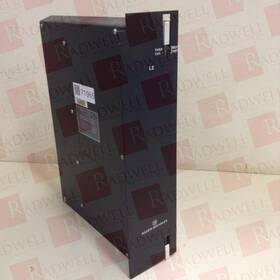
( Brand: Allen Bradley ), ( Manufacturer Part Number: 1775-L2 ), ( Part Type: Module )
Review ALLEN BRADLEY 1775l2 Used
The **Allen-Bradley 1775-L2 (1775L2)** is a high-performance, compact industrial controller designed for demanding automation applications where reliability, flexibility, and scalability are critical. Part of Rockwell Automation s **CompactLogix** series, this programmable logic controller (PLC) is engineered to deliver robust control capabilities in environments ranging from discrete manufacturing to process automation. With its **1775L2 model designation**, it features a **12-slot backplane**, providing ample expansion options for integrating additional I/O modules, communication interfaces, and advanced processing units to meet the most complex control requirements. The controller s **compact yet sturdy design** ensures easy installation in tight spaces while maintaining robust protection against dust, moisture, and electromagnetic interference, making it ideal for harsh industrial settings. Built on a **PowerFlex 5250** processor architecture, the 1775-L2 offers high-speed execution, deterministic timing, and seamless integration with other Rockwell Automation products, including **FactoryTalk View Studio**, **Studio 5000**, and **RSLogix 5000** software platforms. Its **dual-core processing** enhances performance for applications requiring real-time data acquisition, motion control, or complex logic operations, while the **integrated Ethernet/IP and DeviceNet ports** facilitate seamless communication with field devices, HMIs, and higher-level supervisory systems. The 1775-L2 also supports **high-speed serial communication protocols** such as **CIP Sync** and **CIP Motion**, enabling precise synchronization of motion control systems and high-speed data transfers. Additionally, its **modular I/O architecture** allows for the integration of analog, discrete, and specialized I/O modules, ensuring compatibility with a wide range of sensors, actuators, and industrial devices. Whether deployed in a **packaging machine, material handling system, or automated assembly line**, the 1775-L2 delivers the performance, flexibility, and industrial-grade durability required to optimize productivity and operational efficiency in modern manufacturing environments.
### **Pros and Cons of Buying an Allen-Bradley 1775-L2 (1775L2) PLC**
The **Allen-Bradley 1775-L2** is a legacy programmable logic controller (PLC) from Rockwell Automation, originally introduced in the late 1990s. While it remains functional in many industrial applications, its use today comes with distinct advantages and drawbacks.
---
### **Pros**
1. **Reliability and Proven Performance**
The 1775 series was designed for industrial automation and has a strong track record in harsh environments. Many users report long-term reliability, especially when properly maintained. Its robust construction and industrial-grade components make it suitable for continuous operation in factories, manufacturing plants, and process control systems.
2. **Compatibility with Legacy Systems**
If your facility already uses 1775 PLCs or related hardware (such as 1771 I/O modules, 1756 terminals, or older HMI systems), purchasing a 1775-L2 ensures seamless integration without the need for costly retrofitting. This is particularly valuable in environments where changing hardware would disrupt production or require extensive reprogramming.
3. **Cost-Effectiveness for Maintenance and Repairs**
Since the 1775 series is no longer in active production, spare parts (such as CPUs, power supplies, and I/O modules) are often cheaper than newer Rockwell PLCs. Additionally, technicians familiar with the 1775 architecture are still widely available, reducing training costs.
4. **Support for Older ControlLogix and SLC Programs**
The 1775-L2 can run **ControlLogix (RSLogix 5000) and SLC (RSLogix 5/500) programs**, making it a viable option for facilities that rely on these programming environments. While newer Rockwell PLCs (e.g., CompactLogix, Micro800) require updated software, the 1775 can continue running legacy code without migration.
5. **Backward Compatibility with 1756 Terminals**
The 1775-L2 is compatible with **1756-A8 (ControlNet) and 1756-B16 (DH )** terminals, allowing for expanded I/O connectivity. This is useful for integrating older systems with newer I/O modules where possible.
6. **Industrial-Grade Specifications**
The unit is rated for **wide temperature ranges (-25 C to 60 C)**, high humidity (up to 95% non-condensing), and resistance to vibration and shock, making it suitable for demanding environments like automotive, packaging, or food processing.
7. **Availability of Secondhand Units**
Due to its age, the 1775-L2 is frequently found in the used market at significantly lower prices than new Rockwell PLCs. This makes it an attractive option for budget-conscious buyers who prioritize functionality over cutting-edge features.
---
### **Cons**
1. **Lack of Modern Features**
The 1775-L2 lacks advanced capabilities found in newer PLCs, such as:- **EtherNet/IP integration** (requires additional hardware like a **1756-EN2T** module).
- **Built-in motion control** (unlike newer CompactLogix or Micro800 models).
- **Enhanced security features** (older firmware lacks modern encryption and cybersecurity protections).
- **High-speed counter modules** (limited compared to newer options).
- **Support for modern HMI/SCADA systems** (may require gateways or compatibility layers).
2. **Software and Firmware Limitations**
- **RSLogix 5000/5/500 is outdated**, with no active development or security patches. Newer versions of Studio 5000 or CodeSys may not fully support it.
- **No native support for cloud connectivity or IoT integration**, which is increasingly important in modern industrial automation.
- **Limited diagnostic tools** compared to modern PLCs, which often include built-in trend analysis, predictive maintenance features, and remote monitoring.
3. **Hardware Obsolescence Risks**
- **Spare parts may become harder to find** as Rockwell shifts focus to newer platforms. While still available, long-term reliability depends on maintaining a stock of critical components.
- **No official Rockwell support** for troubleshooting or firmware updates, meaning users must rely on third-party resources or legacy documentation.
4. **Scalability Challenges**
- Expanding I/O or adding advanced features (e.g., high-speed Ethernet, advanced motion) requires **additional third-party modules or adapters**, which can be costly and complex.
- Unlike newer PLCs, the 1775-L2 does not support **modular expansion** as seamlessly (e.g., adding a second CPU or advanced math modules).
5. **Training and Workforce Transition Issues**
- Younger engineers may lack familiarity with **ladder logic (LD) or structured text (ST) programming** for the 1775, requiring additional training.
- **Documentation and troubleshooting guides** are less comprehensive than those for modern PLCs, increasing the learning curve for new technicians.
6. **Cybersecurity Vulnerabilities**
- The 1775-L2 was not designed with modern cybersecurity threats in mind. Older firmware may be susceptible to **unpatched vulnerabilities**, making it a potential target for industrial espionage or sabotage.
- **No built-in firewall or encryption** for communication protocols, increasing risk in networked environments.
7. **Limited Longevity in New Installations**
While the 1775-L2 can be a cost-effective choice for **replacement or maintenance**, it is **not ideal for new automation projects** where long-term support and scalability are priorities. Newer PLCs (e.g., **CompactLogix, Micro800, or even Siemens S7-1200**) offer better integration with modern SCADA, cloud, and IoT systems.
---
### **Conclusion**
The **Allen-Bradley 1775-L2** remains a **viable and cost-effective solution** for facilities that:- **Depend on legacy ControlLogix/SLC programs** and cannot afford migration.
- **Operate in environments where reliability and compatibility with older I/O are critical**.
- **Have limited budgets** and can source spare parts independently.
- **Do not require advanced features** like high-speed Ethernet, motion control, or cloud integration.
However, for **new automation projects, modernized facilities, or applications requiring scalability and cybersecurity**, the 1775-L2 is **not the best long-term choice**. Newer PLCs offer better integration with modern industrial networks, improved diagnostics, and future-proofing.
---
### **Recommendation**
- **Buy the 1775-L2 if:**- You are **replacing a failing 1775 unit** in a system that relies on it.
- Your **budget is constrained**, and you can source spare parts reliably.
- You **do not need advanced features** and can work within its limitations.
- Your **technicians are familiar** with ladder logic and older Rockwell software.
- **Avoid the 1775-L2 if:**- You are **starting a new automation project** and need **scalability, Ethernet/IP, or cloud integration**.
- Your facility **requires high-speed motion control or advanced diagnostics**.
- You **prioritize long-term support** and want to align with Rockwell s current product roadmap.
- **Cybersecurity is a major concern**, and you need modern encryption and network protections.
#### **Alternatives to Consider:**- **For Legacy Systems:** **1756-L83 (ControlLogix) or 1769-L32E (CompactLogix)** More modern but still compatible with older I/O.
- **For New Projects:** **Rockwell Micro800, Siemens S7-1200, or Allen-Bradley CompactLogix** Better Ethernet/IP support, easier programming, and future-proofing.
- **For Budget-Conscious New Installations:** **Used 1756-L83 or 1769-L32E** A step up from the 1775 with better expansion options.
Ultimately, the decision depends on **your specific needs, budget, and long-term goals**. If the 1775-L2 fits your current requirements, it can be a **practical and economical choice**. Otherwise, investing in a **newer or more modular PLC** may save costs and headaches in the future.
Details:
ALLEN BRADLEY 1775-L2 / 1775L2 USED DISCONTINUED BY MANUFACTURER, MAIN PROCESSOR MODULE, LEVEL Sells new and surplus product develops channels to purchase such. All products are guaranteed to be working but may show signs of use if purchasing a used product. Call to use a shipping service other than the ones listed.
Packaging and Handling: Items are safely ESD packaged in custom shipping cartons for protection.
part #: 1775l2 prices
- $45.60-$99.99
specifications sensoindustria:
- brand: Allen Bradley
- mpn: 1775-l2
- part type: Module
offer sensoindustria:
- sold: 0
- options: Ship-to-home
- started: February 14, 2026
- availability: In Stock
- quantity: 1
returns sensoindustria:
- time: 30 Days
- paid by: Buyer
- policy: Returns Accepted
- method: Money back
general sensoindustria:
- condition: Used
- PLCs HMIs > PLC Peripheral Modules > PLC Input Output Modules
seller sensoindustria:
- rating: 99.5%
- # reviews: 190210
- city: 1 Millennium Dr, Willingboro, NJ 08046
payments sensoindustria:
- other
- credit card: Mastercard
- wallet: Google-pay
shipping sensoindustria:
- service: Standard
- class: Standard
- cost: $12.90
- type: Fixed
- transit: 25-38 Days
Allen Bradley 1775-L2 Is Similar To:
- 17560a16 17560a16 Allen-bradley Allen Bradley Series (34.1% similar) Allen Bradley cat 17560A16 series a nib...(January 18th, 2018)
- 04eky00001 Allen Bradley Part Flat Power Unused Old Stock (45.7% similar) System ships via USPS and FedEx ground express. Buyer has option to select alternate transport carrier Ats expense. Allen Bradley part: flat power cable. Fob phoenix...(May 7th, 2018)
- 061259830213 Allen-bradley 2015 Factory Sealed (44.4% similar) Thanks a buyer: member id clobbers private during past month Cisco WS-C3750X-48PF-S brand new sealed 3750X Poe us 2,400. Honest and stood by the product working. 00BEST offer price was accepted view item Allen-Bradley 1756-EN2F EN2F b series new sealed arrived as described. E-mail us first if you ...(July 21st, 2017)
- 081159752880 Allen Bradley 1771-oa 120 (57.5% similar) This item is used. Allen Bradley 1771-OA 120 vac output module 1771OA 1771 manufacturer: Bradley model: 1771-OATYPE: module controller platform: plc 5 used, in working condition...(January 22nd, 2018)
- 100-a09nd3 b B Rockwell Automation Allen-bradley (26.2% similar) Auxiliary contact, 110 120V ac 50 60HZ coil, fully tested, in excellent working and cosmetic condition. Notes:the unit is series condition: pup used in a plc hardware. The serial number in pictures has been altered for privacy purposes...(May 5th, 2017)
- 100-c09 10 Allen Bradley Series Contactor (39.5% similar) Allen Bradley 100-C09 10 series a contractor location 14E...(August 23rd, 2018)
- 100-c23d 10 Allen-bradley Allen Bradley (35.1% similar) Previously used, in very good working condition Allen Bradley 100-C23D 10 contractor coil 32A 600V-690V...(May 5th, 2017)
- 10000134269 Allen Bradley 1756-rio Series (52.6% similar) Comes with wiring connector. Working when pulled. Appears new, not in original box...(November 13th, 2017)
- 100s-c09ej14bc Allen Bradley New Contactor (39% similar) A contractor 24VDC part 100S-C09EJ14BC great price pic. New Allen Bradley sear...(June 1st, 2018)
- 1025732 Allen-braldye Allen-bradley Memory Module (35.7% similar) Allen-bradley memory module cat 1772MEB part this unit appears to be new and in the original box, but I cannot verify...(July 5th, 2017)
- 104-a09nd3 Allen Bradley Reversing Contactor (38% similar) Reversing contractor, includes the interlocking end switches to protect from inadvertently shorting power supply...(July 18th, 2018)
