ALLEN-BRADLEY 1774-SL Scanner Module
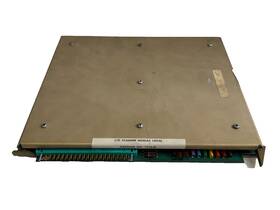
( Brand: Allen-bradley ), ( Manufacturer Part Number: 1774-SL ), ( Model: ALLEN BRADLEY 1774-SL ), ( Part Type: Module )
Review ALLEN BRADLEY Used Scanner Module
The **Allen-Bradley 1774-SL Scanner Module** is a robust and versatile component of the **CompactLogix** and **ControlLogix** programmable logic controller (PLC) family, designed to interface with a wide range of discrete input devices while delivering high reliability and seamless integration into industrial automation systems. This module operates as a **16-point, 24V DC input scanner**, providing a cost-effective solution for monitoring pushbuttons, limit switches, proximity sensors, and other discrete signals in manufacturing, process control, and automation applications. Built with Allen-Bradley s signature engineering precision, the 1774-SL features a **compact, DIN-rail-mountable design** that maximizes space efficiency in control panels, making it ideal for environments where panel density and modularity are critical. Its **isolated input channels** ensure immunity to noise and voltage spikes, safeguarding the PLC from potential damage while maintaining accurate signal detection. The module supports **both normally open (NO) and normally closed (NC) configurations**, offering flexibility in wiring and application design, and its **LED indicators** provide real-time status monitoring for each input point, simplifying troubleshooting and maintenance. Compatible with **RSLogix 5000, Studio 5000, and other Rockwell Automation software platforms**, the 1774-SL seamlessly integrates with modern control systems, enabling engineers to configure, program, and diagnose the module through intuitive graphical interfaces. With a **wide operating temperature range of -20 C to 60 C (-4 F to 140 F)**, the module is well-suited for harsh industrial environments, including factories, oil and gas facilities, and food and beverage processing plants where temperature fluctuations and electrical interference are common. Additionally, its **high-speed scanning capability** ensures minimal latency in signal processing, which is essential for applications requiring precise timing and synchronization. Whether deployed in a small-scale automation setup or as part of a larger, distributed control system, the **Allen-Bradley 1774-SL Scanner Module** delivers dependable performance, ease of use, and the reliability expected from a leader in industrial automation technology.
### Pros and Cons of buying a Allen-Bradley 1774-SL Scanner Module
#### **Pros**
1. **Compatibility with PLC Systems** The 1774-SL is designed to integrate seamlessly with Allen-Bradley CompactLogix, ControlLogix, and other PLC platforms, ensuring reliable communication between I/O modules and the controller.
2. **High-Density Input/Output** The module supports a variety of digital and analog inputs/outputs, allowing for efficient expansion of I/O capacity without requiring additional rack space in many cases.
3. **Reliability and Durability** Allen-Bradley products are known for their robust construction, making the 1774-SL suitable for industrial environments with harsh conditions, including temperature fluctuations and electrical noise.
4. **Easy Installation and Configuration** The module features standard mounting and wiring methods, and its configuration can be managed through Rockwell Automation s software (such as Studio 5000), simplifying setup and troubleshooting.
5. **Backward and Forward Compatibility** The 1774-SL is designed to work with newer and older Allen-Bradley systems, reducing the need for extensive retrofitting when upgrading or maintaining automation setups.
6. **Support for Advanced Features** Depending on the specific variant, the module may support features like diagnostics, fault reporting, and integration with other Allen-Bradley devices, enhancing system monitoring and maintenance.
7. **Widely Available Parts and Support** As a legacy but still widely used product, the 1774-SL benefits from extensive documentation, technical support, and availability of spare parts from Rockwell Automation and third-party suppliers.
---
#### **Cons**
1. **Legacy Technology** The 1774-SL is an older model, which means it may lack some of the advanced features found in newer I/O modules, such as higher data transfer speeds, enhanced security protocols, or modern communication interfaces (e.g., Ethernet/IP with higher bandwidth).
2. **Limited Scalability** While the module is functional, newer systems may require more advanced I/O solutions that offer higher density, modularity, or support for emerging technologies like IoT or predictive maintenance.
3. **Potential Obsolescence Risks** Rockwell Automation has phased out some older products in favor of newer lines (e.g., 1756-I/O modules). Over time, finding replacement parts or technical support may become more difficult, though the 1774-SL remains widely supported for now.
4. **Higher Long-Term Costs** If the system requires frequent upgrades or replacements, the cumulative cost of maintaining legacy components like the 1774-SL could outweigh the initial savings of using a newer, more efficient module.
5. **Limited Software Integration** Newer automation software and tools may not fully optimize performance with older I/O modules, potentially requiring workarounds or additional configuration steps.
6. **Energy Efficiency Concerns** Older I/O modules may not be as energy-efficient as modern counterparts, which could lead to higher operational costs over time, especially in large-scale systems.
7. **Training and Skill Gaps** Engineers or technicians familiar with newer Allen-Bradley systems may require additional training to effectively work with legacy modules like the 1774-SL, potentially increasing operational overhead.
---
### **Conclusion**
The Allen-Bradley 1774-SL scanner module remains a practical choice for applications where compatibility with existing Allen-Bradley PLC systems is critical, and where the module s reliability and ease of integration justify its use. It is particularly well-suited for maintenance or upgrade projects where replacing the entire I/O infrastructure is not feasible or cost-effective. However, for new installations or systems requiring advanced features, scalability, or long-term sustainability, investing in newer I/O modules (e.g., 1756 series) may be more advantageous despite a higher upfront cost.
The decision to purchase the 1774-SL should be based on:- The current and future needs of the automation system.
- The availability of spare parts and technical support.
- The trade-off between immediate cost savings and long-term maintenance or upgrade costs.
- Whether the system s operational environment demands the robustness of legacy hardware.
---
### **Recommendation**
If the 1774-SL is being considered for an existing system that is already in use and functioning reliably, it is a **sound choice** due to its proven performance and compatibility. However, if the system is being designed from scratch or requires future-proofing, prioritize newer I/O modules that offer better scalability, energy efficiency, and integration with modern automation trends.
For users with budget constraints or those maintaining legacy systems, the 1774-SL is a **practical and cost-effective solution**. For new projects or long-term investments, explore newer Allen-Bradley I/O modules to ensure better alignment with future technological advancements. Always conduct a cost-benefit analysis, considering both immediate and long-term operational impacts.
Details:
USED Allen Bradley 1774-SL Scanner Module, Shelf A14 Tote 292.
part #: 1774 prices
- $399.99-$680.00
specifications sensoindustria:
- brand: Allen-bradley
- mpn: 1774-sl
- model: Allen Bradley 1774-sl
- part type: Module
payments sensoindustria:
- other
- credit card: Visa
- wallet: Apple-pay
returns sensoindustria:
- paid by: Seller
- policy: Returns Accepted
- time: 30 Days
- method: Money back
general sensoindustria:
- condition: Used
- PLCs HMIs > PLC Peripheral Modules > PLC Input Output Modules
seller sensoindustria:
- rating: 100.0%
- city: Ray, Michigan
- # reviews: 2196
offer sensoindustria:
- quantity: 1
- sold: 0
- started: April 15, 2026
- options: Ship-to-home
- availability: In Stock
- best offers: True
shipping sensoindustria:
- service: USPS Priority Mail
- type: Fixed
- class: Expedited
- carrier: USPS
- transit: 3-7 Days
- cost: $0.00
Allen-bradley 1774 Is Similar To:
- 17560a16 17560a16 Allen-bradley Allen Bradley Series (36.2% similar) Allen bradley cat 17560A16 series a nib...(January 18th, 2018)
- 04eky00001 Allen Bradley Part Flat Power Unused Old Stock (40.8% similar) System ships via USPS and FedEx ground express. Buyer has option to select alternate transport carrier Ats expense. Allen bradley part: flat power cable. Fob phoenix...(May 7th, 2018)
- 061259830213 Allen-bradley 2015 Factory Sealed (48.3% similar) Thanks a buyer: member id clobbers private during past month Cisco WS-C3750X-48PF-S brand new sealed 3750X Poe us 2,400. Honest and stood by the product working. 00BEST offer price was accepted view item Allen-bradley 1756-EN2F EN2F b series new sealed arrived as described. E-mail us first if you ...(July 21st, 2017)
- 081159752880 Allen Bradley 1771-oa 120 (43% similar) This item is used. Allen bradley 1771-OA 120 vac output module 1771OA 1771 manufacturer: bradley model: 1771-OATYPE: module controller platform: plc 5 used, in working condition...(January 22nd, 2018)
- 100-a09nd3 b B Rockwell Automation Allen-bradley (28.9% similar) Auxiliary contact, 110 120V ac 50 60HZ coil, fully tested, in excellent working and cosmetic condition. Notes:the unit is series condition: pup used in a plc hardware. The serial number in pictures has been altered for privacy purposes...(May 5th, 2017)
- 100-c09 10 Allen Bradley Series Contactor (39% similar) Allen bradley 100-C09 10 series a contractor location 14E...(August 23rd, 2018)
- 100-c23d 10 Allen-bradley Allen Bradley (42.5% similar) Previously used, in very good working condition allen bradley 100-C23D 10 contractor coil 32A 600V-690V...(May 5th, 2017)
- 10000134269 Allen Bradley 1756-rio Series (48.8% similar) Comes with wiring connector. Working when pulled. Appears new, not in original box...(November 13th, 2017)
- 100s-c09ej14bc Allen Bradley New Contactor (36.1% similar) A contractor 24VDC part 100S-C09EJ14BC great price pic. New allen bradley sear...(June 1st, 2018)
- 1025732 Allen-braldye Allen-bradley Memory Module (51.1% similar) Allen-bradley memory module cat 1772MEB part this unit appears to be new and in the original box, but I cannot verify...(July 5th, 2017)
- 104-a09nd3 Allen Bradley Reversing Contactor (40% similar) Reversing contractor, includes the interlocking end switches to protect from inadvertently shorting power supply...(July 18th, 2018)
