ALLEN BRADLEY 1772-ME8 Plc Modules
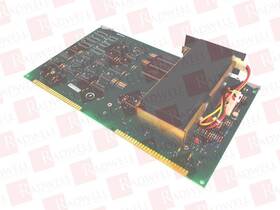
( Brand: Allen Bradley ), ( Manufacturer Part Number: 1772-ME8 ), ( Part Type: Module )
Review ALLEN BRADLEY 1772me8 Used
The **Allen-Bradley 1772-ME8** is a high-performance, modular input/output (I/O) module designed for integration into the **CompactLogix 5560, 5570, and 5700** series of programmable logic controllers (PLCs) within Rockwell Automation s scalable ControlLogix architecture. This **8-channel, 24-bit counter input module** is engineered to deliver precise timing, high-speed counting, and robust industrial-grade performance, making it an ideal solution for applications requiring accurate motion control, process monitoring, or high-speed data acquisition. Built with a **compact, DIN-rail mountable form factor**, the 1772-ME8 module occupies a single slot in a ControlLogix chassis, offering seamless integration into existing automation systems while maximizing space efficiency. Its **isolated, differential input design** ensures immunity to noise and voltage spikes commonly found in harsh industrial environments, such as manufacturing plants, packaging lines, or material handling systems. Each of the eight input channels supports **24-bit counting capability**, enabling the module to handle high-resolution applications with exceptional accuracy, including encoder feedback from servo motors, shaft position tracking, or pulse counting for conveyor systems. The module features **configurable input filtering** to minimize false triggers from transient signals, while its **isolated outputs** (via the PLC s I/O scanning) provide reliable status reporting for diagnostic and monitoring purposes. Compatible with **Rockwell s Studio 5000 software**, the 1772-ME8 allows engineers to easily configure counting modes, presets, and direction control through intuitive programming interfaces, supporting applications such as **incremental encoders, absolute position tracking, or frequency measurement**. With **industrial-grade construction**, including a **wide operating temperature range (-40 C to 70 C)** and **high shock/vibration resistance**, this module is built to withstand the demands of continuous operation in demanding environments. Additionally, its **backplane-powered design** eliminates the need for external power supplies, simplifying installation and reducing system complexity. Whether deployed in **motion control systems, CNC machinery, or high-speed sorting applications**, the 1772-ME8 delivers the reliability and precision required to optimize productivity while minimizing downtime. As part of Rockwell Automation s **ControlLogix ecosystem**, it seamlessly interfaces with other modules, drives, and human-machine interface (HMI) solutions, ensuring a cohesive and scalable automation architecture.
**Pros and Cons of Buying an Allen-Bradley 1772-ME8 (Micro800 Series) Controller**
### **Pros**
1. **Compact and Modular Design** The 1772-ME8 is a compact, modular controller that integrates logic, analog I/O, and communication in a single unit. This reduces wiring complexity and footprint compared to traditional PLCs with separate modules.
2. **Scalability** The Micro800 series supports expansion via additional I/O modules (e.g., 1771-Nx modules) and communication modules (e.g., 1771-CIF for Ethernet/IP). This allows users to scale the system as their application grows without replacing the entire controller.
3. **Ethernet/IP and Other Communication Protocols** The 1772-ME8 supports Ethernet/IP natively, enabling seamless integration with other Rockwell Automation products (e.g., Studio 5000, FactoryTalk View) and third-party devices. It also supports Modbus TCP, making it compatible with legacy systems.
4. **Low Cost of Ownership** Compared to larger PLCs (e.g., ControlLogix or CompactLogix), the Micro800 is more affordable in terms of both hardware and software licensing. The Studio 5000 Logix Designer software is free for basic programming, reducing initial costs.
5. **Easy Programming and Configuration** The Micro800 uses the same programming environment as Rockwell s larger PLCs, making it familiar to engineers already using Studio 5000. The drag-and-drop ladder logic interface simplifies programming for smaller applications.
6. **Built-in Analog and Digital I/O** The 1772-ME8 includes 8 digital I/O points and 2 analog inputs/outputs (configurable as AI, AO, or discrete I/O), reducing the need for additional modules in simple applications.
7. **Reliability and Durability** Like other Allen-Bradley products, the Micro800 is built to industrial standards, offering robust performance in harsh environments (IP65-rated enclosure options are available).
8. **Support for Remote Monitoring and Diagnostics** Ethernet/IP connectivity allows for remote troubleshooting, firmware updates, and monitoring, improving maintenance efficiency.
9. **Compatibility with Rockwell Ecosystem** Works seamlessly with other Rockwell products like Allen-Bradley drives, HMIs, and SCADA systems, reducing integration challenges.
10. **Energy Efficiency** The Micro800 consumes less power than larger PLCs, which can be beneficial for applications with limited power budgets.
---
### **Cons**
1. **Limited Processing Power** The Micro800 is designed for small, simple control applications (e.g., machine automation, HVAC, or basic process control). For complex applications requiring high-speed math, advanced motion control, or large-scale data handling, it may struggle compared to a ControlLogix or CompactLogix.
2. **No Built-in Motion Control** Unlike the CompactLogix or ControlLogix, the Micro800 lacks native support for advanced motion control (e.g., servo or stepper motor control). Users requiring motion applications may need to add external motion modules or use third-party solutions.
3. **Limited Memory** The internal memory is constrained compared to larger PLCs, which can be a limitation for applications requiring extensive data logging, large programs, or complex algorithms. External memory (e.g., USB or SD cards) can be used, but this adds complexity.
4. **Dependence on Rockwell Software** While Studio 5000 Logix Designer is free, advanced features (e.g., structured text, function block diagrams) may require additional licenses or third-party tools. Users heavily reliant on non-Rockwell software (e.g., Codesys) may find the ecosystem restrictive.
5. **Scalability Limitations** While the Micro800 supports expansion, very large I/O requirements may necessitate upgrading to a CompactLogix or ControlLogix, which could increase costs and complexity.
6. **Fewer Third-Party Support Options** Compared to more established PLC brands (e.g., Siemens, Mitsubishi), the Micro800 has a smaller ecosystem of third-party drivers, libraries, or support tools. This can be a drawback for applications requiring specialized hardware or software integrations.
7. **Learning Curve for New Users** While the programming environment is intuitive for Rockwell users, those unfamiliar with Studio 5000 may require training to fully utilize its features.
8. **No Built-in Safety Functions** The Micro800 does not support safety-rated I/O or safety protocols (e.g., Safety over Ethernet/IP). Applications requiring safety certification (e.g., ISO 13849, IEC 61508) would need additional safety PLCs or modules.
9. **Limited Analog Performance** The analog inputs/outputs are basic (12-bit resolution) and may not meet the precision requirements of high-end process control applications.
10. **Potential for Obsolescence** While Rockwell Automation is a stable vendor, newer technologies (e.g., edge computing, AI-driven automation) may render the Micro800 less relevant in the long term. Users should consider future-proofing if the application may evolve significantly.
---
### **Conclusion**
The **Allen-Bradley 1772-ME8 (Micro800)** is an excellent choice for **small to medium-sized control applications** where simplicity, cost-effectiveness, and ease of integration with Rockwell s ecosystem are priorities. It excels in applications such as:
- Machine automation (e.g., packaging, material handling).
- HVAC and building automation.
- Basic process control (e.g., water treatment, simple chemical mixing).
- Applications requiring Ethernet/IP connectivity with minimal I/O expansion.
However, it is **not suitable** for:- High-performance motion control applications.
- Complex process control with advanced math or large data handling.
- Safety-critical applications requiring certified safety functions.
- Large-scale systems where scalability and processing power are critical.
If your application is **simple, cost-sensitive, and within the Micro800 s capabilities**, this controller offers a **strong value proposition**. For more demanding applications, upgrading to a **CompactLogix or ControlLogix** may be necessary despite the higher cost.
---
### **Recommendation**
**Buy the 1772-ME8 if:**- Your application requires **basic logic control, digital I/O, and analog signals** without complex motion or safety needs.
- You are already using **Rockwell Automation products** and want seamless integration.
- You need a **cost-effective, compact solution** for a small to medium-sized machine or process.
- Ethernet/IP connectivity and **Studio 5000 Logix Designer** are acceptable for your programming needs.
**Avoid the 1772-ME8 if:**- Your application requires **high-speed motion control, advanced math, or large-scale data handling**.
- You need **safety-certified I/O or compliance with strict safety standards**.
- You anticipate **significant future expansion** that would require a more powerful PLC.
- You prefer **third-party software or non-Rockwell ecosystems** for programming or integration.
**Alternative Considerations:**- For **motion control**, pair the Micro800 with a **1756-L83 (Motion Module)** or consider a **CompactLogix**.
- For **safety applications**, use a **1756-S7 (Safety PLC)** alongside the Micro800.
- For **larger or more complex systems**, evaluate a **CompactLogix (e.g., 1769-L32E)** or **ControlLogix (e.g., 1756-L85ER)**.
In summary, the **1772-ME8 is a pragmatic choice for its intended use case**, but its limitations should be carefully weighed against the requirements of your specific application.
Details:
Sells new and surplus product develops channels to purchase such. Call to use a shipping service other than the ones listed. All products are guaranteed to be working but may show signs of use if purchasing a used product. Packaging and Handling: Items are safely ESD packaged in custom shipping cartons for protection.
part #: 1772me8 prices
- $40.77-$100.00
specifications sensoindustria:
- brand: Allen Bradley
- mpn: 1772-me8
- part type: Module
seller sensoindustria:
- rating: 99.5%
- # reviews: 190333
- city: 1 Millennium Dr, Willingboro, NJ 08046
shipping sensoindustria:
- transit: 23-36 Days
- service: Standard
- class: Standard
- cost: $12.90
- type: Fixed
general sensoindustria:
- PLCs HMIs > PLC Peripheral Modules > PLC Input Output Modules
- condition: Used
offer sensoindustria:
- options: Ship-to-home
- sold: 0
- quantity: 1
- availability: In Stock
- started: February 16, 2026
returns sensoindustria:
- time: 30 Days
- method: Money back
- policy: Returns Accepted
- paid by: Buyer
payments sensoindustria:
- wallet: Paypal
- other
- credit card: Discover
Allen Bradley 1772-ME8 Is Similar To:
- 17560a16 17560a16 Allen-bradley Allen Bradley Series (37.8% similar) Allen Bradley cat 17560A16 series a nib...(January 18th, 2018)
- 04eky00001 Allen Bradley Part Flat Power Unused Old Stock (46.8% similar) System ships via USPS and FedEx ground express. Buyer has option to select alternate transport carrier Ats expense. Allen Bradley part: flat power cable. Fob phoenix...(May 7th, 2018)
- 061259830213 Allen-bradley 2015 Factory Sealed (41% similar) Thanks a buyer: member id clobbers private during past month Cisco WS-C3750X-48PF-S brand new sealed 3750X Poe us 2,400. Honest and stood by the product working. 00BEST offer price was accepted view item Allen-Bradley 1756-EN2F EN2F b series new sealed arrived as described. E-mail us first if you ...(July 21st, 2017)
- 081159752880 Allen Bradley 1771-oa 120 (56% similar) This item is used. Allen Bradley 1771-OA 120 vac output module 1771OA 1771 manufacturer: Bradley model: 1771-OATYPE: module controller platform: plc 5 used, in working condition...(January 22nd, 2018)
- 100-a09nd3 b B Rockwell Automation Allen-bradley (25.6% similar) Auxiliary contact, 110 120V ac 50 60HZ coil, fully tested, in excellent working and cosmetic condition. Notes:the unit is series condition: pup used in a plc hardware. The serial number in pictures has been altered for privacy purposes...(May 5th, 2017)
- 100-c09 10 Allen Bradley Series Contactor (43.6% similar) Allen Bradley 100-C09 10 series a contractor location 14E...(August 23rd, 2018)
- 100-c23d 10 Allen-bradley Allen Bradley (34.2% similar) Previously used, in very good working condition Allen Bradley 100-C23D 10 contractor coil 32A 600V-690V...(May 5th, 2017)
- 10000134269 Allen Bradley 1756-rio Series (51.3% similar) Comes with wiring connector. Working when pulled. Appears new, not in original box...(November 13th, 2017)
- 100s-c09ej14bc Allen Bradley New Contactor (40.5% similar) A contractor 24VDC part 100S-C09EJ14BC great price pic. New Allen Bradley sear...(June 1st, 2018)
- 1025732 Allen-braldye Allen-bradley Memory Module (39.5% similar) Allen-bradley memory module cat 1772MEB part this unit appears to be new and in the original box, but I cannot verify...(July 5th, 2017)
- 104-a09nd3 Allen Bradley Reversing Contactor (42% similar) Reversing contractor, includes the interlocking end switches to protect from inadvertently shorting power supply...(July 18th, 2018)
