ALLEN BRADLEY 1771-CT50 Plc Modules
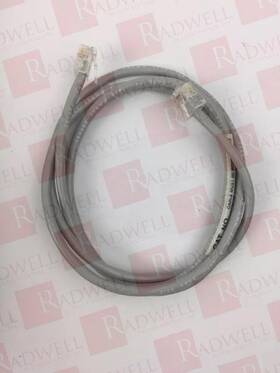
( Brand: Allen Bradley ), ( Manufacturer Part Number: 1771-CT50 ), ( Part Type: Module )
Review ALLEN BRADLEY 1771ct50 Used
The **Allen-Bradley 1771-CT50** is a high-performance, modular **CompactLogix Controller Terminal**, designed to integrate seamlessly into Rockwell Automation s **CompactLogix** series of programmable logic controllers (PLCs). This terminal module serves as a critical interface for connecting additional **CompactLogix** controllers, **Remote I/O**, or **Communication Modules** to a central control system, enabling scalable and flexible automation architectures. Built with Rockwell s industry-leading reliability and engineering precision, the **1771-CT50** features a **50-pin D-sub connector** (male) on one end and a **50-pin D-sub connector** (female) on the other, allowing for direct daisy-chaining or branching of multiple devices in a networked topology. This terminal is engineered to support high-speed data transfer, making it ideal for applications requiring real-time communication between controllers, such as distributed control systems, motion control networks, or large-scale process automation.
The **1771-CT50** is constructed with **industrial-grade materials**, ensuring durability in harsh environments where temperature fluctuations, vibration, and electrical noise are common. Its robust design adheres to **NEMA 4X** standards, providing protection against dust, water splashes, and corrosion, which is essential for applications in manufacturing plants, oil and gas facilities, or outdoor control enclosures. The terminal operates within a **wide voltage range** (typically 10 to 30 VDC or 10 to 52.5 VDC, depending on configuration) and supports **full-duplex communication**, enabling bidirectional data flow between connected devices without signal degradation. This makes it well-suited for applications where synchronized control and monitoring are required, such as in conveyor systems, robotic cells, or energy management networks.
One of the standout features of the **1771-CT50** is its **backward and forward compatibility** with other **CompactLogix** and **ControlLogix** modules, ensuring seamless integration into existing or expanding automation systems. It supports **EtherNet/IP**, **DeviceNet**, and **ControlNet** communication protocols, allowing it to function as a bridge between different types of I/O devices, controllers, or even third-party systems that adhere to these standards. This flexibility simplifies system expansion and maintenance, reducing downtime and improving overall efficiency. Additionally, the terminal s **low-latency communication** ensures minimal delay in data transmission, which is crucial for applications requiring precise timing, such as high-speed packaging machines or automated assembly lines.
For engineers and technicians, the **1771-CT50** offers **easy installation and configuration** through Rockwell s **Studio 5000** software, where users can monitor network health, diagnose communication issues, and optimize performance. The terminal s **LED indicators** provide real-time status updates, including link activity, communication errors, and power status, allowing for quick troubleshooting. Whether used to extend a **CompactLogix** network, connect remote I/O racks, or facilitate communication between multiple controllers, the **1771-CT50** delivers a reliable, high-performance solution that enhances the scalability and robustness of industrial automation systems. Its combination of **durability, speed, and compatibility** makes it an indispensable component for modern control architectures.
### **Pros and Cons of Buying an Allen-Bradley 1771-CT50 (1771CT50) Controller**
The **Allen-Bradley 1771-CT50** is a compact, modular controller designed for industrial automation applications, particularly in PLC (Programmable Logic Controller) systems. Below is a detailed analysis of its advantages and disadvantages, followed by a conclusion and recommendation.
---
### **Pros of the 1771-CT50**
1. **Modular and Scalable Design**
The 1771-CT50 is part of the **1771 series**, which offers modular flexibility. Users can expand or reconfigure the system by adding or removing modules (e.g., I/O, communication, or power supplies) without replacing the entire controller. This makes it suitable for applications where requirements may evolve over time.
2. **High Reliability and Industrial-Grade Build**
Allen-Bradley (now part of Rockwell Automation) is a trusted name in industrial automation, known for durable and robust hardware. The 1771-CT50 is designed for harsh environments, with features like:
- Wide operating temperature range (-40 C to 70 C).
- Resistance to vibration, dust, and moisture (when properly installed).
- Long lifespan, reducing the need for frequent replacements.
3. **Compatibility with Rockwell Automation Ecosystem**
The 1771-CT50 integrates seamlessly with other Rockwell products, including:- **Studio 5000** (for programming and HMI development).
- **RSLogix 5000** (legacy programming software).
- **FactoryTalk View** (for supervisory control and data acquisition).
This compatibility simplifies system integration and reduces training time for engineers familiar with Rockwell s software suite.
4. **High-Speed Communication Capabilities**
The controller supports multiple communication protocols, such as:- **DH-485** (DeviceNet, ControlNet, Ethernet/IP).
- **Ethernet/IP** (for high-speed, real-time data exchange).
- **Modbus** (for compatibility with third-party devices).
This makes it versatile for both standalone and networked applications.
5. **Cost-Effective for Mid-Sized Applications**
While not as compact as some newer PLCs, the 1771-CT50 offers a balance between cost and performance. It is often more affordable than high-end controllers (e.g., CompactLogix or ControlLogix) while still providing robust functionality. This makes it a practical choice for:
- Small to medium-sized automation projects.
- Retrofitting older systems where modularity is beneficial.
- Applications requiring a mix of analog and discrete I/O without overpaying for excess capacity.
6. **Proven Performance in Industrial Environments**
The 1771 series has been widely used in manufacturing, process control, and machinery automation for decades. Its track record includes reliable operation in:
- Packaging machines.
- Material handling systems.
- HVAC controls.
- Water/wastewater treatment plants.
This proven track record reduces the risk of unexpected failures in critical applications.
7. **Easy Maintenance and Troubleshooting**
The modular nature of the 1771-CT50 simplifies diagnostics. Faulty modules can often be replaced without disrupting the entire system. Additionally, Rockwell provides extensive documentation and support resources, including:
- Online manuals and troubleshooting guides.
- Community forums (e.g., Rockwell Automation s support portal).
- Third-party vendors specializing in Allen-Bradley parts and repairs.
8. **Backward and Forward Compatibility**
The 1771-CT50 can interface with older Allen-Bradley systems (e.g., PLC-5, SLC 500) as well as newer ones (e.g., CompactLogix). This flexibility is valuable for:
- Upgrading legacy systems incrementally.
- Ensuring long-term support even as newer technologies emerge.
9. **Support for High-Speed I/O**
The controller supports high-speed I/O modules (e.g., 1771-HS) for applications requiring precise timing, such as:- Servo motor control.
- Encoder feedback processing.
- Synchronized motion control.
10. **Global Availability of Parts and Support**
As a legacy but still widely supported product, spare parts and technical support are readily available from:- Rockwell Automation s authorized distributors.
- Third-party suppliers (e.g., Grainger, MSC Industrial Supply).
- E-commerce platforms (e.g., Amazon, eBay, industrial marketplaces).
---
### **Cons of the 1771-CT50**
1. **Limited I/O Capacity Compared to Modern PLCs**
The 1771-CT50 is designed for **mid-sized applications** and may not be suitable for large-scale systems requiring thousands of I/O points. Key limitations include:
- Maximum I/O expansion is constrained by the backplane and power supply.
- Not as compact as newer PLCs (e.g., CompactLogix or Micro800), which can integrate I/O directly into the main unit.
- Requires additional rack space for extensive I/O expansion.
2. **Outdated Programming Environment (Compared to Newer PLCs)**
While still functional, the 1771-CT50 relies on **RSLogix 5000** or **Studio 5000**, which are more complex than the intuitive interfaces of modern PLCs (e.g., Studio 5000 Logix Designer for CompactLogix). This can:
- Increase programming time for new engineers.
- Require additional training for those unfamiliar with Rockwell s older software.
- Lack some advanced features found in newer PLCs (e.g., built-in safety functions, easier drag-and-drop programming).
3. **Higher Power Consumption**
The 1771-CT50 and its associated modules consume more power than some modern, energy-efficient PLCs. This can be a concern in:- Battery-powered or remote applications.
- Systems where power efficiency is a priority.
- Environments with limited electrical infrastructure.
4. **Mechanical Complexity**
The modular design, while advantageous, adds mechanical complexity. Users must:- Ensure proper grounding and wiring to avoid noise or interference.
- Manage cable routing carefully to prevent damage.
- Follow strict installation guidelines to avoid overheating or component failure.
This can lead to higher installation costs or errors if not handled properly.
5. **Limited Built-In Safety Features**
Unlike newer PLCs (e.g., CompactLogix with Safety over Ethernet/IP), the 1771-CT50 lacks integrated safety certifications (e.g., ISO 13849, IEC 61508). Safety functions must be implemented separately, often requiring additional relays or safety controllers. This adds:
- Extra cost for safety modules.
- Complexity in compliance with safety standards.
- Potential for increased wiring and maintenance.
6. **Slower Scan Times for Large Programs**
While adequate for most applications, the 1771-CT50 may struggle with:- Very large ladder logic programs.
- High-speed, real-time applications requiring sub-millisecond response times.
In such cases, a more powerful controller (e.g., ControlLogix) may be necessary.
7. **Deprecation by Rockwell Automation**
Rockwell Automation has shifted focus to newer platforms (e.g., **CompactLogix, ControlLogix, Micro800, and Studio 5000 Logix Designer**). While the 1771-CT50 is still supported, Rockwell may:
- Discontinue official updates or new firmware releases.
- Reduce long-term technical support compared to newer products.
This could pose risks if the system must run for 20 years without major upgrades.
8. **Higher Initial Cost for Basic I/O**
For applications requiring only a few I/O points, the 1771-CT50 may be **overkill** and more expensive than simpler PLCs (e.g., Siemens S7-1200, Schneider Electric Modicon). The modular nature means you pay for the "base" controller plus additional modules, even if you don t need all the features.
9. **Potential for Obsolescence in Long-Term Projects**
If the system is intended for a **20 year lifespan**, the risk of parts becoming unavailable or software unsupported increases. While the 1771-CT50 is not yet obsolete, newer PLCs offer:
- Longer warranty periods.
- Predictable support timelines.
- Easier upgrades to newer communication protocols (e.g., OPC UA, EtherNet/IP 2.0).
10. **Learning Curve for New Engineers**
The 1771-CT50 s programming environment and modular architecture may require additional training for engineers accustomed to:- Simpler, more user-friendly PLCs.
- Drag-and-drop programming (e.g., Siemens TIA Portal).
- Integrated HMI and SCADA tools in newer platforms.
---
### **Conclusion**
The **Allen-Bradley 1771-CT50** is a **reliable, modular, and well-supported** controller that remains a strong choice for **mid-sized industrial automation applications**, particularly where:
- **Modularity and expandability** are critical.
- **Compatibility with Rockwell s ecosystem** is a priority.
Details:
All products are guaranteed to be working but may show signs of use if purchasing a used product. Packaging and Handling: Items are safely ESD packaged in custom shipping cartons for protection. ALLEN BRADLEY 1771-CT50 / 1771CT50 USED DISCONTINUED BY MANUFACTURER, CABLE, OFFLINE, T50/T35, 50FT/15.24M. Call to use a shipping service other than the ones listed.
Sells new and surplus product develops channels to purchase such.
part #: 1771ct50 prices
- $179.99-$580.00
specifications sensoindustria:
- brand: Allen Bradley
- mpn: 1771-ct50
- part type: Module
general sensoindustria:
- PLCs HMIs > PLC Peripheral Modules > PLC Input Output Modules
- condition: Used
returns sensoindustria:
- time: 30 Days
- paid by: Buyer
- method: Money back
- policy: Returns Accepted
shipping sensoindustria:
- cost: $12.90
- transit: 22-34 Days
- service: Standard
- class: Standard
- type: Fixed
seller sensoindustria:
- city: 1 Millennium Dr, Willingboro, NJ 08046
- # reviews: 192448
- rating: 99.6%
payments sensoindustria:
- other
- credit card: Diners-club
- wallet: Apple-pay
offer sensoindustria:
- quantity: 1
- availability: In Stock
- options: Ship-to-home
- started: March 1, 2026
- sold: 0
Allen Bradley 1771-CT50 Is Similar To:
- 17560a16 17560a16 Allen-bradley Allen Bradley Series (32.6% similar) Allen Bradley cat 17560A16 series a nib...(January 18th, 2018)
- 04eky00001 Allen Bradley Part Flat Power Unused Old Stock (45.8% similar) System ships via USPS and FedEx ground express. Buyer has option to select alternate transport carrier Ats expense. Allen Bradley part: flat power cable. Fob phoenix...(May 7th, 2018)
- 061259830213 Allen-bradley 2015 Factory Sealed (42.4% similar) Thanks a buyer: member id clobbers private during past month Cisco WS-C3750X-48PF-S brand new sealed 3750X Poe us 2,400. Honest and stood by the product working. 00BEST offer price was accepted view item Allen-Bradley 1756-EN2F EN2F b series new sealed arrived as described. E-mail us first if you ...(July 21st, 2017)
- 081159752880 Allen Bradley 1771-oa 120 (57.1% similar) This item is used. Allen Bradley 1771-OA 120 vac output module 1771OA 1771 manufacturer: Bradley model: 1771-OATYPE: module controller platform: plc 5 used, in working condition...(January 22nd, 2018)
- 100-a09nd3 b B Rockwell Automation Allen-bradley (25% similar) Auxiliary contact, 110 120V ac 50 60HZ coil, fully tested, in excellent working and cosmetic condition. Notes:the unit is series condition: pup used in a plc hardware. The serial number in pictures has been altered for privacy purposes...(May 5th, 2017)
- 100-c09 10 Allen Bradley Series Contactor (40% similar) Allen Bradley 100-C09 10 series a contractor location 14E...(August 23rd, 2018)
- 100-c23d 10 Allen-bradley Allen Bradley (33.3% similar) Previously used, in very good working condition Allen Bradley 100-C23D 10 contractor coil 32A 600V-690V...(May 5th, 2017)
- 10000134269 Allen Bradley 1756-rio Series (47.5% similar) Comes with wiring connector. Working when pulled. Appears new, not in original box...(November 13th, 2017)
- 100s-c09ej14bc Allen Bradley New Contactor (39.5% similar) A contractor 24VDC part 100S-C09EJ14BC great price pic. New Allen Bradley sear...(June 1st, 2018)
- 1025732 Allen-braldye Allen-bradley Memory Module (34.1% similar) Allen-bradley memory module cat 1772MEB part this unit appears to be new and in the original box, but I cannot verify...(July 5th, 2017)
- 104-a09nd3 Allen Bradley Reversing Contactor (38.6% similar) Reversing contractor, includes the interlocking end switches to protect from inadvertently shorting power supply...(July 18th, 2018)
