ALLEN BRADLEY 1771-CJ Plc Modules
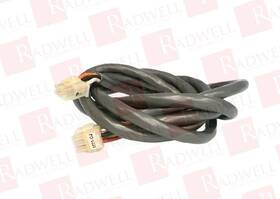
( Brand: Allen Bradley ), ( Manufacturer Part Number: 1771-CJ ), ( Part Type: Module )
Review ALLEN BRADLEY 1771cj Used
The **Allen-Bradley 1771-CJ (1771CJ) CompactLogix Controller** is a robust, high-performance programmable logic controller (PLC) designed to meet the demands of modern industrial automation systems. Part of Rockwell Automation s CompactLogix family, this controller combines advanced processing power with a compact, modular architecture, making it ideal for applications requiring reliable, scalable, and efficient control solutions. The 1771-CJ operates on the **ControlLogix platform**, leveraging the same proven architecture as the larger 5000-series controllers while offering a more cost-effective and space-efficient alternative for smaller to mid-sized control tasks. With its **1771-CJ1ERM** or **1771-CJ1ER** base unit, this controller provides a **1.5 GHz Intel Atom processor**, ensuring rapid execution of control logic, real-time data processing, and seamless integration with other automation devices. Its **1771-CJ1ERM** variant includes an integrated **Ethernet port**, enabling direct communication with Ethernet/IP networks, while the **1771-CJ1ER** model offers a **serial communication port** for legacy or alternative networking setups. The 1771-CJ supports a wide range of **I/O modules**, including digital, analog, and specialized function modules, allowing users to configure input/output configurations tailored to their specific application requirements. Whether deployed in discrete manufacturing, process control, or motion applications, this controller delivers **deterministic performance** with scan times as fast as **1 millisecond**, ensuring precise and responsive control over machinery and processes. Additionally, the 1771-CJ integrates seamlessly with **FactoryTalk View Studio**, **Studio 5000**, and other Rockwell Automation software platforms, enabling advanced human-machine interface (HMI) development, data logging, and remote monitoring capabilities. Built to withstand harsh industrial environments, the 1771-CJ features **IP65-rated enclosures**, **wide operating temperature ranges**, and **redundant power supply options**, ensuring reliability in demanding conditions. Its **compact footprint** and **modular design** allow for easy installation and expansion, making it a versatile choice for both new installations and retrofitting existing systems. Overall, the **Allen-Bradley 1771-CJ** represents a powerful yet accessible solution for engineers and technicians seeking a high-performance PLC that balances flexibility, performance, and ease of integration within their automation infrastructure.
### Pros and Cons of Buying an Allen-Bradley 1771-CJ (1771-CJ1 or 1771-CJ2) Controller
The **Allen-Bradley 1771-CJ** series is a compact, modular controller designed for control and monitoring applications in industrial environments. Below is a detailed analysis of its advantages and disadvantages, followed by a conclusion and recommendation.
---
### **Pros of the 1771-CJ Series**
1. **Compact and Modular Design**
The 1771-CJ is a space-efficient controller that integrates control logic, communication, and I/O in a single unit. This reduces the need for additional rack space compared to traditional PLCs with separate CPU and I/O modules. The modular nature allows for easy expansion and configuration.
2. **High-Speed Communication**
The 1771-CJ supports high-speed Ethernet (10/100 Mbps) and serial communication (RS-232/422/485), enabling real-time data exchange with HMIs, SCADA systems, and other industrial devices. This is particularly useful for applications requiring fast response times, such as motion control or distributed systems.
3. **Built-in Web Server and Remote Access**
The controller includes a built-in web server, allowing for remote monitoring and configuration via a web browser. This feature is valuable for maintenance, troubleshooting, and system updates without physical access to the equipment.
4. **Scalability**
The 1771-CJ series can be scaled from basic control applications to more complex systems by adding I/O modules, communication modules, or additional controllers in a network. This flexibility makes it suitable for both small and large-scale industrial applications.
5. **Compatibility with Rockwell Automation Ecosystem**
As part of the Rockwell Automation family, the 1771-CJ integrates seamlessly with other products like Studio 5000, FactoryTalk View, and CompactLogix or ControlLogix PLCs. This ensures compatibility with existing systems and simplifies programming and maintenance.
6. **Reliability and Industrial-Grade Build**
The 1771-CJ is designed for harsh industrial environments, with features such as wide operating temperature ranges, protection against electrical noise, and robust construction. This makes it suitable for applications in manufacturing, process control, and automation.
7. **Cost-Effective for Small to Medium Applications**
For applications where a full-sized PLC might be overkill, the 1771-CJ offers a cost-effective alternative. Its compact size and integrated features can reduce the need for additional hardware, lowering overall system costs.
8. **Support for Advanced Features**
The controller supports features such as:- **Motion Control**: Integration with servo drives for precise motion applications.
- **Analog and Digital I/O**: Flexible input/output options for various sensors and actuators.
- **Security**: Built-in security features like user authentication and role-based access control.
- **Diagnostics**: Advanced error reporting and logging for easier troubleshooting.
9. **Easy Programming and Configuration**
Programming is done using **Studio 5000**, a user-friendly environment that supports ladder logic, structured text, and other programming languages. The intuitive interface simplifies development and debugging.
10. **Long-Term Availability**
As a product from Rockwell Automation, the 1771-CJ has been around for several years and is likely to remain supported for the foreseeable future. This reduces the risk of obsolescence compared to newer or less established brands.
---
### **Cons of the 1771-CJ Series**
1. **Limited I/O Capacity**
The 1771-CJ is designed as a compact controller, which means it has fewer I/O points compared to larger PLCs like the ControlLogix or CompactLogix series. For applications requiring hundreds of I/O points, additional modules or a separate PLC may be necessary.
2. **Higher Cost per I/O Point**
While the 1771-CJ is cost-effective for small systems, the cost per I/O point can be higher than that of more traditional PLCs or open-platform controllers. This may make it less economical for very large or simple applications.
3. **Dependence on Rockwell Software**
Programming and configuration are tightly integrated with Rockwell s **Studio 5000** software. This can be a drawback if the user prefers open-source or third-party tools, as compatibility may be limited. Additionally, licensing costs for Studio 5000 can add to the overall expense.
4. **Learning Curve for New Users**
Users unfamiliar with Rockwell Automation s software or industrial automation may require training to fully utilize the 1771-CJ s features. This can introduce delays in implementation and increased costs for training.
5. **Limited Expansion Options**
While the 1771-CJ supports expansion, the options are somewhat limited compared to larger PLC systems. Users may need to use additional communication modules or separate controllers to achieve complex network setups.
6. **Potential for Overkill in Simple Applications**
For very basic control applications (e.g., simple relay logic or small motor control), the 1771-CJ may offer more features than necessary. In such cases, a simpler or cheaper controller (e.g., a basic microcontroller or a smaller PLC) might suffice.
7. **Vendor Lock-In**
The integration with Rockwell s ecosystem can create vendor lock-in, making it difficult to migrate to other platforms or use open-standard communication protocols (e.g., Modbus TCP) without additional effort or cost.
8. **Physical Size Constraints**
Although compact, the 1771-CJ is larger than some microcontroller-based solutions or single-board computers. In space-constrained environments, this may require careful placement or additional mounting solutions.
9. **Power Requirements**
The controller requires a stable power supply (typically 24V DC or 120/240V AC). In environments with poor power quality, additional filtering or power conditioning may be needed, adding to the system complexity.
10. **Deprecation Risk**
While the 1771-CJ is not yet deprecated, Rockwell Automation occasionally phases out older products in favor of newer lines (e.g., the **Allen-Bradley CompactLogix** or **ControlLogix**). Future support or availability cannot be guaranteed indefinitely.
---
### **Conclusion**
The **Allen-Bradley 1771-CJ** is a versatile and reliable compact controller well-suited for applications requiring integrated control, communication, and monitoring in industrial environments. Its strengths lie in its compact design, high-speed communication, remote access capabilities, and seamless integration with Rockwell s ecosystem. These features make it an excellent choice for small to medium-sized control systems where space efficiency and advanced functionality are priorities.
However, the 1771-CJ is not without limitations. Its limited I/O capacity, higher cost per I/O point, and dependence on Rockwell s software ecosystem may pose challenges for users with large-scale or open-platform requirements. Additionally, the learning curve and potential vendor lock-in could be drawbacks for organizations seeking flexibility or cost efficiency in simpler applications.
For users who prioritize **compactness, communication capabilities, and integration with Rockwell Automation s tools**, the 1771-CJ is a strong recommendation. It is particularly well-suited for:
- Small to medium control panels.
- Applications requiring Ethernet or serial communication for remote monitoring.
- Systems where space savings and integrated features justify the cost.
- Environments where Rockwell s software ecosystem is already in use.
For users with **large I/O requirements, open-platform needs, or budget constraints**, alternatives such as **CompactLogix, ControlLogix, or open-source PLCs** (e.g., those based on Linux or open Modbus protocols) may be more appropriate.
---
### **Final Recommendation**
If your application meets the following criteria, the **Allen-Bradley 1771-CJ** is a **highly recommended choice**:- You need a compact, all-in-one controller with built-in communication and web access.
- Your system is part of or will integrate with Rockwell Automation s ecosystem (e.g., Studio 5000, FactoryTalk).
- You require high-speed Ethernet or serial communication for real-time data exchange.
- Your I/O requirements are moderate (dozens of points), and you can supplement with additional modules if needed.
- You operate in an industrial environment where reliability and support are critical.
**Consider alternatives** if:- You need **hundreds of I/O points** and require a larger PLC.
- You prefer **open-source or third-party software** for programming.
- Your budget is tight, and a simpler or cheaper controller would suffice.
- You anticipate **long-term flexibility** and want to avoid vendor lock-in.
In summary, the 1771-CJ is a **solid, feature-rich controller** for the right applications, but its suitability depends on your specific requirements, budget, and long-term goals.
Details:
All products are guaranteed to be working but may show signs of use if purchasing a used product. Call to use a shipping service other than the ones listed. Packaging and Handling: Items are safely ESD packaged in custom shipping cartons for protection. Sells new and surplus product develops channels to purchase such.
ALLEN BRADLEY 1771-CJ / 1771CJ USED DISCONTINUED BY MANUFACTURER, POWER CABLE, 1771, I/O CHASSIS, FOR 1772-P1 P4 1777-P2.
part #: 1771-cj prices
- $27.62-$30.00
specifications sensoindustria:
- brand: Allen Bradley
- mpn: 1771-cj
- part type: Module
payments sensoindustria:
- other
- wallet: Google-pay
- credit card: Discover
shipping sensoindustria:
- class: Standard
- service: Standard
- transit: 24-37 Days
- type: Fixed
- cost: $12.90
seller sensoindustria:
- city: 1 Millennium Dr, Willingboro, NJ 08046
- rating: 99.5%
- # reviews: 189503
offer sensoindustria:
- availability: In Stock
- options: Ship-to-home
- quantity: 1
- sold: 0
- started: February 10, 2026
general sensoindustria:
- PLCs HMIs > PLC Peripheral Modules > PLC Input Output Modules
- condition: Used
returns sensoindustria:
- policy: Returns Accepted
- time: 30 Days
- paid by: Buyer
- method: Money back
Allen Bradley 1771-CJ Is Similar To:
- 17560a16 17560a16 Allen-bradley Allen Bradley Series (34.1% similar) Allen Bradley cat 17560A16 series a nib...(January 18th, 2018)
- 04eky00001 Allen Bradley Part Flat Power Unused Old Stock (45.7% similar) System ships via USPS and FedEx ground express. Buyer has option to select alternate transport carrier Ats expense. Allen Bradley part: flat power cable. Fob phoenix...(May 7th, 2018)
- 061259830213 Allen-bradley 2015 Factory Sealed (44.4% similar) Thanks a buyer: member id clobbers private during past month Cisco WS-C3750X-48PF-S brand new sealed 3750X Poe us 2,400. Honest and stood by the product working. 00BEST offer price was accepted view item Allen-Bradley 1756-EN2F EN2F b series new sealed arrived as described. E-mail us first if you ...(July 21st, 2017)
- 081159752880 Allen Bradley 1771-oa 120 (57.5% similar) This item is used. Allen Bradley 1771-OA 120 vac output module 1771OA 1771 manufacturer: Bradley model: 1771-OATYPE: module controller platform: plc 5 used, in working condition...(January 22nd, 2018)
- 100-a09nd3 b B Rockwell Automation Allen-bradley (26.2% similar) Auxiliary contact, 110 120V ac 50 60HZ coil, fully tested, in excellent working and cosmetic condition. Notes:the unit is series condition: pup used in a plc hardware. The serial number in pictures has been altered for privacy purposes...(May 5th, 2017)
- 100-c09 10 Allen Bradley Series Contactor (39.5% similar) Allen Bradley 100-C09 10 series a contractor location 14E...(August 23rd, 2018)
- 100-c23d 10 Allen-bradley Allen Bradley (35.1% similar) Previously used, in very good working condition Allen Bradley 100-C23D 10 contractor coil 32A 600V-690V...(May 5th, 2017)
- 10000134269 Allen Bradley 1756-rio Series (50% similar) Comes with wiring connector. Working when pulled. Appears new, not in original box...(November 13th, 2017)
- 100s-c09ej14bc Allen Bradley New Contactor (39% similar) A contractor 24VDC part 100S-C09EJ14BC great price pic. New Allen Bradley sear...(June 1st, 2018)
- 1025732 Allen-braldye Allen-bradley Memory Module (35.7% similar) Allen-bradley memory module cat 1772MEB part this unit appears to be new and in the original box, but I cannot verify...(July 5th, 2017)
- 104-a09nd3 Allen Bradley Reversing Contactor (38% similar) Reversing contractor, includes the interlocking end switches to protect from inadvertently shorting power supply...(July 18th, 2018)
