ALLEN-BRADLEY 1771-1A-001 Module
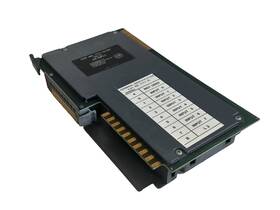
( Brand: Allen-bradley ), ( Manufacturer Part Number: 1771-1A-001 ), ( Model: ALLEN BRADLEY 1771-1A-001 ), ( Part Type: Module )
Review ALLEN BRADLEY Used Input Module
The **Allen-Bradley 1771-1A-001** is a high-performance, modular **1771 Series A** analog input module designed for integration into the **ControlLogix** and **CompactLogix** programmable logic controller (PLC) systems. This module serves as a critical component in industrial automation applications where precise analog signal acquisition is essential, offering reliable and scalable input processing for a wide range of process control, monitoring, and data acquisition tasks. Engineered with Allen-Bradley s signature robustness, the 1771-1A-001 features **16 isolated analog input channels**, each capable of accepting **4-20 mA DC current signals** or **0-10 V DC voltage signals**, providing flexibility to interface with a diverse array of sensors, transmitters, and field devices. Its **isolated inputs** ensure immunity to noise and voltage spikes, safeguarding the PLC system from potential electrical disturbances while maintaining signal integrity across long distances or harsh industrial environments. The module s **16-bit resolution** delivers exceptional accuracy and precision, enabling fine-grained control and measurement of analog signals with minimal error, making it ideal for applications requiring high fidelity in data representation, such as temperature monitoring, pressure regulation, flow measurement, or motor speed control. Built with **industrial-grade components**, the 1771-1A-001 is housed in a rugged, DIN-rail mountable enclosure that meets stringent environmental standards, offering protection against dust, moisture, and temperature fluctuations within an operating range of **0 C to 60 C (32 F to 140 F)**. Its **hot-swappable design** allows for seamless integration into existing ControlLogix or CompactLogix systems without requiring a system reset, minimizing downtime during maintenance or upgrades. The module s compatibility with **RSLogix 5000** and **Studio 5000** software platforms ensures seamless configuration, programming, and diagnostics, empowering engineers to optimize performance through features like **scan-time monitoring, input filtering, and configurable scaling** to tailor the module s behavior to specific application requirements. Whether deployed in manufacturing plants, chemical processing facilities, or energy management systems, the 1771-1A-001 exemplifies Allen-Bradley s commitment to delivering a dependable, high-performance analog input solution that enhances automation efficiency, reduces operational risks, and supports the demands of modern industrial control architectures.
### **Pros and Cons of buying a Allen-Bradley 1771-1A-001 Module**
#### **Pros:**1. **Compatibility and Reliability** The 1771-1A-001 is a well-established module from Allen-Bradley (now Rockwell Automation), known for its robust performance in industrial automation systems. It is designed to work seamlessly with PLCs like the **1756-L8x** and **1756-L83**, ensuring long-term reliability in harsh environments.
2. **High Input Density** This module provides **16 isolated digital inputs**, making it suitable for applications requiring multiple discrete signals (e.g., sensors, switches, or limit devices). This reduces the need for additional I/O expansion, simplifying wiring and system design.
3. **Isolation and Noise Immunity** Each input is optically isolated, protecting the PLC from voltage spikes, transients, and ground loops. This enhances system stability, especially in industrial settings with electrical noise.
4. **Wide Input Voltage Range** The module supports **24V DC or 115V AC** inputs, offering flexibility in wiring and compatibility with various field devices. This reduces the need for additional signal conditioning.
5. **Backward Compatibility** As part of the **1771 series**, it is compatible with older Rockwell Automation systems and can be integrated into newer architectures, making it a cost-effective upgrade option.
6. **Easy Installation and Configuration** The module is designed for plug-and-play operation with standard terminal blocks, simplifying installation. Configuration in **RSLogix 5000, Studio 5000, or FactoryTalk View** is straightforward, reducing setup time.
7. **Durability and Longevity** Built to industrial standards, the 1771-1A-001 is designed for continuous operation in environments with temperature fluctuations, humidity, and vibration.
8. **Support for Advanced Features** While primarily a basic I/O module, it can be used in conjunction with other Allen-Bradley modules (e.g., **1771-NX** for networking) to extend functionality in larger automation systems.
---
#### **Cons:**1. **Limited Advanced Features** Unlike newer modules (e.g., **1756-I16B** or **1756-I16C**), the 1771-1A-001 lacks built-in diagnostics, remote I/O capabilities, or Ethernet/IP integration. This may require additional hardware for modern communication needs.
2. **Obsolete Status** The **1771 series** is considered legacy technology, meaning:- **Limited availability** Stock may be harder to find, and lead times could be longer than for newer modules.
- **No longer supported** Rockwell Automation has shifted focus to newer platforms (e.g., **CompactLogix, ControlLogix, or Micro800**), meaning fewer updates, documentation, or technical support.
- **Potential compatibility issues** Future software updates or firmware changes may not account for this module.
3. **Higher Cost Relative to Alternatives** While not excessively expensive, newer modules (e.g., **1756-I16B**) often offer similar or better performance at a comparable price, making the 1771-1A-001 less cost-effective for new projects.
4. **No Built-in Redundancy** Unlike some modern I/O modules, the 1771-1A-001 does not support hot-swapping or redundant configurations, which could be a drawback in critical applications requiring high availability.
5. **Mechanical Compatibility Issues** The **1771 series** uses a different backplane design than newer Allen-Bradley PLCs (e.g., **1756-L8x** requires specific slots). If upgrading a system, additional adapters or cabling may be needed.
6. **Software Dependency** Older programming environments (e.g., **RSLogix 5/500**) may require emulation or virtual machines for development, adding complexity compared to modern IDEs like **Studio 5000**.
7. **Environmental Limitations** While durable, the module is not rated for extreme conditions (e.g., high-temperature industrial zones or explosive environments) without additional protection.
---
### **Conclusion**
The **Allen-Bradley 1771-1A-001** remains a **reliable and functional** digital input module for legacy or low-maintenance systems where compatibility with older PLCs is required. Its **isolated inputs, high density, and industrial-grade build** make it suitable for applications where simplicity and robustness are prioritized over cutting-edge features.
However, its **legacy status** introduces risks such as **limited availability, lack of future support, and potential incompatibility with modern automation trends**. For **new projects or critical control systems**, newer modules (e.g., **1756-I16B, 1756-I16C, or Micro800 I/O**) offer better diagnostics, networking, and long-term viability.
---
### **Recommendation**
- **Buy the 1771-1A-001 if:**- You are maintaining or upgrading a **legacy system** that requires this specific module.
- The application is **non-critical and low-risk**, and you can source spare parts independently.
- You have **existing stock** and do not need to purchase new.
- Cost is not a major concern, and reliability is the primary requirement.
- **Avoid purchasing new if:**- You are starting a **new automation project** opt for a **modern I/O module** (e.g., **1756-I16B**) for better support, diagnostics, and scalability.
- You anticipate **long-term maintenance** legacy modules may become harder to replace or repair.
- Your system requires **Ethernet/IP, remote I/O, or advanced diagnostics**, which the 1771-1A-001 lacks.
- You are working in a **highly regulated industry** (e.g., pharmaceutical, food processing) where compliance with newer standards is mandatory.
- **Alternatives to Consider:**- **1756-I16B** (16-point isolated digital input, Ethernet/IP capable, more modern).
- **1756-I16C** (similar to I16B but with different input types).
- **Micro800 I/O modules** (cost-effective, compact, and supported for future use).
- **Third-party modules** (e.g., **Siemens, Phoenix Contact**) if Allen-Bradley compatibility is not strictly required.
If you must use the **1771-1A-001**, ensure you have **backup sources** for parts and consider **documenting the system thoroughly** for future troubleshooting. For new installations, prioritize **future-proofing** with newer, supported hardware.
Details:
USED Allen Bradley 1771-1A-001 Input Module, Shelf A14 Tote 290.
part #: 17711a001 price
- $200.00
specifications sensoindustria:
- brand: Allen-bradley
- mpn: 1771-1a-001
- model: Allen Bradley 1771-1a-001
- part type: Module
returns sensoindustria:
- time: 30 Days
- policy: Returns Accepted
- paid by: Seller
- method: Money back
shipping sensoindustria:
- class: Expedited
- type: Fixed
- service: USPS Priority Mail
- transit: 3-7 Days
- carrier: USPS
- cost: $0.00
offer sensoindustria:
- best offers: True
- quantity: 1
- options: Ship-to-home
- availability: In Stock
- sold: 0
- started: April 7, 2026
seller sensoindustria:
- # reviews: 2178
- rating: 100.0%
- city: Ray, Michigan
general sensoindustria:
- condition: Used
- PLCs HMIs > PLC Peripheral Modules > PLC Input Output Modules
payments sensoindustria:
- credit card: Visa
- wallet: Paypal
- other
Allen-bradley 1771-1A-001 Is Similar To:
- 17560a16 17560a16 Allen-bradley Allen Bradley Series (33.3% similar) Allen bradley cat 17560A16 series a nib...(January 18th, 2018)
- 04eky00001 Allen Bradley Part Flat Power Unused Old Stock (40% similar) System ships via USPS and FedEx ground express. Buyer has option to select alternate transport carrier Ats expense. Allen bradley part: flat power cable. Fob phoenix...(May 7th, 2018)
- 061259830213 Allen-bradley 2015 Factory Sealed (47.2% similar) Thanks a buyer: member id clobbers private during past month Cisco WS-C3750X-48PF-S brand new sealed 3750X Poe us 2,400. Honest and stood by the product working. 00BEST offer price was accepted view item Allen-bradley 1756-EN2F EN2F b series new sealed arrived as described. E-mail us first if you ...(July 21st, 2017)
- 081159752880 Allen Bradley 1771-oa 120 (44.4% similar) This item is used. Allen bradley 1771-OA 120 vac output module 1771OA 1771 manufacturer: bradley model: 1771-OATYPE: module controller platform: plc 5 used, in working condition...(January 22nd, 2018)
- 100-a09nd3 b B Rockwell Automation Allen-bradley (28.3% similar) Auxiliary contact, 110 120V ac 50 60HZ coil, fully tested, in excellent working and cosmetic condition. Notes:the unit is series condition: pup used in a plc hardware. The serial number in pictures has been altered for privacy purposes...(May 5th, 2017)
- 100-c09 10 Allen Bradley Series Contactor (33.3% similar) Allen bradley 100-C09 10 series a contractor location 14E...(August 23rd, 2018)
- 100-c23d 10 Allen-bradley Allen Bradley (39% similar) Previously used, in very good working condition allen bradley 100-C23D 10 contractor coil 32A 600V-690V...(May 5th, 2017)
- 10000134269 Allen Bradley 1756-rio Series (40.5% similar) Comes with wiring connector. Working when pulled. Appears new, not in original box...(November 13th, 2017)
- 100s-c09ej14bc Allen Bradley New Contactor (35.3% similar) A contractor 24VDC part 100S-C09EJ14BC great price pic. New allen bradley sear...(June 1st, 2018)
- 1025732 Allen-braldye Allen-bradley Memory Module (47.8% similar) Allen-bradley memory module cat 1772MEB part this unit appears to be new and in the original box, but I cannot verify...(July 5th, 2017)
- 104-a09nd3 Allen Bradley Reversing Contactor (32.2% similar) Reversing contractor, includes the interlocking end switches to protect from inadvertently shorting power supply...(July 18th, 2018)
