ALLEN-BRADLEY 1770-RD2 Remote Driver Module
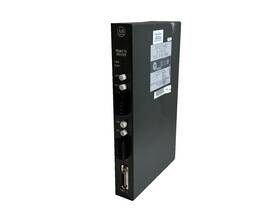
( Brand: Allen-bradley ), ( Manufacturer Part Number: 1770-RD2 ), ( Model: ALLEN BRADLEY 1770-RD2 ), ( Part Type: Remote Driver Module )
Review ALLEN BRADLEY Refurbished Remote Driver Module
The **Allen-Bradley 1770-RD2 Remote Driver Module** is a high-performance, modular component designed to enhance the flexibility and scalability of the **CompactLogix 176x** and **CompactLogix 1768** programmable logic controller (PLC) systems within industrial automation environments. Part of the **1770 series of remote I/O modules**, the 1770-RD2 serves as a critical link between the main PLC processor and distributed field devices, enabling seamless communication over long distances while maintaining robust data integrity and real-time responsiveness. Engineered with **Allen-Bradley s proven reliability**, this module supports **EtherNet/IP** connectivity, allowing it to integrate effortlessly into Ethernet-based networks, including those utilizing **Rockwell Automation s ControlLogix** or **CompactLogix** architectures. The 1770-RD2 is specifically tailored for applications requiring **remote I/O expansion**, such as large-scale manufacturing plants, process control systems, or facilities with geographically dispersed equipment, where centralized control is essential for efficiency and monitoring.
Featuring a **dual-port design**, the 1770-RD2 module provides redundant communication paths to ensure uninterrupted operation even in the event of a network failure. This redundancy enhances system resilience, minimizing downtime and maintaining continuous production cycles. The module operates within a **temperature range of -40 C to 70 C**, making it suitable for harsh industrial environments, including those exposed to temperature fluctuations, vibration, or exposure to dust and moisture when installed in properly sealed enclosures. With **EtherNet/IP communication speeds up to 100 Mbps**, the 1770-RD2 delivers high-speed data transfer, enabling real-time control and monitoring of remote I/O devices such as sensors, actuators, or motor starters. Its **plug-and-play compatibility** simplifies integration, as it requires minimal configuration beyond basic network setup, reducing implementation time and technical complexity for engineers and technicians.
The 1770-RD2 is built with **Allen-Bradley s industrial-grade construction**, incorporating **shielded twisted-pair (STP) cabling** for Ethernet connectivity to mitigate electromagnetic interference (EMI) and signal degradation over extended distances. This ensures stable communication even in electrically noisy environments, such as those found in power generation, automotive assembly, or chemical processing plants. Additionally, the module supports **EtherNet/IP messaging standards**, including **CIP (Common Industrial Protocol)**, which facilitates seamless interoperability with other Rockwell Automation devices, third-party Ethernet/IP-compatible equipment, and higher-level supervisory systems like **FactoryTalk View** or **RSLogix 5000**. Its **compact, DIN-rail mountable form factor** allows for efficient space utilization in control panels or remote I/O enclosures, while its **LED indicators** provide quick visual feedback on module status, network connectivity, and communication errors.
For applications demanding **high availability and fault tolerance**, the 1770-RD2 can be paired with **Allen-Bradley s 1770-RM2 Remote Module**, forming a **redundant I/O network** that enhances system reliability. This configuration ensures that if one communication path fails, the system can seamlessly switch to the alternate path without disrupting operations. The module s **deterministic communication** capabilities further ensure predictable performance, which is critical for applications requiring precise timing, such as motion control, synchronized machine operations, or safety-critical processes. Whether deployed in a **single-drop or multi-drop Ethernet/IP network**, the 1770-RD2 delivers a balance of performance, flexibility, and durability, making it an indispensable component for modern industrial automation systems seeking to optimize efficiency, scalability, and uptime.
The **Allen-Bradley 1770-RD2 Remote Driver Module** is a communication module used in ControlLogix and CompactLogix PLC systems to enable remote I/O connectivity via Ethernet. Below is a detailed analysis of its pros and cons, followed by a conclusion and recommendation.
---
### **Pros of the 1770-RD2 Remote Driver Module**
1. **Remote I/O Expansion**
The 1770-RD2 allows for the expansion of I/O beyond the physical limits of the PLC rack, enabling distributed control systems. This is particularly useful in large or geographically spread-out facilities where wiring long distances would be impractical or costly.
2. **Ethernet-Based Communication**
It uses Ethernet (TCP/IP) for communication, which is a widely supported and high-speed protocol. This ensures reliable data transfer between the PLC and remote I/O modules, reducing the need for dedicated communication cables like serial or proprietary links.
3. **Scalability**
The module supports multiple remote I/O devices, allowing for flexible system expansion. It can connect to various Allen-Bradley remote I/O systems, including 1756-RIO and 1756-RS modules, making it adaptable to different setups.
4. **Reduced Wiring Complexity**
By offloading I/O to remote locations, the 1770-RD2 minimizes the need for extensive wiring between the PLC and field devices. This simplifies installation, reduces cable clutter, and lowers the risk of signal degradation or interference.
5. **Integration with Allen-Bradley Ecosystem**
It is fully compatible with other Allen-Bradley products, such as ControlLogix, CompactLogix, and Studio 5000 software. This ensures seamless integration with existing automation systems and tools like RSLogix 5000 or FactoryTalk.
6. **Reliability and Redundancy Support**
The module supports redundant Ethernet connections, enhancing system reliability. In the event of a network failure, redundant links can maintain communication, reducing downtime.
7. **Support for High-Speed Data Transfer**
Ethernet provides fast data transfer rates, which is beneficial for applications requiring real-time or high-frequency data exchange, such as motion control or process monitoring.
8. **Easy Configuration and Monitoring**
Configuration is typically done through Studio 5000 or other Allen-Bradley software, which provides a user-friendly interface for setting up remote I/O. Monitoring tools can also track the health and performance of the module.
---
### **Cons of the 1770-RD2 Remote Driver Module**
1. **Cost**
The 1770-RD2 is a specialized module, and its price can be higher than basic I/O modules or simpler communication interfaces. The cost may also include additional expenses for remote I/O racks, cabling, and potential licensing for software tools.
2. **Complexity in Setup and Configuration**
Configuring the module requires a good understanding of Ethernet networking, PLC programming, and Allen-Bradley software. Mistakes in setup can lead to communication errors or system failures, requiring technical expertise to troubleshoot.
3. **Dependence on Ethernet Infrastructure**
The module relies on a stable Ethernet network. Issues such as IP address conflicts, network congestion, or hardware failures (e.g., switches, routers) can disrupt communication between the PLC and remote I/O. This introduces a single point of failure if not properly managed.
4. **Limited Physical Distance**
While Ethernet supports long-distance communication, practical limitations exist due to signal attenuation, latency, and network infrastructure constraints. For extremely long distances, additional networking hardware (e.g., repeaters, fiber optics) may be required, adding complexity and cost.
5. **Compatibility Issues**
Although the 1770-RD2 works well with Allen-Bradley products, integrating it with non-Allen-Bradley systems or third-party devices may require additional gateways, converters, or custom programming, adding layers of complexity.
6. **Potential Latency**
In high-speed or real-time applications, Ethernet latency even if minimal can introduce delays in data transmission. While this is usually negligible for most industrial applications, it may be a concern in ultra-fast or precision-driven systems.
7. **Maintenance and Diagnostics**
Diagnosing issues with the 1770-RD2 or its associated network can be challenging. Unlike wired I/O, where faults are often localized to specific cables or modules, Ethernet issues may stem from network hardware, IP settings, or firmware problems, requiring broader troubleshooting efforts.
8. **Power Requirements**
The module requires power, typically supplied through the PLC rack or a separate power source. In remote locations, ensuring reliable power supply for both the module and the remote I/O racks may add logistical challenges.
---
### **Conclusion**
The **Allen-Bradley 1770-RD2 Remote Driver Module** is a powerful tool for expanding I/O capabilities in ControlLogix and CompactLogix systems, offering significant advantages in terms of scalability, reduced wiring complexity, and Ethernet-based reliability. Its integration with the Allen-Bradley ecosystem and support for redundancy make it a robust choice for distributed automation systems.
However, the module s complexity in setup, dependence on Ethernet infrastructure, and higher cost relative to simpler alternatives must be carefully considered. It is best suited for applications where remote I/O expansion is critical, and the investment in networking and technical expertise is justified. For smaller or simpler systems, alternative solutions like wired I/O or other communication modules (e.g., 1771-NET) might be more cost-effective.
---
### **Recommendation**
**Purchase the 1770-RD2 if:**- You are working with a **ControlLogix or CompactLogix PLC** and need to expand I/O remotely.
- Your application requires **distributed control** with minimal wiring between the PLC and field devices.
- You have **existing Allen-Bradley infrastructure** (e.g., Ethernet network, Studio 5000 software) and can manage the setup complexity.
- Reliability and redundancy are priorities, and you can invest in proper networking hardware to support the module.
**Avoid or consider alternatives if:**- Your budget is limited, and simpler I/O solutions (e.g., wired modules or other communication interfaces) would suffice.
- Your system does not require remote I/O expansion, and local I/O is adequate.
- You lack the technical expertise to configure and troubleshoot Ethernet-based communication issues.
- Your application is highly sensitive to latency or requires ultra-fast data transfer, and you are unsure about the module s performance in such scenarios.
For most industrial automation projects where remote I/O is necessary, the **1770-RD2 is a strong and reliable choice**, provided the system design and support infrastructure are in place. Always evaluate your specific requirements and consult with an Allen-Bradley-certified technician or integrator to ensure optimal performance.
Details:
REFURBISHED Allen Bradley 1770-RD2 Remote Driver Module, - Shelf A14 Tote 292.
part #: 1770rd2 prices
- $189.00-$1200.00
specifications sensoindustria:
- brand: Allen-bradley
- mpn: 1770-rd2
- model: Allen Bradley 1770-rd2
- part type: Remote Driver Module
shipping sensoindustria:
- class: Expedited
- carrier: USPS
- type: Fixed
- transit: 3-7 Days
- service: USPS Priority Mail
- cost: $0.00
seller sensoindustria:
- city: Ray, Michigan
- rating: 100.0%
- # reviews: 2196
offer sensoindustria:
- quantity: 1
- started: April 14, 2026
- availability: In Stock
- options: Ship-to-home
- sold: 0
- best offers: True
returns sensoindustria:
- policy: Returns Accepted
- paid by: Seller
- method: Money back
- time: 30 Days
payments sensoindustria:
- credit card: Discover
- other
- wallet: Google-pay
general sensoindustria:
- condition: Seller refurbished
- PLCs HMIs > PLC Peripheral Modules > PLC Input Output Modules
Allen-bradley 1770-RD2 Is Similar To:
- 17560a16 17560a16 Allen-bradley Allen Bradley Series (29.6% similar) Allen bradley cat 17560A16 series a nib...(January 18th, 2018)
- 04eky00001 Allen Bradley Part Flat Power Unused Old Stock (35.7% similar) System ships via USPS and FedEx ground express. Buyer has option to select alternate transport carrier Ats expense. Allen bradley part: flat power cable. Fob phoenix...(May 7th, 2018)
- 061259830213 Allen-bradley 2015 Factory Sealed (39.6% similar) Thanks a buyer: member id clobbers private during past month Cisco WS-C3750X-48PF-S brand new sealed 3750X Poe us 2,400. Honest and stood by the product working. 00BEST offer price was accepted view item Allen-bradley 1756-EN2F EN2F b series new sealed arrived as described. E-mail us first if you ...(July 21st, 2017)
- 081159752880 Allen Bradley 1771-oa 120 (38.7% similar) This item is used. Allen bradley 1771-OA 120 vac output module 1771OA 1771 manufacturer: bradley model: 1771-OATYPE: module controller platform: plc 5 used, in working condition...(January 22nd, 2018)
- 100-a09nd3 b B Rockwell Automation Allen-bradley (25% similar) Auxiliary contact, 110 120V ac 50 60HZ coil, fully tested, in excellent working and cosmetic condition. Notes:the unit is series condition: pup used in a plc hardware. The serial number in pictures has been altered for privacy purposes...(May 5th, 2017)
- 100-c09 10 Allen Bradley Series Contactor (31.3% similar) Allen bradley 100-C09 10 series a contractor location 14E...(August 23rd, 2018)
- 100-c23d 10 Allen-bradley Allen Bradley (34% similar) Previously used, in very good working condition allen bradley 100-C23D 10 contractor coil 32A 600V-690V...(May 5th, 2017)
- 10000134269 Allen Bradley 1756-rio Series (45.8% similar) Comes with wiring connector. Working when pulled. Appears new, not in original box...(November 13th, 2017)
- 100s-c09ej14bc Allen Bradley New Contactor (35.1% similar) A contractor 24VDC part 100S-C09EJ14BC great price pic. New allen bradley sear...(June 1st, 2018)
- 1025732 Allen-braldye Allen-bradley Memory Module (48.1% similar) Allen-bradley memory module cat 1772MEB part this unit appears to be new and in the original box, but I cannot verify...(July 5th, 2017)
- 104-a09nd3 Allen Bradley Reversing Contactor (38.4% similar) Reversing contractor, includes the interlocking end switches to protect from inadvertently shorting power supply...(July 18th, 2018)
