ALLEN BRADLEY 1760-SIM Plc Modules
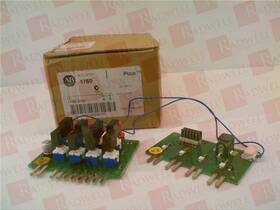
( Brand: Allen Bradley ), ( Manufacturer Part Number: 1760-SIM ), ( Part Type: Module )
Review ALLEN BRADLEY 1760sim Used
The **Allen-Bradley 1760-SIM (1760SIM)** is a high-performance, modular programmable logic controller (PLC) designed to meet the demands of modern industrial automation while delivering exceptional flexibility, scalability, and reliability. Part of Rockwell Automation s **CompactLogix** series, this controller is engineered to streamline control applications in manufacturing, process automation, and discrete control environments, offering a robust solution for engineers and technicians seeking a balance between ease of use and advanced functionality. The **1760-SIM** operates on the **CompactLogix 5000 platform**, leveraging the same intuitive programming environment as the larger 5500 series but with a more compact and cost-effective form factor, making it ideal for applications requiring high-speed processing, extensive I/O capacity, and seamless integration with other Rockwell Automation products.
At its core, the **1760-SIM** features a **1769-L32ERM** or **1769-L33ERM** base module, which serves as the central processing unit (CPU), providing **up to 16 MB of user memory** (expandable via optional memory modules) and supporting **real-time control with deterministic timing**. This CPU is backward-compatible with **Studio 5000 Logix Designer**, Rockwell s industry-leading programming software, which simplifies development through drag-and-drop functionality, structured text, ladder logic, and function block programming. The **1760-SIM** excels in high-speed applications, offering **1 s scan times** and **16 KHz pulse output capabilities**, making it well-suited for motion control, servo drives, and precise timing applications. Additionally, it supports **EtherNet/IP**, **CIP Safety**, and **DeviceNet** communication protocols, ensuring seamless connectivity with other PLCs, HMIs, drives, and safety systems within a distributed automation architecture.
The modular design of the **1760-SIM** allows for easy expansion through a variety of **I/O modules**, including **digital I/O, analog input/output, counter modules, and special function modules** such as temperature, pressure, and position feedback interfaces. These modules are hot-swappable, enabling maintenance and upgrades without downtime, while the **backplane bus** ensures high-speed data transfer between modules, maintaining optimal system performance. The **1760-SIM** also incorporates **built-in redundancy** options, such as **dual-power supply support** and **fail-safe communication**, enhancing system reliability in critical applications. Its **compact chassis** (available in 1-slot, 2-slot, and 4-slot configurations) allows for flexible installation in control panels, enclosures, or directly on machinery, while its **industrial-grade construction** ensures resistance to vibration, temperature fluctuations (operating in environments from **-20 C to 60 C**), and electrical noise, making it suitable for harsh manufacturing environments.
Beyond its technical capabilities, the **1760-SIM** integrates seamlessly with Rockwell s **FactoryTalk** ecosystem, enabling advanced monitoring, diagnostics, and predictive maintenance through **FactoryTalk View SE** and **FactoryTalk Analytics**. This connectivity allows operators to visualize process data, receive real-time alerts, and optimize production efficiency. The controller also supports **OPC UA** for enhanced interoperability with third-party systems, further expanding its utility in smart factory and Industry 4.0 applications. With its **long-term availability** and **proven reliability**, the **Allen-Bradley 1760-SIM** remains a cornerstone in industrial automation, offering a powerful yet accessible solution for engineers looking to build scalable, high-performance control systems with minimal complexity. Whether deployed in a small machine control application or as part of a larger distributed control network, this PLC delivers the speed, flexibility, and integration capabilities required to drive modern manufacturing forward.
### **Pros and Cons of Buying an Allen-Bradley 1760-SIM (1760SIM) Controller**
#### **Pros**
1. **Compatibility with Legacy Systems** The 1760-SIM is designed to interface with older Allen-Bradley PLCs (such as 1762, 1769, or 1771 series), making it useful for maintaining or upgrading existing control systems without full replacement.
2. **Cost-Effective Upgrade Path** If you already have a 1760-series PLC, the 1760-SIM provides a low-cost way to add serial communication (RS-232/RS-485) without purchasing a new controller. This can reduce capital expenditure compared to buying a full replacement PLC.
3. **Simple Serial Communication** The module supports basic serial communication (Modbus RTU, ASCII, or proprietary protocols), which can be useful for connecting to HMIs, scanners, or legacy devices that don t require Ethernet or advanced networking.
4. **Easy Installation** As a standalone module, it can be added to an existing 1760 rack without requiring additional programming or major system changes.
5. **Reliability of Allen-Bradley Brand** Allen-Bradley (now part of Rockwell Automation) is a well-established brand with a strong reputation for industrial reliability, reducing the risk of frequent failures.
6. **Backward Compatibility** Works seamlessly with older software (such as RSLogix 500 or Studio 5000) that may still be in use in some facilities.
7. **No Ethernet Dependency** Unlike newer PLCs that rely on Ethernet for communication, the 1760-SIM operates independently, which can be beneficial in environments where network infrastructure is limited or unreliable.
---
#### **Cons**
1. **Limited Communication Protocols** The 1760-SIM only supports serial communication (RS-232/RS-485) and lacks Ethernet, Modbus TCP, or modern industrial protocols like PROFINET or EtherNet/IP. This restricts its use in modern automation setups.
2. **No Built-in Security Features** Unlike newer PLCs, the 1760-SIM lacks encryption, firewall capabilities, or secure remote access features, making it vulnerable to cybersecurity threats if exposed to unsecured networks.
3. **Outdated Technology** The 1760 series is nearing end-of-life (EOL) status, meaning Rockwell Automation no longer provides official support, firmware updates, or new driver compatibility. This could lead to compatibility issues with future software or devices.
4. **No Advanced Diagnostics** Modern PLCs offer built-in health monitoring, predictive maintenance tools, and detailed error logging. The 1760-SIM lacks these features, making troubleshooting more difficult.
5. **Limited Scalability** If your automation needs grow, you may eventually need to replace the entire system with a more advanced PLC (e.g., 1769-L30ER or 1769-L33ER), making the 1760-SIM a temporary solution rather than a long-term investment.
6. **Hardware Obsolescence** Components like serial ports (RS-232/RS-485) are becoming less common in new devices. Future devices may not support legacy serial connections, limiting integration possibilities.
7. **No Support for Modern I/O** The 1760-SIM cannot directly interface with modern high-speed I/O modules, digital signal processing (DSP), or advanced motion control features available in newer PLCs.
8. **Software Limitations** Older programming environments (e.g., RSLogix 500) are less intuitive and lack the features of modern development tools (e.g., Studio 5000). This can increase programming complexity and reduce efficiency.
---
### **Conclusion**
The **Allen-Bradley 1760-SIM** is a practical choice for **short-term or legacy system maintenance**, particularly if you need serial communication in an existing 1760-series PLC setup. It provides a cost-effective way to extend the life of older systems without a full replacement. However, it is **not suitable for new installations, modern automation projects, or long-term use** due to its outdated technology, lack of security features, and limited scalability.
If your application requires **Ethernet, advanced diagnostics, security, or future-proofing**, investing in a newer PLC (such as the 1769-L30ER or 1769-L33ER) would be a better long-term solution. The 1760-SIM is best reserved for **temporary upgrades, serial communication needs in legacy systems, or budget-constrained environments** where no other options are available.
### **Recommendation**
- **Use the 1760-SIM if:**- You have an existing 1760-series PLC and need serial communication for legacy devices.
- Your system is in a stable, non-critical application where modern features are unnecessary.
- You are working within a tight budget and cannot afford a full PLC upgrade.
- **Avoid the 1760-SIM if:**- You are starting a new automation project and require Ethernet, security, or advanced features.
- Your system will need to integrate with modern devices or software in the future.
- You prioritize long-term reliability, scalability, or cybersecurity in your industrial control setup.
For most **new or evolving automation projects**, upgrading to a **modern Allen-Bradley PLC (e.g., 1769 series with Ethernet support)** is strongly recommended. The 1760-SIM is a **band-aid solution** rather than a sustainable long-term investment.
Details:
Packaging and Handling: Items are safely ESD packaged in custom shipping cartons for protection. Call to use a shipping service other than the ones listed. Sells new and surplus product develops channels to purchase such. ALLEN BRADLEY 1760-SIM / 1760SIM USED DISCONTINUED BY MANUFACTURER,PICO, TRAINING SIMULATOR MODULE.
All products are guaranteed to be working but may show signs of use if purchasing a used product.
part #: 1760 prices
- $99.99-$110.00
specifications sensoindustria:
- brand: Allen Bradley
- mpn: 1760-sim
- part type: Module
payments sensoindustria:
- credit card: Visa
- wallet: Paypal
- other
returns sensoindustria:
- policy: Returns Accepted
- time: 30 Days
- method: Money back
- paid by: Buyer
offer sensoindustria:
- quantity: 1
- options: Ship-to-home
- sold: 0
- availability: In Stock
- started: February 22, 2026
shipping sensoindustria:
- type: Fixed
- transit: 22-34 Days
- cost: $12.90
- service: Standard
- class: Standard
seller sensoindustria:
- # reviews: 191365
- rating: 99.5%
- city: 1 Millennium Dr, Willingboro, NJ 08046
general sensoindustria:
- condition: Used
- PLCs HMIs > PLC Peripheral Modules > PLC Input Output Modules
Allen Bradley 1760 Is Similar To:
- 17560a16 17560a16 Allen-bradley Allen Bradley Series (33.3% similar) Allen Bradley cat 17560A16 series a nib...(January 18th, 2018)
- 04eky00001 Allen Bradley Part Flat Power Unused Old Stock (44.7% similar) System ships via USPS and FedEx ground express. Buyer has option to select alternate transport carrier Ats expense. Allen Bradley part: flat power cable. Fob phoenix...(May 7th, 2018)
- 061259830213 Allen-bradley 2015 Factory Sealed (41% similar) Thanks a buyer: member id clobbers private during past month Cisco WS-C3750X-48PF-S brand new sealed 3750X Poe us 2,400. Honest and stood by the product working. 00BEST offer price was accepted view item Allen-Bradley 1756-EN2F EN2F b series new sealed arrived as described. E-mail us first if you ...(July 21st, 2017)
- 081159752880 Allen Bradley 1771-oa 120 (53.3% similar) This item is used. Allen Bradley 1771-OA 120 vac output module 1771OA 1771 manufacturer: Bradley model: 1771-OATYPE: module controller platform: plc 5 used, in working condition...(January 22nd, 2018)
- 100-a09nd3 b B Rockwell Automation Allen-bradley (25.6% similar) Auxiliary contact, 110 120V ac 50 60HZ coil, fully tested, in excellent working and cosmetic condition. Notes:the unit is series condition: pup used in a plc hardware. The serial number in pictures has been altered for privacy purposes...(May 5th, 2017)
- 100-c09 10 Allen Bradley Series Contactor (38.5% similar) Allen Bradley 100-C09 10 series a contractor location 14E...(August 23rd, 2018)
- 100-c23d 10 Allen-bradley Allen Bradley (34.2% similar) Previously used, in very good working condition Allen Bradley 100-C23D 10 contractor coil 32A 600V-690V...(May 5th, 2017)
- 10000134269 Allen Bradley 1756-rio Series (53.8% similar) Comes with wiring connector. Working when pulled. Appears new, not in original box...(November 13th, 2017)
- 100s-c09ej14bc Allen Bradley New Contactor (38% similar) A contractor 24VDC part 100S-C09EJ14BC great price pic. New Allen Bradley sear...(June 1st, 2018)
- 1025732 Allen-braldye Allen-bradley Memory Module (34.9% similar) Allen-bradley memory module cat 1772MEB part this unit appears to be new and in the original box, but I cannot verify...(July 5th, 2017)
- 104-a09nd3 Allen Bradley Reversing Contactor (42% similar) Reversing contractor, includes the interlocking end switches to protect from inadvertently shorting power supply...(July 18th, 2018)
