ALLEN BRADLEY 1747-L531-E Plc Modules 1747-L531/E SLC500
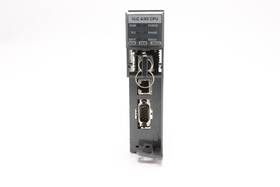
( Brand: Allen Bradley ), ( Manufacturer Part Number: 1747-L531/E ), ( Part Type: Module )
Review ALLEN BRADLEY 1747-l531/e
The **Allen-Bradley 1747-L531/E SLC500 Controller** is a robust and versatile programmable logic controller (PLC) designed to meet the demands of industrial automation, offering a blend of reliability, flexibility, and advanced control capabilities for mid-sized applications. Part of Rockwell Automation s SLC500 series, this controller is engineered to deliver high-performance logic control, analog and discrete I/O processing, and seamless integration with other PLCs, HMIs, and supervisory systems. The **1747-L531/E** model features a **128-point I/O base unit**, providing a scalable foundation for expanding control systems through additional I/O modules, allowing users to configure everything from simple discrete control to complex motion and process automation. Its **8K user program memory** (expandable via optional memory upgrades) ensures ample space for intricate control logic, ladder logic programs, and data handling, while its **16-bit processing architecture** enables efficient execution of time-critical tasks with high-speed scan rates, making it ideal for applications requiring precise timing and real-time responsiveness. The controller s **RS-232 serial communication port** facilitates direct connectivity to programming devices, HMIs, and other PLCs, supporting protocols like **DF1 (Data Highway Plus)** and **Modbus RTU**, which enhances its compatibility with legacy and modern industrial networks. Additionally, the **1747-L531/E** includes a **watchdog timer** and **fault diagnostics** to ensure system stability and simplify troubleshooting, while its **industrial-grade construction** with a wide operating temperature range (-20 C to 60 C) and resistance to vibration and electrical noise makes it suitable for harsh manufacturing environments. Whether deployed in discrete manufacturing, process control, or material handling systems, this PLC serves as a dependable backbone for automation solutions, offering a balance of cost-effectiveness and performance for applications demanding reliable, scalable control.
### **Pros and Cons of Buying an Allen-Bradley 1747-L531E SLC500 PLC**
The **Allen-Bradley 1747-L531E** is a legacy **SLC 500** programmable logic controller (PLC) released in the late 1990s. While it remains functional in many industrial applications, its purchase should be carefully considered due to its age, availability, and long-term viability.
---
### **Pros**
1. **Proven Reliability**
- The SLC 500 series is well-established, with decades of industrial use in automation, manufacturing, and process control. Many users report long-term reliability in stable environments.
- The hardware is robust, designed for harsh industrial conditions (wide temperature ranges, EMI resistance, and rugged enclosures).
2. **Widespread Availability of Parts and Support**
- As a legacy product, spare parts (power supplies, I/O modules, backplanes) are still available from **Rockwell Automation, authorized distributors, and third-party suppliers**.
- Documentation (manuals, programming guides) is widely accessible online, and forums (e.g., **Control.com, Automation Direct, PLC Forum**) provide troubleshooting help.
- Many engineers and technicians are familiar with SLC 500 programming (RSLogix 500), making maintenance easier.
3. **Compatibility with Existing Systems**
- If the PLC is already integrated into a legacy system, replacing it may require significant rework of HMI, communication protocols, and control logic.
- Some older machines may not support newer PLCs due to protocol differences (e.g., **DNP3, Modbus RTU, or proprietary protocols**).
4. **Cost-Effective for Short-Term Use**
- Prices for used or refurbished units are relatively low compared to newer controllers (e.g., **Micro800, CompactLogix, or ControlLogix**).
- If the application is simple and the PLC meets current needs, upgrading may not be justified.
5. **Backward Compatibility with Older Devices**
- Some legacy sensors, actuators, and communication devices (e.g., **serial modems, analog I/O**) may only work with SLC 500 or older PLCs.
- If the system relies on **hardware handshaking or specific timing**, newer PLCs might introduce compatibility issues.
---
### **Cons**
1. **Outdated Technology and Limited Features**
- The **1747-L531E** has **only 32 KB of user memory**, which is extremely limited compared to modern PLCs (e.g., **128 MB in CompactLogix**).
- No built-in **ethernet, TCP/IP, or modern communication protocols** (only **RS-232, RS-485, and serial communication**).
- Lacks **built-in safety features** (e.g., **SIL-rated safety modules**) found in newer controllers.
- **No support for advanced motion control** (e.g., servo drives, high-speed pulse generation).
2. **Lack of Future-Proofing**
- **Rockwell Automation has discontinued the SLC 500 line**, meaning no new firmware updates, security patches, or long-term support.
- **No compatibility with modern SCADA/HMI systems** (e.g., FactoryTalk View SE, Ignition, or KepServer) without additional gateways.
- **Difficulty integrating with IoT, cloud, or edge computing** trends in automation.
3. **Programming Limitations**
- **RSLogix 500** (the original software) is outdated and lacks modern features like **structured text, function blocks, or object-oriented programming**.
- **No support for modern programming languages** (e.g., **C#, Python, or ladder logic with advanced math functions**).
- **Limited debugging tools** compared to newer IDEs (e.g., **Studio 5000**).
4. **Higher Maintenance and Downtime Risks**
- **Fewer certified technicians** are familiar with SLC 500 programming, increasing reliance on older experts.
- **Hardware failures** (e.g., **faulty power supplies, backplane issues**) may be harder to diagnose without specialized knowledge.
- **No built-in diagnostics** for predictive maintenance, leading to unexpected downtime.
5. **Security Vulnerabilities**
- **No built-in cybersecurity features** (e.g., **firewall, encryption, or secure authentication**).
- **Serial communication is vulnerable to eavesdropping and tampering**, making it risky for modern industrial networks.
- **No support for industrial security standards** (e.g., **IEC 62443, NIST SP 800-82**).
6. **Difficulty Finding Trained Personnel**
- Younger engineers are less likely to be trained on **ladder logic or SLC 500**, making long-term support challenging.
- **Training resources** for SLC 500 are scarce compared to newer platforms.
7. **Environmental and Compliance Risks**
- **No support for modern environmental regulations** (e.g., **energy efficiency standards, emissions controls**).
- **Hardware obsolescence** may lead to **supply chain disruptions** for critical spare parts.
---
### **Conclusion**
The **Allen-Bradley 1747-L531E SLC500** remains a viable option **only under very specific conditions**:- The PLC is **already integrated into a stable, low-risk system** with no plans for expansion.
- **No modern communication or safety requirements** are needed.
- **Budget constraints** prevent upgrading to a newer controller.
- **Legacy hardware compatibility** is non-negotiable (e.g., old sensors, drives, or protocols).
**However, for most new or evolving applications, upgrading is strongly recommended.** The risks of **obsolete technology, security vulnerabilities, and maintenance challenges** far outweigh the benefits of cost savings. Modern PLCs (e.g., **Micro800, CompactLogix, or even smaller Allen-Bradley controllers**) offer **better performance, scalability, and future-proofing** at a relatively low incremental cost.
---
### **Recommendation**
1. **If the system is simple and the PLC meets current needs:**- **Keep using the SLC 500** but **document all dependencies** (hardware, software, communication protocols).
- **Set aside a budget for spare parts** to mitigate future failures.
- **Train a backup technician** in SLC 500 programming to ensure continuity.
2. **If the system requires modernization:**- **Upgrade to a newer Allen-Bradley controller** (e.g., **Micro800 for small systems, CompactLogix for mid-sized, or ControlLogix for large-scale applications**).
- **Evaluate compatibility** with existing sensors, HMIs, and communication networks before upgrading.
- **Consider a gradual migration** (e.g., replacing only critical components while keeping some legacy I/O).
3. **If the PLC is in a critical or high-risk application:**- **Do not rely on the SLC 500** upgrade immediately to avoid **downtime, security risks, or compliance issues**.
- **Assess cybersecurity risks** and implement **network segmentation, firewalls, or industrial VPNs** if keeping the PLC.
4. **If budget is a major concern:**- **Explore used/refurbished modern PLCs** (e.g., **Siemens S7-1200, Mitsubishi FX3U, or Beckhoff TwinCAT**) which offer better features at a lower cost than new Allen-Bradley units.
- **Consider cloud-based or edge computing solutions** if real-time data logging and remote monitoring are needed.
**Final Verdict:**The **1747-L531E SLC500 is a good short-term solution for legacy systems**, but **long-term reliance on it is risky**. For new projects or systems requiring growth, **upgrading to a modern PLC is the best practice** to ensure **reliability, security, and scalability**. If upgrading is not feasible, **minimize exposure by isolating the SLC 500 from modern networks** and **maintaining strict spare parts inventory**.
Details:
part #: 1747l531 prices
- $49.99-$250.00
specifications sensoindustria:
- brand: Allen Bradley
- mpn: 1747-l531/e
- part type: Module
general sensoindustria:
- condition: Used
- PLCs HMIs > PLC Peripheral Modules > PLC Input Output Modules
seller sensoindustria:
- # reviews: 5690
- rating: 100.0%
- city: Warren, Michigan
payments sensoindustria:
- credit card: Diners-club
- other
- wallet: Apple-pay
shipping sensoindustria:
- service: UPS Ground, USPS Priority Mail, UPS 2nd Day Air, UPS Next Day Air
- transit: 2-6 Days
- type: Calculated
- cost: $19.02
- carrier: UPS, USPS
- class: Standard, Expedited, One-day
offer sensoindustria:
- availability: In Stock
- quantity: 1
- best offers: True
- sold: 0
- started: April 28, 2026
- options: Ship-to-home
returns sensoindustria:
- method: Money back
- paid by: Seller
- policy: Returns Accepted
- time: 30 Days
Allen Bradley 1747-L531 Is Similar To:
- 17560a16 17560a16 Allen-bradley Allen Bradley Series (35.3% similar) Allen Bradley cat 17560A16 series a nib...(January 18th, 2018)
- 04eky00001 Allen Bradley Part Flat Power Unused Old Stock (42.7% similar) System ships via USPS and FedEx ground express. Buyer has option to select alternate transport carrier Ats expense. Allen Bradley part: flat power cable. Fob phoenix...(May 7th, 2018)
- 061259830213 Allen-bradley 2015 Factory Sealed (43.6% similar) Thanks a buyer: member id clobbers private during past month Cisco WS-C3750X-48PF-S brand new sealed 3750X Poe us 2,400. Honest and stood by the product working. 00BEST offer price was accepted view item Allen-Bradley 1756-EN2F EN2F b series new sealed arrived as described. E-mail us first if you ...(July 21st, 2017)
- 081159752880 Allen Bradley 1771-oa 120 (57.1% similar) This item is used. Allen Bradley 1771-OA 120 vac output module 1771OA 1771 manufacturer: Bradley model: 1771-OATYPE: module controller platform: plc 5 used, in working condition...(January 22nd, 2018)
- 100-a09nd3 b B Rockwell Automation Allen-bradley (27.2% similar) Auxiliary contact, 110 120V ac 50 60HZ coil, fully tested, in excellent working and cosmetic condition. Notes:the unit is series condition: pup used in a plc hardware. The serial number in pictures has been altered for privacy purposes...(May 5th, 2017)
- 100-c09 10 Allen Bradley Series Contactor (43.8% similar) Allen Bradley 100-C09 10 series a contractor location 14E...(August 23rd, 2018)
- 100-c23d 10 Allen-bradley Allen Bradley (36.6% similar) Previously used, in very good working condition Allen Bradley 100-C23D 10 contractor coil 32A 600V-690V...(May 5th, 2017)
- 10000134269 Allen Bradley 1756-rio Series (52.1% similar) Comes with wiring connector. Working when pulled. Appears new, not in original box...(November 13th, 2017)
- 100s-c09ej14bc Allen Bradley New Contactor (45.9% similar) A contractor 24VDC part 100S-C09EJ14BC great price pic. New Allen Bradley sear...(June 1st, 2018)
- 1025732 Allen-braldye Allen-bradley Memory Module (39.5% similar) Allen-bradley memory module cat 1772MEB part this unit appears to be new and in the original box, but I cannot verify...(July 5th, 2017)
- 104-a09nd3 Allen Bradley Reversing Contactor (44.7% similar) Reversing contractor, includes the interlocking end switches to protect from inadvertently shorting power supply...(July 18th, 2018)
