ALLEN BRADLEY 1720-L310 Plc Modules
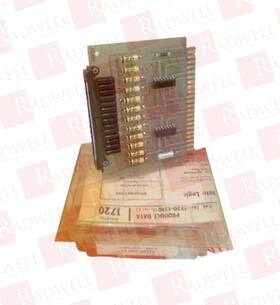
( Brand: Allen Bradley ), ( Manufacturer Part Number: 1720-L310 ), ( Part Type: Module )
Review ALLEN BRADLEY 1720l310 Used
The **Allen-Bradley 1720-L310** is a high-performance, modular **CompactLogix 1700** programmable logic controller (PLC) designed to deliver robust automation solutions for industrial applications requiring compact yet powerful processing capabilities. Part of Rockwell Automation s trusted CompactLogix series, this controller is engineered to provide seamless integration with other Allen-Bradley products, including Human-Machine Interfaces (HMIs), drives, and communication networks, making it an ideal choice for discrete and process control environments. With a **310-point I/O capacity**, the 1720-L310 offers a balance of flexibility and efficiency, accommodating a wide range of input/output configurations to suit diverse automation needs from basic machine control to complex motion and process applications.
The **1720-L310** features a **1769-L310 base module**, which houses a **1.3 GHz dual-core processor** running Rockwell s **Studio 5000 Logix Designer** software, ensuring fast scan times and real-time performance even in demanding applications. Its **128 MB of user memory** provides ample space for program storage, data tables, and communication protocols, while the **1 GB of non-volatile memory** ensures data retention during power interruptions. The controller supports **EtherNet/IP, DeviceNet, and ControlNet** communication protocols, enabling seamless connectivity with other PLCs, drives, sensors, and supervisory systems, thereby enhancing system scalability and interoperability.
Designed with **industrial durability in mind**, the 1720-L310 operates within a **temperature range of -20 C to 60 C (-4 F to 140 F)**, making it suitable for harsh factory environments where temperature fluctuations and mechanical stress are common. Its **compact, DIN-rail-mountable form factor** allows for easy installation in tight spaces, while the **front-panel LED indicators** provide quick status monitoring of power, communication, and error conditions. The unit also includes **built-in diagnostics** and **remote support capabilities**, enabling technicians to troubleshoot issues efficiently without physical access to the controller.
For applications requiring **high-speed data processing**, the 1720-L310 supports **motion control** through integrated **Allen-Bradley Kinetix or PowerFlex drives**, as well as **high-speed counter inputs** for precise positioning and synchronization tasks. Its **scalable architecture** allows for the addition of **expansion modules** (such as the 1769-I/O series) to extend I/O capacity, ensuring the system can grow alongside evolving automation requirements. Whether deployed in **packaging machinery, material handling systems, or process control applications**, the 1720-L310 delivers **reliable, high-performance automation** with minimal maintenance overhead, making it a cost-effective solution for modern industrial control challenges.
### **Pros and Cons of buying a Allen-Bradley 1720-L310 (1720L310) PLC**
#### **Pros**
1. **Reliability and Proven Performance**
The 1720-L310 is part of Rockwell Automation s **CompactLogix** series, known for robust industrial automation applications. It is designed for harsh environments, offering high reliability with minimal downtime. The platform is widely used in manufacturing, process control, and automation, benefiting from years of refinement and support.
2. **Scalability and Flexibility**
The 1720 series supports **EtherNet/IP**, **DeviceNet**, and **ControlNet** communication protocols, allowing seamless integration with other PLCs, HMIs, and drives. The L310 model provides **32 digital I/O points** (expandable via modules) and **4 analog I/O points**, making it suitable for mid-sized control applications. Users can easily upgrade or expand the system as needs evolve.
3. **Compatibility with Rockwell Ecosystem**
The 1720-L310 integrates smoothly with **Studio 5000 Logix Designer**, **FactoryTalk View**, and other Rockwell software tools. This compatibility simplifies programming, debugging, and maintenance, reducing training time for engineers familiar with the platform.
4. **Cost-Effective for Mid-Range Applications**
Compared to higher-end PLCs like the **ControlLogix** or **PowerFlex** drives, the 1720-L310 offers a balanced price-to-performance ratio. It is more affordable than enterprise-level systems while still delivering strong functionality for small to medium control tasks.
5. **Energy Efficiency and Compact Design**
The CompactLogix series is designed to be space-efficient, reducing panel footprint in control cabinets. It also consumes less power than some legacy PLCs, contributing to lower operational costs.
6. **Strong Technical Support and Documentation**
Rockwell Automation provides extensive documentation, training resources, and global support. The 1720 series has a long product lifecycle, ensuring availability of spare parts and firmware updates for years.
7. **Ladder Logic and Structured Text Support**
The PLC supports traditional **ladder logic (LAD)** and modern **structured text (ST)**, making it accessible to both legacy and newer automation engineers. This flexibility ensures compatibility with existing codebases.
---
#### **Cons**
1. **Limited I/O Capacity for Large Systems**
The base **L310 model only has 32 digital I/O and 4 analog I/O points**, which may be insufficient for complex applications requiring hundreds of inputs/outputs. Users would need additional modules (e.g., **1734 series**), increasing system cost and complexity.
2. **No Built-In Safety Functionality**
Unlike some newer PLCs (e.g., **Allen-Bradley GuardLogix**), the 1720-L310 does not natively support **safety-rated I/O or integrated safety logic**. Safety applications would require additional hardware (e.g., **1756-SA safety modules**), adding expense and complexity.
3. **Deprecation and Future-Proofing Concerns**
While still supported, the **1720 series is not the latest in Rockwell s lineup**. Newer models like the **Micro800** (for simpler applications) or **ControlLogix 5580** (for high-end control) may offer better efficiency, cloud integration, or AI/ML capabilities in future updates. Some users may prefer migrating to more modern platforms for long-term scalability.
4. **Learning Curve for New Users**
While the **Studio 5000 environment is powerful**, it has a steeper learning curve than some competitors (e.g., **Siemens TIA Portal** or **Siemens PLCs**). Engineers unfamiliar with Rockwell s software may require additional training.
5. **Dependence on Rockwell s Proprietary Ecosystem**
The 1720-L310 is tightly integrated with Rockwell s tools, which can be a drawback if a company prefers **open-standard PLCs** (e.g., **Siemens, Schneider Electric, or Beckhoff**). Migration to a different vendor later may require significant reprogramming.
6. **Higher Initial Cost Than Entry-Level PLCs**
While more affordable than high-end systems, the **1720-L310 is pricier than basic PLCs** (e.g., **Allen-Bradley Micro800, Siemens LOGO!**). For very simple applications, a cheaper alternative may suffice.
7. **Limited Wireless and IoT Capabilities**
Unlike newer PLCs with **built-in wireless (Wi-Fi, Bluetooth, or cellular)**, the 1720-L310 relies on wired Ethernet/IP for communication. This can be a limitation in applications requiring remote monitoring or IoT integration without additional hardware.
---
### **Conclusion**
The **Allen-Bradley 1720-L310** is a **reliable, mid-range PLC** well-suited for **industrial automation tasks requiring 32 digital and 4 analog I/O points** with **EtherNet/IP connectivity**. It excels in **scalable, Rockwell-integrated applications** where **ladder logic and structured text programming** are preferred. Its **proven reliability, strong support, and compatibility with Studio 5000** make it a solid choice for companies already invested in Rockwell s ecosystem.
However, **larger systems, safety-critical applications, or future-proofing needs** may require additional modules or a migration to newer PLC platforms. If **cost efficiency, ease of use, or open standards** are priorities, alternatives like the **Micro800, Siemens S7-1200, or Schneider Electric Modicon** might be worth considering.
### **Recommendation**
**Buy the 1720-L310 if:**- You need a **reliable, mid-range PLC** for **EtherNet/IP-based control systems**.
- Your application requires **32 digital and 4 analog I/O points** with **expandability**.
- You are already using **Rockwell Automation tools** (e.g., Studio 5000, FactoryTalk).
- You operate in an **industrial environment** where **ladder logic and structured text** are standard.
- You prioritize **long-term support and spare parts availability**.
**Consider alternatives if:**- Your application needs **more than 32 digital I/O points** (consider **1769-L30ERM** or **ControlLogix**).
- You require **built-in safety functionality** (evaluate **GuardLogix or Siemens S7-1500T**).
- You want **lower-cost, simpler PLCs** (e.g., **Micro800, Siemens LOGO!**).
- You prefer **open-standard or non-Rockwell ecosystems** (e.g., **Siemens, Schneider, or Beckhoff**).
- Future **IoT, wireless, or cloud integration** is a priority (look at **latest CompactLogix or Micro850 models**).
For most **mid-sized industrial automation tasks within a Rockwell environment**, the **1720-L310 remains a strong, cost-effective choice**. However, assess your long-term needs carefully to ensure it aligns with future scalability and technological advancements.
Details:
Call to use a shipping service other than the ones listed. Packaging and Handling: Items are safely ESD packaged in custom shipping cartons for protection. Sells new and surplus product develops channels to purchase such. All products are guaranteed to be working but may show signs of use if purchasing a used product.
part #: 1720l310 prices
- $64.95-$95.00
specifications sensoindustria:
- brand: Allen Bradley
- mpn: 1720-l310
- part type: Module
payments sensoindustria:
- wallet: Paypal
- other
- credit card: Discover
general sensoindustria:
- condition: Used
- PLCs HMIs > PLC Peripheral Modules > PLC Input Output Modules
shipping sensoindustria:
- transit: 28-33 Days
- cost: $12.90
- type: Fixed
- class: Standard
- service: Standard
offer sensoindustria:
- sold: 0
- started: April 18, 2026
- options: Ship-to-home
- quantity: 1
- availability: In Stock
returns sensoindustria:
- policy: Returns Accepted
- paid by: Buyer
- method: Money back
- time: 30 Days
seller sensoindustria:
- city: 1 Millennium Dr, Willingboro, NJ 08046
- rating: 99.6%
- # reviews: 1999 43
Allen Bradley 1720-L310 Is Similar To:
- 17560a16 17560a16 Allen-bradley Allen Bradley Series (32.6% similar) Allen Bradley cat 17560A16 series a nib...(January 18th, 2018)
- 04eky00001 Allen Bradley Part Flat Power Unused Old Stock (43.8% similar) System ships via USPS and FedEx ground express. Buyer has option to select alternate transport carrier Ats expense. Allen Bradley part: flat power cable. Fob phoenix...(May 7th, 2018)
- 061259830213 Allen-bradley 2015 Factory Sealed (47.1% similar) Thanks a buyer: member id clobbers private during past month Cisco WS-C3750X-48PF-S brand new sealed 3750X Poe us 2,400. Honest and stood by the product working. 00BEST offer price was accepted view item Allen-Bradley 1756-EN2F EN2F b series new sealed arrived as described. E-mail us first if you ...(July 21st, 2017)
- 081159752880 Allen Bradley 1771-oa 120 (54.5% similar) This item is used. Allen Bradley 1771-OA 120 vac output module 1771OA 1771 manufacturer: Bradley model: 1771-OATYPE: module controller platform: plc 5 used, in working condition...(January 22nd, 2018)
- 100-a09nd3 b B Rockwell Automation Allen-bradley (25% similar) Auxiliary contact, 110 120V ac 50 60HZ coil, fully tested, in excellent working and cosmetic condition. Notes:the unit is series condition: pup used in a plc hardware. The serial number in pictures has been altered for privacy purposes...(May 5th, 2017)
- 100-c09 10 Allen Bradley Series Contactor (37.5% similar) Allen Bradley 100-C09 10 series a contractor location 14E...(August 23rd, 2018)
- 100-c23d 10 Allen-bradley Allen Bradley (33.3% similar) Previously used, in very good working condition Allen Bradley 100-C23D 10 contractor coil 32A 600V-690V...(May 5th, 2017)
- 10000134269 Allen Bradley 1756-rio Series (47.5% similar) Comes with wiring connector. Working when pulled. Appears new, not in original box...(November 13th, 2017)
- 100s-c09ej14bc Allen Bradley New Contactor (37% similar) A contractor 24VDC part 100S-C09EJ14BC great price pic. New Allen Bradley sear...(June 1st, 2018)
- 1025732 Allen-braldye Allen-bradley Memory Module (34.1% similar) Allen-bradley memory module cat 1772MEB part this unit appears to be new and in the original box, but I cannot verify...(July 5th, 2017)
- 104-a09nd3 Allen Bradley Reversing Contactor (36.1% similar) Reversing contractor, includes the interlocking end switches to protect from inadvertently shorting power supply...(July 18th, 2018)
