ALLEN-BRADLEY 1492-CM1771-LD012 Swing Arm Conversion Module
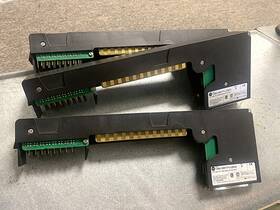
( Brand: Allen-bradley ), ( Manufacturer Part Number: 1492-CM1771-LD012 ), ( Type: Plc Input/output Module ), ( Analog/digital: Digital ), ( Controller Platform: Plc-5 ), ( Country Of Origin: Mexico )
Review ALLEN BRADLEY Series Swing Arm Conversion Module
The **Allen-Bradley 1492-CM1771-LD012 Swing Arm Conversion Module** is a precision-engineered, high-performance accessory designed to enhance the flexibility and adaptability of Allen-Bradley s compact motor starters, particularly those in the **1492-CM1771** series. This module serves as a critical interface between the starter s internal components and external wiring, enabling seamless integration with swing-arm-style terminal blocks a common configuration in industrial control panels, machinery automation, and electrical distribution systems. Engineered with robust construction, the 1492-CM1771-LD012 features a **swing-arm terminal design**, allowing for quick and secure connection of conductors without the need for rigid, fixed terminals, which simplifies wiring adjustments, maintenance, and retrofitting in tight or congested panel spaces. Its compact yet durable form factor ensures compatibility with Allen-Bradley s modular starter systems while maintaining compliance with industry standards for electrical safety and performance.
At its core, this conversion module is built to handle the demands of high-current applications, with a **current rating of up to 120 amps** (depending on the specific starter model and configuration), making it suitable for powering motors, contactors, and other high-load devices in manufacturing, HVAC systems, conveyor belts, and other industrial environments. The swing-arm terminals are designed to accommodate a range of wire gauges, typically from **10 AWG to 12 AWG**, though exact specifications may vary based on the starter s overall rating and the application s voltage requirements. Each terminal features a **spring-loaded, self-aligning mechanism**, ensuring a consistent and reliable electrical connection that minimizes resistance and reduces the risk of loose or corroded contacts a common source of downtime and equipment failure. This design also facilitates easier troubleshooting, as technicians can quickly disconnect and reconnect wires without tools, streamlining maintenance procedures.
Beyond its functional advantages, the **1492-CM1771-LD012** is engineered with **Allen-Bradley s commitment to reliability and longevity**, incorporating materials resistant to environmental stressors such as moisture, dust, and temperature fluctuations. The module is housed in a **metal enclosure** that aligns with the starter s overall construction, providing a cohesive and professional appearance while offering protection against physical damage and electrical interference. Additionally, the swing-arm design reduces the risk of accidental disconnections, which can occur with traditional fixed terminals in high-vibration environments, such as those found in heavy machinery or automated assembly lines. For applications requiring **NEMA or IEC compliance**, this module is often pre-configured to meet specific enclosure and terminal standards, ensuring seamless integration into global manufacturing and control systems.
From an installation perspective, the **1492-CM1771-LD012** is designed for ease of use, with clear labeling and intuitive terminal alignment that minimizes user error during wiring. The swing-arm terminals can be adjusted to accommodate various wire orientations, making it ideal for retrofitting existing panels where space constraints or legacy wiring configurations pose challenges. Whether used in new installations or as part of an upgrade to an existing system, this conversion module enhances the starter s versatility without compromising performance. Its compatibility with **Allen-Bradley s broader ecosystem of control solutions**, including PLCs, human-machine interfaces (HMIs), and motor control centers, further solidifies its role as a critical component in modern industrial automation. By combining precision engineering, durability, and user-friendly design, the **1492-CM1771-LD012 Swing Arm Conversion Module** delivers a reliable, efficient, and future-proof solution for engineers and technicians seeking to optimize their motor control systems.
### **Overview of the Allen-Bradley 1492-CM1771-LD012 Swing Arm Conversion Module**
The **Allen-Bradley 1492-CM1771-LD012** is a **swing arm conversion module** designed to interface with **CompactLogix 1771 controllers** (such as the 1771-LD012) to enable **swing arm motion control** in applications like robotic arms, conveyors, or automated material handling systems. It converts analog or digital signals into a format compatible with the controller for precise positioning and movement.
---
### **Pros of buying a 1492-CM1771-LD012**
1. **Compatibility with CompactLogix Controllers**
- Specifically designed for use with **Allen-Bradley 1771-LD012** and other **CompactLogix** series controllers, ensuring seamless integration without additional hardware modifications.
- Supports **RS-232, RS-485, or Ethernet/IP** communication, depending on the system configuration, allowing flexibility in networking options.
2. **Enhanced Motion Control Capabilities**
- Enables **swing arm motion profiles**, including **point-to-point, linear interpolation, and circular motion**, which are critical for applications requiring precise robotic or automated positioning.
- Works with **Allen-Bradley s Motion Control (MC) software**, allowing easy programming of motion sequences via **Studio 5000** or **RSLogix 5000**.
3. **Reliability and Industrial-Grade Build**
- Manufactured by **Rockwell Automation**, a leader in industrial automation, ensuring **durability, long-term performance, and support**.
- Designed for **harsh industrial environments**, with protection against **voltage spikes, temperature fluctuations, and electrical noise**.
4. **Easy Integration with Existing Systems**
- Plug-and-play compatibility with **CompactLogix** controllers reduces development time.
- Supports **standard communication protocols**, making it easier to integrate with **PLCs, HMIs, and other automation devices**.
5. **Cost-Effective for Motion Applications**
- While not the cheapest motion solution, it offers a **balanced cost-performance ratio** compared to standalone motion controllers or third-party alternatives.
- Reduces the need for additional **motion cards or external drives**, simplifying system architecture.
6. **Support for Advanced Motion Features**
- Supports **velocity, acceleration, deceleration, and jerk control**, improving the smoothness and efficiency of swing arm movements.
- Can be used in **synchronized multi-axis applications**, though this may require additional programming.
7. **Rockwell Automation Support & Documentation**
- Comprehensive **manuals, technical support, and community resources** are available, making troubleshooting and implementation easier.
- Part of Rockwell s **ecosystem**, ensuring compatibility with other Allen-Bradley products like **PowerFlex drives, servo motors, and safety systems**.
---
### **Cons of buying a 1492-CM1771-LD012**
1. **Limited to CompactLogix Controllers**
- **Not compatible with older ControlLogix or SLC 500 series** without additional hardware or software workarounds.
- If upgrading from an older system, **migration may require significant reprogramming**.
2. **Higher Upfront Cost Compared to Alternatives**
- More expensive than **basic analog input/output modules** or **third-party motion controllers** with similar functionality.
- May require additional **motion software licenses** (e.g., **Motion Edge, DriveNet, or third-party motion libraries**) for full functionality.
3. **Complex Programming for Advanced Motion**
- While the module simplifies hardware integration, **implementing complex motion profiles** (e.g., **path interpolation, trajectory planning**) requires **experience with Rockwell s motion control software**.
- Developers must be familiar with **RSLogix 5000 or Studio 5000 s motion programming tools**, which have a **steeper learning curve** than basic PLC programming.
4. **Dependence on Rockwell s Ecosystem**
- If the system relies on **non-Rockwell components** (e.g., **servo drives from another manufacturer**), compatibility may require **additional gateways or converters**.
- Future **firmware updates or compatibility issues** could arise if Rockwell discontinues support for older CompactLogix models.
5. **Physical Space and Wiring Requirements**
- Requires **proper rack mounting and wiring**, which may not be ideal for **space-constrained applications**.
- **Signal conditioning** (e.g., for analog inputs) may still be needed, adding to installation complexity.
6. **Potential Latency in Motion Control**
- While optimized for industrial use, **real-time motion control** may still experience slight delays compared to **dedicated motion controllers** (e.g., **Beckhoff, Siemens SINAMICS**).
- Network latency (if using **Ethernet/IP**) could affect **high-speed applications**.
7. **Limited Availability of Newer Alternatives**
- Rockwell has **shifted focus to newer platforms** (e.g., **Studio 5000, DriveNetX, and cloud-based solutions**), meaning **long-term support may be uncertain** for legacy CompactLogix systems.
- Some features may be **deprecated or replaced** in future firmware updates.
---
### **Conclusion**
The **Allen-Bradley 1492-CM1771-LD012 Swing Arm Conversion Module** is a **strong choice** for applications requiring **precise swing arm motion control within a CompactLogix-based automation system**. Its **seamless integration, reliability, and support for advanced motion profiles** make it ideal for **industrial robotic arms, conveyor systems, and automated material handling** where **Rockwell s ecosystem is already in use**.
However, it is **not the best fit** for:- **Budget-conscious projects** where cost is a major constraint.
- **Systems requiring non-Rockwell components** (e.g., third-party servo drives).
- **High-speed, ultra-low-latency applications** where dedicated motion controllers perform better.
- **Users unfamiliar with Rockwell s motion programming tools**, as implementation may be challenging.
---
### **Recommendation**
**Buy the 1492-CM1771-LD012 if:**You are **already using a CompactLogix controller** (e.g., 1771-LD012) and need **swing arm motion without additional hardware**.
Your application **requires Rockwell s motion control software** and you have **experience with RSLogix/Studio 5000**.
You prioritize **reliability, industrial-grade performance, and long-term support** from Rockwell Automation.
The **cost is justified** by the **simplified integration and reduced development time**.
**Consider Alternatives if:**You need **lower cost** explore **third-party motion controllers** (e.g., **Beckhoff, Siemens, or Delta**) or **basic analog motion modules**.
Your system **requires non-Rockwell components** evaluate **universal motion cards** (e.g., **Allen-Bradley 1756-MC767** for ControlLogix) or **open-source alternatives**.
You need **higher speed or lower latency** consider **dedicated servo drives with built-in motion control** (e.g., **PowerFlex 755, Siemens SINAMICS**).
You are **not familiar with Rockwell s motion programming** train personnel or hire a **Rockwell-certified integrator** to ensure proper implementation.
**Final Verdict:**For **CompactLogix users needing swing arm motion within Rockwell s ecosystem**, the **1492-CM1771-LD012 is a solid, well-supported choice**. However, **careful evaluation of alternatives** is recommended if budget, compatibility, or programming expertise is a concern. Always **test compatibility** with your specific hardware and software before final purchase.
Details:
It operates as an 8-point I/O module with a rated voltage of 132 volts AC, functioning efficiently in frequency range 47 to 63 Hz. The 1492-CM1771-LD012 is an Allen Bradley digital I/O conversion module designed for seamless integration into industrial setups.
part #: 1492cm1771ld012 prices
- $45.00-$121.17
specifications sensoindustria:
- brand: Allen-bradley
- mpn: 1492-cm1771-ld012
- type: Plc Input/output Module
- analog/digital: Digital
- controller platform: Plc-5
- country of origin: Mexico
payments sensoindustria:
- other
- credit card: Diners-club
- wallet: Paypal
returns sensoindustria:
- policy: No Returns
shipping sensoindustria:
- carrier: USPS
- cost: $12.37
- class: Expedited
- type: Calculated
- service: USPS Priority Mail
- transit: 4-10 Days
general sensoindustria:
- condition: Used
- PLCs HMIs > PLC Peripheral Modules > PLC Input Output Modules
offer sensoindustria:
- options: Ship-to-home
- best offers: True
- quantity: 3
- sold: 0
- started: March 2, 2026
- availability: In Stock
seller sensoindustria:
- rating: 100.0%
- city: Morrisville, North Carolina
- # reviews: 12
Allen-bradley 1492-CM1771-LD012 Is Similar To:
- 17560a16 17560a16 Allen-bradley Allen Bradley Series (38% similar) Allen bradley cat 17560A16 series a nib...(January 18th, 2018)
- 04eky00001 Allen Bradley Part Flat Power Unused Old Stock (30.4% similar) System ships via USPS and FedEx ground express. Buyer has option to select alternate transport carrier Ats expense. Allen bradley part: flat power cable. Fob phoenix...(May 7th, 2018)
- 061259830213 Allen-bradley 2015 Factory Sealed (38.6% similar) Thanks a buyer: member id clobbers private during past month Cisco WS-C3750X-48PF-S brand new sealed 3750X Poe us 2,400. Honest and stood by the product working. 00BEST offer price was accepted view item Allen-bradley 1756-EN2F EN2F b series new sealed arrived as described. E-mail us first if you ...(July 21st, 2017)
- 081159752880 Allen Bradley 1771-oa 120 (35.8% similar) This item is used. Allen bradley 1771-OA 120 vac output module 1771OA 1771 manufacturer: bradley model: 1771-OATYPE: module controller platform: plc 5 used, in working condition...(January 22nd, 2018)
- 100-a09nd3 b B Rockwell Automation Allen-bradley (22.2% similar) Auxiliary contact, 110 120V ac 50 60HZ coil, fully tested, in excellent working and cosmetic condition. Notes:the unit is series condition: pup used in a plc hardware. The serial number in pictures has been altered for privacy purposes...(May 5th, 2017)
- 100-c09 10 Allen Bradley Series Contactor (42.2% similar) Allen bradley 100-C09 10 series a contractor location 14E...(August 23rd, 2018)
- 100-c23d 10 Allen-bradley Allen Bradley (31.8% similar) Previously used, in very good working condition allen bradley 100-C23D 10 contractor coil 32A 600V-690V...(May 5th, 2017)
- 10000134269 Allen Bradley 1756-rio Series (40.4% similar) Comes with wiring connector. Working when pulled. Appears new, not in original box...(November 13th, 2017)
- 100s-c09ej14bc Allen Bradley New Contactor (34.5% similar) A contractor 24VDC part 100S-C09EJ14BC great price pic. New allen bradley ser...(June 1st, 2018)
- 1025732 Allen-braldye Allen-bradley Memory Module (42.7% similar) Allen-bradley memory module cat 1772MEB part this unit appears to be new and in the original box, but I cannot verify...(July 5th, 2017)
- 104-a09nd3 Allen Bradley Reversing Contactor (37.5% similar) Reversing contractor, includes the interlocking end switches to protect from inadvertently shorting power supply...(July 18th, 2018)
